Paper presented at the conference "The Need for a New
Economics of Science", University of Notre Dame, USA, 1997
Scientific systems in most East European countries are faced with an unprecedented decrease in their social, political, and economic status. This paper incorporates the concept of national system of innovation and analyses the evolution of institutional factors whose interaction has been shaping the performance of the Soviet and post-Soviet R&D system. The focus of the paper is on the recent trends in Russian science. It outlines the changes in social and political environment shaping the status of science in the contemporary Russia, identifies the major current and potential customers of Russian science, both domestically and internationally, and explains their motivations and strategies. In particular, the paper looks at how Russian government, Russian industry (including military-industrial complex, financial industrial groups, small businesses in R&D sphere), OECD government level programs and contracts, foundations, foreign industries, universities and colleges influence the processes in the Russian R&D system. The paper then analyses how the new institutional arrangements and funding mechanisms impact the patterns of behavior of Russian scientists and develops some predictions as to how Russian science will be developing in the near future. The paper aims at showing why the crisis of science policy has been so profound and devastating in Russia and whether the deficiencies that the Soviet R&D system was plagued with have been eliminated, its advantages preserved and the areas of excellence exploited.
PART 1. Introduction. Theoretical framework
PART 2. The making of Soviet "science policy"
PART 3. Changes in the Russian R&D system in 1991-1996
PART 4 Changing pattern of behavior in Russian science
and major tendencies in the
Russian R&D complex
Throughout the recent decade, Russia, as well as other East European
countries in transition, has been witnessing a dramatic crisis of their
science and technology systems. Some of the processes which have been instrumental
in this profound decline of R&D activities are common to both former
Eastern bloc and Western bloc countries: termination of the Cold War and
the crisis of "Big Science". However, although for Western scientists recent
cuts in budget allocations have undoubtedly been painful, the extent to
which Western scientific community was hurt by the changing policy regime
is incomparable with that in the East. Russian and East European science
and technology (S&T) systems are faced with an unprecedented decrease
in their social, political and economic status. The data below may give
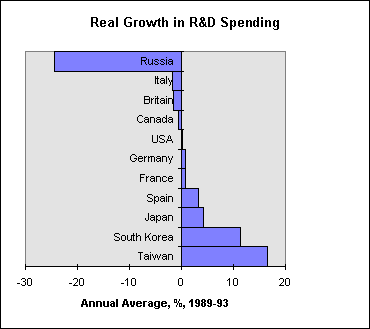
an idea about the depth of the crisis: In Russia gross expenditures on
S&T decreased by nearly 50 per cent between 1989 and 1991 (at constant
prices) and further declined tree-fold in 1991. The share of R&D expenses
in GDP fell from 2.1% in 1990 to 0.52% in 1993 to
0.30% in 1995 (1) (see figure 1.1).
Figure 1.1
Sources: The Economist,
May 18, 1996 and (OECD, 1994b)
In the West, a small community of Russian area scholars have analyzed these destructive processes (e.g. Balzer, 1985,1996; Kneen, 1993,1995; Kontorovich,1990,1994; Levin,1989,1991,1992; Sagdeev,1988; Schweitzer 1995a,b). Among other important publications in the area are, of course, the two-volume OECD report on Russian science (OECD, 1994a,b) (2), a collection of essays in the recent 1995 issue of Social Studies of Science and numerous materials in Science and Nature (e.g. Aldous,1994; Nature, 1994). The majority of authors tend to attribute the causes of the dismal situation in Russian scientific system to inefficiency of the R&D mechanism inherited from the socialist epoch, inflexible and short-sighted government policies and inability of scientific institutions and individual scientists to adapt to the new environment. Many authors (e.g. OECD, 1994a, p.17) assert that the downsizing is inevitable. In estimating the approximate number of scientists to be laid off, the OECD report uses the following rule of thumb: The USA employed in the late 1980s some 1 million scientists and engineers in for in economy which was three times bigger than Russia’s. Therefore Russia can reasonably afford to employ some 300,000 scientists. The mechanisms of funds’ distribution on competitive basis are to ensure that the most efficient scientists will be selected.
Although the existing literature on Russian science can provide valuable information about Soviet and Russian R&D mechanisms, it also has shortcomings. Firstly, it focuses primarily on the shortcomings of the (post)Soviet R&D system and does not pay much attention to the factors which enabled Soviet science to be at the cutting edge in many directions of research and produce remarkable technological advances, despite the backwardness of the Soviet economy. Secondly, it treats the new competitive methods of funding rather uncritically. Thirdly, the role of foreign players (foundations, industry, etc.) in changing environment in the Russian R&D complex is not paid sufficient attention in this literature. However, international influences on the developments in national R&D systems are often as important as domestic science policies are.
This paper broaches the subject from a somewhat different perspective. It outlines the exact causes of Soviet science’s inefficiency and explains why Soviet science was nevertheless among the world leaders. In describing the current situation with Russian science, we look at whether the pitfalls of the Soviet R&D mechanisms have been eliminated, its advantages preserved, and areas of excellence exploited. We conclude that the present dismal situation in Russian science is caused not only by the pitfalls of the Soviet R&D mechanism, but by a much more complex web of social, political and economic factors. We show that while some pitfalls of the Soviet R&D system have been eliminated (militarization, ministerial principle of management), others have remained in force (inability of the industry to introduce innovations). Many factors that were instrumental in making Russian scientists world leaders in many areas no longer in force. We also argue that new funding mechanisms have an ambiguous impact on Russian science. We draw the conclusion that the allocation of resources to science by the Russian government is unlikely to increase in the near future. Russian science is increasingly becoming foreign-controlled, while the government is losing its ability to conduct a coherent science policy influencing research programs of the top Russian scientists. Since the demand for Russian R&D on behalf of Russian industry and foreign customers is insufficient to match falling budget allocations, the downsizing of the R&D complex will continue.
This paper incorporates the concept of national system of innovation first formulated by Lundvall et al. (1992) and applied in a number of case studies collected in Nelson, ed. (1993). The national system of innovation can be defined as a set of institutions whose interaction determines the performance of different elements of a country’s R&D system (Freeman, 1995). The key institutions include:
In Part 2 the workings of the Soviet R&D mechanism will be shown as an interaction of such institutions as major groups in the Party establishment, industry management, scientific system itself, and the social status of science in the country.
In Part 3, we shall trace the evolution of the aforementioned institutions in the post-communist Russia and show how their changing nature and relative influence have influenced the processes in Russian science. Describing the post-Soviet period (we will confine ourselves to the period from 1991 to 1996), we will demonstrate how the social and political status of Russian science has been changing recently, and how this affected the science’s economic status. Simplifying somewhat, we can join a prominent Polish polymer scientist Andrzej Ziabicki who said that "science policy is about money and about priorities" (Nature, 1994,p.594). Therefore we will proceed to show who is willing to pay for Russian science, how much and in accordance with which priorities. With our theoretical framework in mind, we will also be able to say how certain priorities are formulated and out of which considerations money is or is not allocated. In other words, we shall identify the major current or potential customers of Russian science, both domestically and internationally, and explain their motivations and strategies. With this in mind, we shall develop an explanation as to why the crisis of science policy has been so devastating and profound in Russia.
Next, in Part 4, we shall look at how these changing institutional and funding mechanisms feed back on the behavior on Russian scientists and try to give some predictions as to how Russian science will be developing in the near future.
In the beginning of the 20th century, the Russian R&D system included two major elements: (i) Russian Academy of Sciences (hereinafter RAS) which was concerned primarily with basic research and (ii) small-scale industrial research. The R&D system was developing under the overwhelming influence of the state, while independent scientific societies played a relatively minor role. Fragmentation of the R&D cycle was already present before the revolution, and a number of scholars voiced their arguments in favor of closer links between Academic institutes and the industry (Bailes, 1978, pp.40-41).
The pre-Revolutionary structure of the R&D system - highly centralized
and dependent on the state fit nicely into the Soviet paradigm of economic
development. In the 1920-30s, the elitist character of the RAS was preserved
and, at the same time, a network of applied research institutes responsible
to relevant ministries was created. Initially, these institutes were "flexible,
manageable teams of scientists sharing common goals" (Sagdeev, 1985, p.49),
and the number of personnel in each institute never exceeded 100-200 employees.
The applied research institutes, as it was thought, had to be made independent
from the enterprises which they served so as to assure unbiasedness of
the technological advice (Graham, 1992). Together with universities, RAS
and applied research institutes formed the Soviet R&D system
| University system | Academy of Sciences system | Industrial and defense system |
| State Committee of Higher and Secondary Education of the USSR | Academy of sciences of the USSR (RAS), Siberian division, other divisions | Industrial branch ministries, Defense ministry, KGB |
| Higher education institutions: 770 | Academies of Sciences of Union republics: 14; Academies of Agricultural sciences, Medical sciences, Pedagogical sciences, Engineering: 586 institutes | Industrial research institutes, closed military research institutes, intelligence institutes: 3128 institutes total, R&D departments of industrial enterprises. |
| 600,000 researchers | 190,000 | 800,000 |
| 7 per cent of R&D budget | 6.5% | 87% |
The major features of the Soviet management of science gradually crystallized in the 1920-30s. The Soviet economy, operated according to the ministerial principle, was partitioned into a number of distinct sectors, each having its own ministry, monopolies and an R&D system. The ministries existed as self-contained entities, pursuing uncoordinated activities, or, more exactly, the centralized coordination represented a bargaining process among representatives of different sectors. In these circumstances, a coherent science policy could hardly be possible. We can see that almost from the outset the Soviet R&D system was highly fragmented both horizontally and vertically.
In the post-war period, Soviet leadership attached an increasing importance to the sphere of science, technology and education. Massive investments into this sphere were initiated in the mid 1950s, and gained especially strong momentum in the 1960s. In that decade Khruschev’s ‘thaw’ brought about internal pluralism and de-homogenization of the Soviet leadership in which three groups defending different political agendas became visible. 1. Liberal reformist faction (Gorbachev, Yakovlev) which supported political liberalization; 2. Technocratic faction (Kosygin, Podgornyi, later- Brezhnev) which was concerned about the growing ineffectiveness of the economic system and tried to promote technological progress and some degree of competition in the industry; 3. ‘traditionalists’ and hard core ideologists (Suslov, Shelest, Shelepin): they argued for increased allocation of funds to the defense and for self-sufficiency and isolation (3). Relative influence of these three groups was changing over time due to varying political and economic environment. The three groups were spokesmen for respective industries and social groups that could benefit or lose depending on which group was more or less influential. Government policies represented a resultant vector of conflicting interests pertinent to the above groups and ministries, and hence they often had dubious results on the economy and the R&D system. For the sake of exposition, we shall confine our analysis to the 2nd and 3rd groups and assume that ‘technocrats’ are interested exclusively in promotion of science and technology, while the ‘traditionalists’ support military build-up.
The next important element in our analysis is the science management mechanism. As Saltykov et al. (1989) showed (and a similar insight was given by M.Polanyi in his article Planning of science (1940)) (4), that due to the complex nature of scientific activities, sophisticated indicators had to be elaborated by the planning bodies. However, since it was too complicated a task, planning of science had to be limited to one or two simple indicators, usually analogous to those used in industrial production. Thus the major variable in the Soviet science policy-making was the number of R&D personnel. Saltykov called this phenomenon "a primitivization of the criteria mechanism" (Saltykov et al., 1990, p.124) which resulted in the so called "numbers fetishism" in Soviet planning: concentration on quantitative increases in variables subject to planning.
Lastly, on the grass-roots level, success of centrally-designed policies critically depended on whether R&D and industrial organizations had incentives and capabilities to implement them.
| Thousands | ||
| Year | USSR | USA |
| 1950 | 125.2 | 158.7 |
| 1955 | 172.6 | 254.3 |
| 1960 | 273.0 | 380.9 |
| 1965 | 474.5 | 494.5 |
| 1970 | 661.9 | 546.5 |
| 1975 | 873.5 | 534.8 |
| 1981 | 1,200.0 | 890.0 |
To summarize, government policies, industrial ministries, R&D organizations, industrial enterprises formed the core of the Soviet system of innovation.
In this paper we will analyze the attempts at encouraging innovation activities that were made by the Soviet leadership after the failure of the Kosygin 1965 reform. After 1970, efforts were concentrated mostly on promoting a rapid scientific and technological progress, rather than experimenting with industrial relations, which had brought unsatisfactory results before. In the early 1970s we can observe a remarkable change in traditional Marxist ideology: science rather than labor started to be considered as the main factor of production. According to philosophy of ‘scientific-technological revolution’ which permeated discussions in leading social sciences journals in the 1970s, socialism would eventually overcome capitalism because of its higher ability to innovate (Black,1979). As one of the Soviet leaders, Masherov, said in the early 1970s, "science in our time has become the main arena for the competition between the two systems." (5) The policy measures taken in that period included increases in allocations in the R&D sphere and a transition to negotiable forms of technology transfer from the West.
What were the effects of these policies? We will analyze them using the three elements of our analysis described above: policy-making in the upper echelons of power; science’s management by ministries, and grass-roots level decision-making. On the first level, technocrats’ eagerness to boost scientific activities collided with traditionalists’ program of military build-up. Therefore increasing amount of resources was diverted into military-industrial complex which enjoyed a top-priority status in the Soviet economy. This resulted in increasing militarization of Soviet science: by 1985 more than 80% of scientists worked on military projects, and the work of an even greater percentage of scientists had at least indirect military connections (6).
On the ministerial level, structural, or qualitative, changes in Soviet
science could only be achieved by central planning organs through quantitative
increases in R&D personnel (the numbers fetishism syndrom).
Impressive quantitative increases in the number of R&D personnel can
be seen from Table 2.2. This mechanism was quite effective throughout the
1960s: according to Saltykov (1990), Soviet science was normally characterized
by a 4-5% annual growth of new research problems and directions. Therefore
a 10-15% annual growth of allocations into new areas of Soviet science
could lead to substantial qualitative improvements. That is why a high
correlation between quantitative and qualitative changes could be observed
in the 1960s. However, in the 1970s the system’s ability to translate quantitative
increases into internal structural changes was inexorably diminishing:
scientific institutes were overstaffed, which often
rendered them inflexible and inefficient (7). Thus ‘technocrats’
good intentions had in many cases adverse consequences. This cleavage can
be illustrated by the excerpts from A.Zinoviev’s Yawning Heights (see
Box 2.1).
| Box 2.1. Real effects of Soviet science policy. Excerpts from
"The Yawning Heights" by Alexander Zinoviev.
"… The scientific level of
the country is determined by (among other things) the number of Doctors
and Bachelors of science, the number of publications, of scientific conferences,
of journals and so on. A decision to raise the level of science is taken.
Among the steps to be taken, naturally, will be a decision to increase
the number of Doctors and Bachelors of science, the number of publications
and so on. Money is earmarked for this purpose. But a decision is a decision,
and execution is quite another matter. If our society was in reality as
it is depicted by our official propaganda and as our leaders think of it
(at least officially), then the problem would be easily solved: a purely
quantitative change would entail a proportionate qualitative change. But
what really happens in view of the peculiarities of the system within which
the decision is taken? It becomes far easier initially to be accepted as
a research student, to be awarded degrees, to get work published and so
on. But these new opportunities are used primarily and principally by mediocrities,
cheats, careerists and other similar types who have a great facility for
carving themselves large chunks of society’s cake. It’s true that some
real scientists manage to grab a few crumbs, but in relative terms their
share in the business is sharply reduced. The level of science may rise
slightly, but a long way short of the level envisaged by the leadership…
Let us pursue the example. We see that university degrees are devalued…
So a decision is taken to change the pay structure of scientific research
workers. The new system takes into account the real value of the research.
Who will be responsible for working the system out? Will they be impartial,
just, godlike creatures? No, they will be those same Doctors and Bachelors
of Science who were the reason for the whole upheaval. And they will do
everything in their own way, and almost nothing will change. The only people
to suffer will be the most defenseless, productive and talented scientists.
There are very few of them but they are the soul and nerve of science.
And as it is they who suffer, the consequences will be disastrous. All
this is an example of the qualitative effect produced by the system. In
such cases any reforms preserve the status quo and only damage the most
highly organized and superior forms of the system."
|
On the grass-roots level, innovation was hampered due to a number of factors. Firstly, industrial managers were hostile to innovations since the top priority for them was the stable fulfillment of quarterly ministerial plans, implementation of new technologies could halt the stability of production process. Secondly, prices set by ministries were cost-based, and therefore cost-cutting innovations were unwelcome by managers. For the same reasons, managers preferred the option of erecting a new plant rather than upgrading an existing one. Therefore turn-key transfers of Western plants was such a welcome solution. This can explain the existence in Soviet industries and military industrial complex enterprises representing various stages of economic development: beginning from the 1930s and up to the state-of-the-art plants (9). Thirdly, during the 1970s the most high-skilled R&D personnel and most talented young graduates were concentrated in the Academy system (10), and the gap in scientific expertise between the Academy on the one side and applied and industrial research system on the other, prevented an effective communication between these branches of the R&D system. Next, with the growth of technology transfers, an increasing share of applied research was dedicated to reverse engineering. However, attempts at diffusion of purchased technologies often failed since Soviet applied scientists could not effectively interpret the tacit content embodied in modern technologies (11). Lastly, many authors (e.g. Balzer, 1985; Sagdeev, 1988) mentioned a decreasing amount of resources allocated to basic research in the 1970s. It was especially detrimental to innovation since the Academy of Sciences was independent and nearly exclusive performer of many advanced technologies (Kassel, p.26), and lack of resources prevented academic institutes from developing strong experimental facilities.
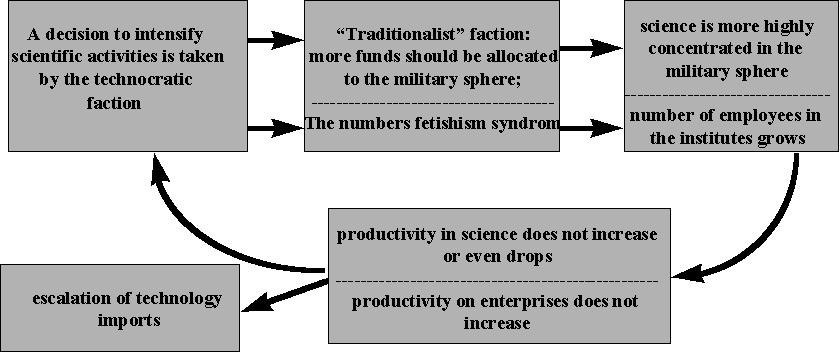
The mechanism of the Soviet innovation system, described above, is schematically shown on Chart 2.1. We can see that Soviet science policy mechanism generated a ‘vicious circle’ which led to growing inefficiency of the R&D system. It explains the disadvantages of Soviet innovation that the bulk of literature on Soviet R&D focused on (12).
However, for the purposes of our analysis it is important for us to
point to the factors which made Soviet scientists world leaders in many
areas. Indeed, it is something of a paradox that it was so despite the
fact that the 1985 level of consumption per capita in the USSR was only
28.6% of the U.S. level and substantially lower than in other OECD countries
(Bergson, 1991). We can mention several factors. 1. The sheer
amount of resources could created a solid scientific base regardless
of inefficiencies in many sectors. As one of Russian emigres noted, "there
is so much scientific activity in the Soviet Union,
that even if 98% is wasted, the rest is still substantial" (13).
2. Soviet system possessed the ability to concentrate resources
on priority areas: to establish islands of creativity and even promote
quasi-competition in the R&D sector.
However, in the late 1970s, the fact that the costs of the Soviet R&D system outweighed the benefits was increasingly evident. Growth rates in the economy were sluggish and it was more and more difficult to solve the trade-off among investments into civilian industries, military-industrial complex and consumption. As we can see from Table 2.4, innovation in enterprises was steadily slowing down in the 1970s (if we take the number of new equipment prototypes as a proxy for innovation) . The fact that in the military sector this process was less evident indicates that resources were being diverted from civilian into military sphere, however results were not very bright, since the military complex was plagued with the same deficiencies as the civilian sector was. The results of technology transfer were discouraging due to systemic impediments to innovation. The technological gap between the USSR and the West had never diminished between 1950s and 1980s, while the USSR found itself dependent from the West in comparatively small (5%) but strategically important share of technology imports (14). Thus a general disenchantment with technology transfers was perceived in the USSR by the early 1980s, and technology purchases from the West were cut (15).
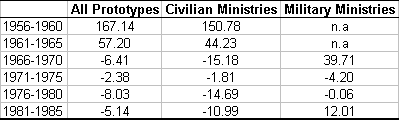
Table 2.4. Growth rates of Soviet
Machine and equipment prototypes, 1956-1985, relative to the previous five-year
period (%). Source: Kontorovich (1990).
We can summarize the major deficiencies of the Soviet R&D system and the latter’s main achievements, namely sectors and technologies in which the USSR was leading.
| The areas of technology in
which Russia is among the leaders or ahead:
rocket engines; aerospace engines; nuclear test facilities; compositional materials; new materials; laser research; fiber optics; oceanography; marine biology; automatic computer design methods; solid-state and microelectronics technology; advanced material processing and metallurgy technology; genetic engineering; pulsed-power technology (16). Overall, there are some 3,000 technologies possessed by Russia, which the USA either does not have or is lagging in their production (17). |
Part 3. Changes in Russian Science in 1991-95.
From 1991 to 1995, Russian innovation system has undergone profound changes. In this chapter we shall give an account of these changes. First, we shall outline the evolution of social, political and economic status of the Russian R&D system. Then we shall describe the behavior of major participants of the Russian innovation system.
1. Social status. One of the reasons is the reputation
of the Russian Academy of Sciences in the Russian society. It is widely
regarded as an aristocratic, bureaucratized structure, an "old boys’ club",
that excludes from the benefits which it enjoys large circles of the scientific
community. This reputation was formed partly as a result of respected scientists’
protests against undemocratic election procedures in the Academy’s Presidium
in the late 1980s, as well as the Academy’s ambiguous behavior during the
August 1991 military coup attempt (Zakharov, 1995). But it is especially
important to point out that during a country’s democratization and marketization,
all aristocratic and elitist elements of society suffer absence of sympathy
or even scorn from the society. A good parallel in this context would be
the history of the Parisian Academy of Sciences in the 18th century, as
it was described by R. Hahn (1971). By the mid 18th century the Academy
was a bright symbol of advancement of learning in Europe. Whereas the Soviet
society of the 1960s science enjoyed a tremendous popularity, so it was
in Europe of the Enlightenment epoch when scientia was given the image
of the universal panacea of all mankind’s ills, as the ultimate symbol
of civilization. The Academy was responsible for forming and maintaining
the scientific ethos: academic style and behavioral norms consonant
with the ésprit classique of the late 17th century.. In the 18th
century, the Parisian Academy became the principal director of the entire
French scientific enterprise, possessing high administrative power and
closely cooperating with the government as a consultant and arbiter in
the realm of technological development, and the major provider of technical
education. High social status and privileges bestowed on the Academy by
the state had to be exchanged for a reduction of academic freedom and the
King’s involvement in the Academy’s affairs. In this way the Academy’s
existence was intricately intertwined with the web of institutions and
habits of thought peculiar to the ancien régime society (Hahn, p.83).
At the same time the 18th century saw the proliferation of artisans-technologists
who could not find their way into the Academy with all its benefits. During
the revolution, although the quality of scientific research and ethical
norms within the Academy remained intact, the institution could not cope
with the new social environment embedded in the laissez-faire spirit
that demanded academic egalitarianism and democratization of science. Hence
after the Revolution, the leadership in science was picked by sociétés
libres composed largely of the formerly outcast artisans. "The case in
favor of voluntary associations was easily transposed into a preference
for liberty over despotism" (p.182). Importantly, the new societal ethos
encouraged propagation rather than advancement of science (ibid., pp.176-177),
and science was therefore vulgarized and commercialized. Analogously, since
the strongest part of the Russian research community concentrated in the
Academy of Sciences and in the public opinion the scientific community
at large tends to be identified with the RAS, this community loses a compelling
raison d’être in public eyes.
Reminiscent of the above argument is Mamardashvili’s
(1996) discussion of the contemporary trends in Russian science. He expresses
his observation that in the classical epoch of capitalism, scientific intelligentsia
existed as a limited and elitist group of people who monopolized intellectual
pursuits. This group was relatively independent from the ruling hierarchy,
and due to its monopolist status in society, it performed the role of,
so to speak, collective self-consciousness for all other social strata.
Intelligentsia in that period served as a kind of ‘universal conscience’
of the society writ large, of articulating the meanings of such central
values as ‘beauty’, ‘good’, ‘truth’, ‘human being’. Now, in the bourgeois
society the traditional functions of intelligentsia have to much extent
evaporated. In the modern society the ‘production’ of cultural values has
assumed a mass character, and a number of other agents have
taken the instruments for articulating what is happening to society,- the
instruments which belonged solely to scientific intelligentsia before.
In practice, it is manifest in penetration of industrial forms into production
of ideas (mass media), art (industrial aesthetics, design, etc.), and into
scientific activities themselves (commercialization of science and education).
In this milieu, the elitist and ‘prophetic’ character of intelligentsia
is being eroded, with increasing number of people entering the occupations
in business, entertainment, journalism, sociology,
psychology, psycho techniques, etc. (18). These
processes are very peculiar to the contemporary Russia, since this country,
which in the Soviet period resembled a highly stratified, aristocratic
society, based on "birth, wealth and profession", is now becoming a Westernized,
bourgeois and egalitarian one. In this setting, the rationale for the society’s unconditional
support of the ‘republic of science’ becomes doubtful among citizenry (19).
Remarkably, in the situation of this
tremendous decrease of science’s social status, many members of the Russian
scientific community - the social stratum that traditionally serves as
a major supporter for democracy - feel an increasing disillusionment with
the democratic reform. Some look for a "third alternative" and often find
it in the "eurasianist" philosophy that originated in Russian émigré
circles in the 1920s (see Riasanovsky, 1967); others begin to feel sympathy
toward the communist movement. S. Kovalev (1996) cites a Russian physicist
with whom he talked before the 1996 presidential elections: "I’m going
to vote for the Communists… Under Brezhnev things were very bad but I worked
as a physicist. And now, the economic situation is so bad for teachers
and researchers that I can’t do the scientific work I love so much. It
is better to have communism with physics than abject poverty without physics."
Even in the once liberal Siberian scientific branch, communists meet with
a welcome reception.
2. Political status of Russian science has been eroding due to two remarkable trends in the official ideology: laissez-faire orientation and ‘state-hood’ philosophy.
Firstly, both in the Western and Eastern societies the environment of Cold war with its "siege" mentlality and competition between the two system, which justified unlimited allocations for science resulting from the implicit social contract, is gone. When old frontiers are behind, the laissez faire ideology, persistent in the West and emergent in the East, erodes the role of government in science policy (Etzkowitz, 1996). In the West, this science policy crisis is not so profound and devastating as it is in the East partly because the scientific community continues to enjoy a considerable bargaining power in the political establishment and the interaction between scientists’ arguments and the position of the pragmatic Clinton administration molds the new rationale for the government support which now concentrates on promoting promising technologies on pre-competitive stage (Branscomb, 1992). Admittedly, the most powerful argument is a recourse to the challenge posed to the US international competitiveness by the new technological leaders who attribute an increasing importance to basic science ( Abelson, 1996; Etzkowitz, pp.22-24).
In Russia, where ideologies have always had a pervasive power over minds, the new laissez-faire ideology often blocs realistic attempts at any activist government policy in the sphere of science and technology. Those who argue for such a policy are stigmatized as "crypto-communists" (20). Even if these attempts are made, they lack coherence and take the form of "sporadic spontaneity" (Fastenko & Chistova, 1996). The reason, common to most East European countries, is that there is no coherent and well-thought-out long term program of development (21). Henceforth it is problematic to formulate strategic directions on research policy. The problem is aggravated by the fact that the relative influence of interest groups within the Russian political establishment has changed in favor of the ‘traditionalists’. This trend is accountable for the odd metamorphosis which the state ideology is undergoing now: if the classical Bolshevik eulogies for the working class were replaced with the ‘scientific revolution’ rhetoric in the 1970s, the phenomenon of today is the ideology of "derzhavnost" which means ‘state-ness’ or ’power-ness’. Basically, it refers to ceremonial patriotism that at the present time permeates media articles, books and political speeches (Kovalev, 1996). This new articulation of the country’s consciousness is nothing else but the old philosophy of the "patriotic" hard-line faction within the CPSU, which now finds its incarnation in Zyuganov’s party (Yanov, 1996), and in fact comprises very wide circles within the Russian political, industrial and business establishments - to the extent as they are formed by the same Party bureaucrats,- and, as sociological surveys reveal, a very considerable share of the new establishment is indeed composed of the former Party functioneers (22). The important feature of this emerging ideology is its hostility or at least indifference towards intellectual culture that does not fit well into this would-be patriotism (not least because of the eminence of Jews in the Russian science.) This reinforces the traditional utilitarian treatment of science by the Russian establishment:
"The authorities are inclined to regard the current situation with science as a quite normal, stationary state of affairs, rather than an extraordinary one. Indeed, the institutes are functioning, articles and reports are being published, and even protest actions occur only in cases of many-month delays of salary payments, and these actions are rare and calm. And scientists’ cautious warnings that such a policy will result very soon in the total disappearance of basic research are confronted with the requests to first prove why, as a matter of fact, science is needed at all." (23)
3. Economic status of Russian science has significantly worsened in the recent years. From 1993 to 1995 government funding has been reduced in real terms by 4.3 times. The industry’s demand for R&D has also subsided due to a near-bankruptcy and domestic demand constraints of many enterprises, which resulted from the government’s macroeconomic austerity programs not accompanied by a coherent restructuring processes. As a result, the share of R&D expenditures in Russia’s GNP reduced from 3.6 per cent in 1983 to 0.29 per cent in 1995 (see Figure 3.1). Taking into account that GNP
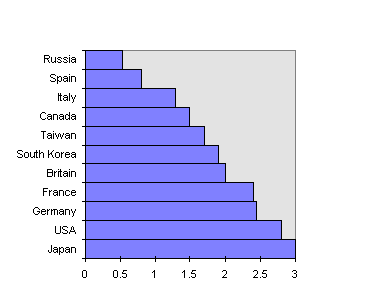
itself has fallen by more than 50% in that period, we can conclude that the funding of Russian science has dropped in real terms approximately ten-fold.
At the same time, new science and technology policy mechanisms have emerged that are intended to alleviate the problems in Russian science. That is why the situation is not unequivocal and calls for a more detailed analysis of government policies and of private and non-private demand for Russian R&D. In what follows, we shall analyze the impact of (a) Russian governmental agencies; (b) Russian industry; (c) OECD government level agencies, international foundations, and foreign industry on Russian R&D activities.
a. Russian government. In the previous chapter we showed that the particular configurations which Soviet science policy was taking can be attributed to changing influence of different elite groups within the Soviet establishment. A preferential status which science enjoyed was to much extent explained by the technocrats’ efforts to boost innovation. In the present situation, interests of scientific community are weakly represented in the Russian ruling circles: it does not have strong lobbyists. Moreover, those industries which could be major domestic customers of Russian R&D (including inter alia the military industry), and to whom infant (or even ‘sunrise’) industry argument could be applied, also have a weak bargaining position. At the same time, primary goods producers’ interests (first of all, of the oil-gas complex) and the military establishment have a disproportionately high weight in policy-making and benefits’ distribution.
A common feature in many Post-socialist countries’ science policies has been the creation of government agencies designed to specify priority directions to distribute funding among them, in the R&D system, to coordinate state programs (24). Russia was no exception. The Ministry of Science and Technology (MST) was created in 1991 to be heir to the State Committee for Science and Technology which existed throughout the Brezhnev era. In 1995, 20.3 per cent of all state allocations for science was distributed to MST, while another 7.2% was earmarked for the Russian Fund for Basic Research (RFFI) which acted under MST’s supervision.
Boris Saltykov who headed MST from 1991 to 1996 was born in 1940 and was educated as mathematician. Before getting his ministerial position, he worked in the Institute for Mathematical Economics on quantitative aspects of economics of science. His views on Soviet science (which we mentioned in the previous chapter) can be found in Saltykov et al. (1990) and Piskunov & Saltykov (1992) (25). In these works Saltykov depicted Soviet science as plagued with the same deficiencies which were peculiar to the administrative-command system in general. He concluded that "the entire management paradigm had to be changed both in science and in the national economy at large." (26) In 1992 Saltykov was promoted by the then prime-minister Yegor Gaidar to the ministerial position. Gaidar’s philosophy, oriented at macroeconomic austerity and rejection of any pro-active government policy, was apparently not doubted by Saltykov. He saw the MST’s mission as helping science adapt to the present economic situation. Working along these lines, Saltykov’s agency chose to selectively support a limited number of directions of research - which were declared state priorities - on competitive basis.. As for the other areas, MST made it clear that funding would be provided only in those cases when non-government investors could not support scientific projects sufficiently. Saltykov also realized that R&D sector would be significantly downsized, and therefore he argued for transforming brain-drain into "planned evacuation" of science through keeping scientists’ exodus under control.
One of MST’s major achievements has been the creation of the Russian Fund for Basic Research (hereafter RFFI) in 1992. Modeled on the NSF, RFFI was intended to channel scarce budget resources into hands of the ablest scientists through the peer review system. Budget allocations for RFFI increased from 3% of total budget allocations for R&D in 1993, when the first round of 9,000 grants was distributed, to as much as 7.2% in 1995. In 1994, RFFI supported 6,000 research projects, providing an average of $5,000 a year to each. In 1995, some 54,000 Russian scholars were funded by RFFI (27). Although the fund has been generally receiving positive appraisals for its work, one feature that makes one more skeptical is a remarkably limited circle of scientists who are eligible for the fund’s grants: under the current legislation they include only the RAS members occupying high-ranking administrative positions (28).
Second significant measure taken by the Ministry was the creation of the State Scientific Centers (SSC). The rationale behind this policy was to give preferential treatment to the core Russian research institutions. Practically, it would mean 30-40% more funding than average. In 1995, SSC’s accounted for more than 50% of all MST’s expenditures, and their share in total budget expenses on science increased from 6.8% to 8.1%. The typical SSC is a giant complex with massive equipment and high material and energy costs (29) as well as a personnel of several thousand people. Despite the declarations, SSC’s received only 54% of their funds in1994 and 70% in 1995. This was aggravated by the fact that, since from 1993 to 1995 the number of institutions awarded the status of SSC increased from 33 to 61, scarce government resources have been scattered and the real position of the SSC’s has differed insignificantly from that of other R&D institutions.
Lastly, MST was responsible for implementing 41 state priority programs in science and technology. The share of these programs in the state science budget decreased from 2.7% in 1993 to 2.0% in 1995. The only programs that have not been cut include the Federal Space Program and The Program for Civilian Aviation Development.
Despite the achievements, the effectiveness of MST’s policy was substantially reduced by the following factors:
Another remarkable government’s undertaking in the sphere of science and technology has been a series of attempts to formulate a state industrial policy. The major participants in these attempts have been MST, the State Committee for Industrial Policy (GKPP), the Ministry of Foreign Economic Relations (and especially S.Glaziev who headed the Ministry in 1993-1994) and the Ministry of Economics (Balzer, 1996). One of the drafts of industrial policy guidelines was suggested by GKPP in 1994. The following basic directions were suggested for the middle-range time period:
b. Russian industry
Science-intensive production in the Russian industry has dropped overall
and in the key industries. The share of technologically new products in
total production has dropped in Russia from 7.2% in 1992 to 2.6% in 1994
and the number of industrial enterprises which undertake in-house R&D
has reduced by 60% from 1990 to 1994 (33). By
Gaponenko’s (1995) estimates, in 1992 expenditure on new products and technologies
ran at only 5% of the 1985 level. Thus the share of the government in total
R&D expenses has been increasing throughout recent years (see Figure
3.2). For one thing, old institutional mechanisms which used to
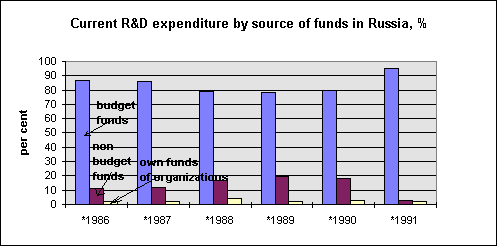
Figure 3.2. Source: OECD (1994b)
The military-industrial complex amounted to no less than 25 per cent of total industrial employment and was a massive producer of both military-oriented and civilian goods. As we already said, the complex consumed more than 80% of all Soviet R&D efforts. For that reason, the reform of the military complex was to much extent equivalent to the reform of the R&D system. We also indicated that the boundaries between military and civilian production as well as military and civilian R&D were blurred. Also, like the Soviet economy as a whole, the military complex was not a homogenous entity and was composed of enterprises exhibiting different technological levels. The same was characteristic of the defense-oriented R&D institutions.
The massive conversion of the military sector initiated in 1992 was based on the erroneous assumption that the military sector constituted a pool of advanced technologies and if market forces were given a full play, the sector would be able to rapidly adapt to the new environment. By assuming this the policy makers neglected the traditional obstacles which hinder a smooth transition of military production and R&D to civilian applications:
The government faced two possible strategies for the conversion. First, it could concentrate its resources on those areas of military R&D where Russia has a strong competitive advantage (34), simultaneously encouraging civilian spin-off activities. Expenditures on R&D would have been cut only in those areas which do not meet the requirements of Russia’s defense sufficiency concept. Alternatively, the government could cut expenditures on military-oriented R&D more rapidly than those on maintenance of the army (35). There is sufficient evidence that the second option has been chosen: between 1991 and 1996, the share of military expenses in GDP was reduced from 8.7 to 3.5%, while the share of military R&D and arms purchases in total military expenditures dropped from 62% to 25% from 1990 to 1995 (36). This choice can be explained by the fact that a huge army is the justification for the existence of an excessively big community of army generals who are more interested in the present state of affairs rather then in the army’s restructuring.
How have these trends affected military-oriented R&D institutions?
Financial-industrial groups (FIGs) 33 FIGs produced up to 10 per cent of Russian GDPin 1995. While the industrial production fell by 3% in 1995, FIGs registered a 3% growth in production. It is believed that FIGs can become a significant source of innovation activities, since: 1. Asymmetry of information problem in relations between the bank and the enterprise will be solved; 2. Bankers will be encouraged to take a longer-term view of credit-allocation;. 3. There will be a possibility of flexible transferring of resources between members of a group; 4. The government could carry out regulatory functions more easily; 5. The entry of FIGs into world markets may be eased. Indeed, as experiences of other countries demonstrate, the "universal banking" in Germany, "chaebols" in Korea and the "keiretsu" system in Japan do perform these functions. However, though the FIGs may become ‘growth points’ in the Russian economy, there are a number of reasons which make one think skeptically about that the groups are unlikely to aggressively pursue innovations. Firstly, Russian FIGs concentrated mostly in traditional industries (see Table 2.3). Secondly, since primary goods producers’ lobby is extremely strong in the Russian establishment, one may reasonably suppose that it is by those industries that government benefits will be recouped. Thirdly, taking into account the benefits which the government promises to bestow upon FIGs, there is a likelihood that FIGs may degenerate into hotbeds of group interests. Lastly, it is known that many banks invested in enterprises and joined with them into FIGs with a view of reselling them later to potential foreign direct investors. Presently, it is too early to make any definite conclusions about FIGs, but in any case, in the Russian context, they represent one of the few promising forms of industrial organization which are able to carry out R&D on a large scale.
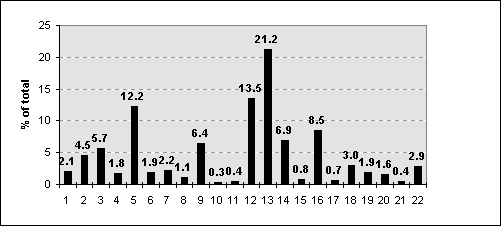
| 1. New technologies in oil and gas extraction | 12. Copper and nickel production |
| 2. Radio-electronics | 13. Steelworks |
| 3. Electrotechnical equipment | 14. Production of ecologically clean chemicals |
| 4. Ship-building | 15. Wood processing |
| 5. Auto industry | 16. Oil processing and oil chemistry |
| 6. Heavy and transport machinery | 17. Technological equipment for food production |
| 7. Telecommunications | 18. Construction |
| 8. Medical equipment, pharmaceuticals | 19. Extracting industry |
| 9. Aluminum production | 20. Rubber |
| 10. Metals | 21. Jewelry |
| 11. Alloy production | 22. Consumer goods |
Small businesses in R&D sphere
first appeared in the late 1980s and since then they proliferated rapidly:
between 1993 and 1995 their number increased from 12,000 to 73,000 (37). These
enterprises provide employment for redundant scientists. Usually their
activities include "mobilizing R&D carried out in state research institutes
and rendering various intermediary services, from consulting to trading"
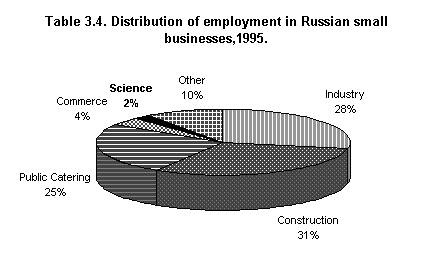
(Gaponenko, 1995). Although small R&D businesses do not play an important
role in the Russian R&D system yet, and their share in the overall
small business sector is not very prominent (see Figure 3.4), potentially
they can serve as a vital link between science and industry.
Finally, we should mention the philanthropically inspired donations on science on behalf of the Russian industrialists. The examples are rare. One of the possible reasons is the fact that in Russia only 2% of incomes can be exempted from taxation in the case of such donations, compared to 50% in the U.S. Low social status of science admittedly plays a role, too. Consequently, while in the USA 39% of all private donations goes into science and education, in Russia the priorities include culture (24%), sports (22%), health system (19%), help to the poor (15%), education (5%) (38).
To sum up, the Russian industry is currently unable to undertake investments into R&D on a large scale. Remarkably, the recession is continuing in both traditional and technologically advanced industries, such as electronics, machine-tool construction, aerospace and nuclear industries.
c. Foreign demand for Russian R&D. After the iron curtain was lifted, international contacts have become an integral part of the Russian science’s functioning. These contacts have taken a number of forms, and in this section of the paper we shall discuss the most important ones. They include: 1. The assistance rendered to Russian science by members of the European community and the USA; in this subsection we shall also try to delineate the general strategy of the Western countries towards Russia’s technological development and the motives behind their willingness to assist and cooperate; 2. Private foundations’ assistance to Russian science; 3. The demand of OECD industries for Russian R&D. Here we shall distinguish between these industries’ operation on the Russian market, in which case the emigration of R&D personnel is not necessary, and the employment of Russian scientists in foreign countries, which presupposes emigration (or ‘brain drain’); 4. Demand for Russian R&D personnel on behalf of American universities, colleges and laboratories; 5. Emerging and potential sources of brain drain from Russia, such as demand from Japan and new industrial countries.
OECD (government level): programs and contracts. Total non-private allocations of OECD countries into Russian science amounted to $450mln. in 1993. The biggest donor states were USA ($200mln.), Germany ($40mln.), Japan ($30mln.), France ($30mln.) [OECD (1994a, pp.37-38).] The biggest government-level projects designed for the newly independent states (including Russia) are: INTAS - an international association with the budget of 50mln. ECU - which carries out joint research projects in 18 countries; TACIS program ["Technical Assistance for the Commonwealth of Independent States"] with the budget of 1,870mln. ECU which implemented more than 2,000 projects in various fields, including the science and technology sphere, between 1993 and 1994; "Copernicus" - a scientific-technical program aimed at activating research in those fields of science and technology which will assist the Central and East European countries in achieving a more rapid economic transformation; TEMPUS ["Transeuropean System for Cooperation in Higher Education"] - the program for supporting higher education in the former USSR.
Several projects between Russia and OECD countries are concerned with "Big Science". For example, in 1994 NASA undertook a major initiative involving Russian specialists by earmarking $400mln. to use Russian technological capabilities in supporting the development and operation of the International Space Station Program. As Schweitzer (1995b) pointed out, "spending U.S. funds while NASA was downsizing within the United States was justified on the basis of the unique capabilities offered in Russia" (p.254, italics in original).
This brings us to the question as to why it is profitable for OECD countries. Firstly, labor costs in Russia are in many cases only 10 per cent of the costs of comparable work undertaken in the West. (Parenthetically, imports of sophisticated equipment in Russia is about 20% higher than in Europe and the U.S. It means that labor-intensive contracts will prevail.) Secondly, OECD countries can get access to knowledge about Russia’s technological capabilities. Thirdly, Western countries are concerned about a possible leakage of Russian expertise to countries from the not-so-favored list (Schweitzer, 1995b).
However, there is another set of factors working in a different direction and making OECD authorities keep assistance to Russian science on a rather moderate level and limiting Russia’s technological prowess on the world markets. Firstly, a new dynamic competitor can break a shaky balance on the world technology markets. Secondly, it is understood that the appearance of one more technological leader might have a detrimental ecological consequences. Thirdly, in the case of a rapid technological development there may be spillovers from civilian to military applications which will be dangerous if the political climate in Russia changes. Lastly, the current pattern of East-West international trade in which raw materials are exchanged for technologies is highly profitable for OECD countries (39). The evidence supports these considerations. It is therefore not surprising that a policy of "technological jingoism" is practiced towards Russia, which can be seen both in official documents (OECD-IMF) and in concrete international trade policies of the OECD countries.
Foundations. Privately and publicly financed foreign foundations have become a vital source of funding for Russian science. The most prominent example is, of course, the International Science Foundation sponsored by G. Soros, which allocated more than $100mln. for emergency help to scientists, including personal stipends and grants, help for libraries, telecommunications and travel to conferences (more than $10mln.) and financing of research (about $80mln.) [OECD (1994b, p.197).]. The help offered takes several forms: invitations abroad to read papers at conferences; do contract work or undertake practical studies in foreign laboratories; direct contacts between scientists and direct aid to research teams in Russia, through grants, payments of fixed allowances to researchers, links to foreign private firms, delivery of equipment, etc. (ibid., p.198). The motives of the foundations are to some extent similar to those peculiar to OECD government agencies, all the more many of these foundations are funded by governments. It is clear, for example, that ISTC grants financial support in the areas where Russians have proved their excellence. The same ISTC is designed to keep Russian scientists who were formerly engaged in military research from accepting lucrative deals offered by Iraq, Libya, etc. (40). A summary of the
| Name of Foundation | Rating of popularity (42) | Average annual amount of grants | Number of cities where grants were given in 1994-95 | Number of grants per year | Fields |
| Soros Foundation (ISF) | 165 | $15000 over 18 months | 52 | 3600 | natural and life sciences |
| McArthur Foundation | 32 | 7765 | 29 | 70 | protection of environment, energy, human rights, legal and economic reform |
| IREX | 8 | $18,000 over 8 months | 3 | 25 | any social sciences |
| The Russian Science Foundation (funded by Ford) | 39 | $2,000 | n.a. | 218 | economics, sociology, political science, Russian history |
| Carnegie Foundation | 6 | n.a. | n.a. | n.a. | social sciences |
| INTAS | 18 | $30,000 over 1-2 years | 861 | natural, life, social sciences, humanities. | |
| Kennan Institute | $42,000 | Russian-related studies in any social sciences | |||
| Fulbright scholarships | $16,350 | 14 | any social sciences and ecology | ||
| NATO Foundation | 6 | Some 8,000 Russian scientists work on more than 40 programs financed by NATO. | |||
| DAAD | ~100 | any natural, life and social sciences | |||
| International Science and Technology Center (ISTC) | cumulatively, $82mln. per more than 9,200 Russian scientists by 1996 | cumulati- vely, 157 projects have been funded by summer 1995 | nuclear safety, fusion as an energy source, new materi-als, electronics tech nology, environ- mental protection, pharmaceuticals, laser technology, space and aviation technologies | ||
The main consequence of the emergence of foreign foundations in Russia is undoubtedly a marketization of science and a competition among scientists for grants. These processes have both positive and negative sides which will be discussed Part 4.
Foreign industry. The demand for Russian technologies and scientific expertise on behalf of foreign corporations can take several forms: the hiring by corporations of Russian scientists or research teams for carrying out particular projects; the purchase of technologies in embodied or disembodied forms from Russian research institutions; foreign direct investments.
The major spheres of corporations’ interests include those areas of Russia’s excellence which were mentioned at the end of Part 2. In the meantime, they have been especially active in such spheres as image processing, software, aerial photographic surveying, new materials (43), power plants, welding, superconductivity, vibrational processing (Astreina & Lenchuk, 1995). In the area of aviation, Boeing Corporation intends to set up a research center for aviation technology in the Moscow region and at the same time is planning to use Russian technologies. In 1993, the American Telephone and Telegraph (AT&T) Company invited Russian specialists from the L. Landau Theoretical Physics Institute to conduct research on metal covering for optical fibers together with American colleagues at the US Bell Laboratories. Similarly, Sun Microsystems invited a group of Russian specialists from the defense sector to work on supercomputers (ibid.). In some cases, the whole scientific institutes are carrying out research for foreign companies. Again, the primitive condition of the Russian intellectual property rights legislation and Russian institutes short-sightedness producers negative effects in this area of cooperation. For instance, in1992 a large Russian academic institute granted all rights for the results of its research in applied laser optics to a certain American company. As a result, this company is reaping huge profits, while the institute is now unable to come to the world market with that product (Kompaneetz, 1996).
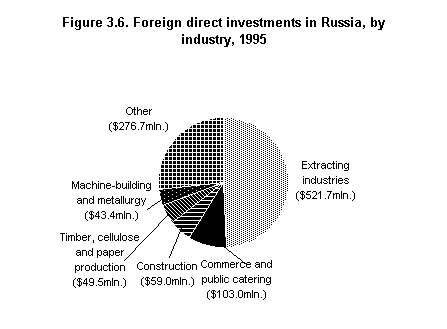
The attraction of foreign direct investments (FDI) into Russian economy has not produced bright results yet. Cumulative FDI inflows in Russia amounted to $3.9bln. in the early 1996, whereas in Hungary - $10.6bln. The structure of FDI in Russia indicate that technologically intensive sectors have not attracted a significant amount of investments (see Figure 3.6). To much extent this phenomenon can be explained by the unstable legislation, high level of corruption and crime. In some cases the government fails to create a favorable environment for foreign direct investors in the areas where these investments would be especially welcome, for instance, in the computer industry . Although the development of computer industry has a high potential in Russia (in terms of human capital and industrial facilities), no attempts have been made to develop a coherent policy based on the infant industry argument. Consequently, the country is flooded with cheap computers, research in microelectronics is stagnant, production facilities huge crowds of Russian software specialists seek jobs abroad.
We should point out, however, that FDI is not a panacea for R&D
survival in East European countries. As Hungarian experience shows, these
investments do not guarantee the revival of R&D on the enterprise.
On the contrary, as a rule, foreign investors tend not to exploit R&D
capacities on the enterprises they purchase (Molnar & Tarjan, 1995).
Universities and colleges. As it is well known, universities in OECD countries readily accept large numbers of students from the former Soviet Union to their graduate schools, especially in natural sciences. Firstly, there is a growing demand for TAs in university departments because of the increasing university-industry relations. This demand exceeds the ability of the industry to absorb the new PhDs, and this explains the universities’ willingness to accept more international students who would later return to their home countries and thus will not produce additional pressure on the labor market (Dasgupta and David, 1995). Secondly, students from the Soviet Union are a preferable choice for university professors for several reasons: their mathematical abilities, they are easier to understand in terms of their English and backgrounds (for example, compared to Chinese and East Asian students); and last but not least, their honesty in scholarly work: fraudulent behavior is rare with them and they are unlikely to be ‘yes men’ in relations with their research advisors.
As far as Russian professors in American educational institutions are concerned, Kontorovich (1994) asserts that although the demand for them on behalf of larger universities may be on decline, smaller colleges may still be able to employ large quantities of Russian.
Part 4. Changing Patterns of Behavior in Russian Science and Major Tendencies in the Russian R&D Complex
1. As we showed in the previous chapter, science is not among the Russian government’s priorities and it is highly unlikely that the funding of science will significantly increase in the predictable future. The share of foreign (government and private) funding in the composition of aggregate expenditures on Russian science will be increasing in comparison with the domestic expenditures. The non-domestic allocations to Russian science in 1993 amounted to $200-300mln. This amount is comparable to the government science budget which in recent years fluctuated between $600-700mln. As H. Balzer pointed out, "with so many researchers working for foreign firms and receiving grants from international agencies, the government is losing its ability to conduct a coherent scientific policy influencing the research program of the top 10 per cent of its scientists." [Los Angeles Times, December 24, 1994.] This view is supported by one of the MST’s officials who acknowledged that the Ministry could only control 15-50% of all international contacts of Russian scientists, and the share of foreign funding is likely to make up to 2/3 of total expenditures on Russian basic science [Batenev (1995, pp.23, 24)]. Some of the officials may not fully agree with these estimates, but the fact that scientific activities in Russia are increasingly becoming foreign-controlled is widely recognized. Although the Russian Foundation for Fundamental Research is trying to complement for foreign foundations, it becomes evident that only those areas of science have a chance to survive which can find a foreign sponsor, while other directions are either dying (or have died) or stagnant. Furthermore, the composition of demand for Russian R&D specialists indicated that the demand presupposing the scientist’s emigration is currently prevalent. Since foreign demand cannot fully compensate for the dropping domestic expenditures, the Russian R&D complex is likely to continue shrinking.
2. The share of funding distributed on competitive basis compared to institution-based funding will be increasing. Speaking about the new funding regimes, we can look at the issue from two angles: namely, theoretical- economic and political-economic aspects. First we have to answer the question as to whether peer review is more effective than institutional funding, which has traditionally been practiced in allocating research funds during the Soviet period. We can single out relative advantages and shortcomings of the two major funding schemes. The benefits of the institute approach are several: it enables scientists to pursue a research agenda over a substantial period of time (with an uncertain outcome), it frees scientists from spending long hours in seeking resources and it minimizes administrative expenditures (44). The drawbacks of the institute approach are straightforward: it encourages shirking and tends to perpetuate inefficiencies when scientists are guaranteed payment regardless of their performance. The grant system encourages quality, productivity and initiative among scientists. At the same time, as it was said above, it compels scholars to divert their energy to seeking resources. Indeed, by some estimates, an average American chemist spends up to 300 hours per year writing proposals for grants. And in contemporary Russia we can observe the phenomenon of the new profession of proposal-writers within the scientific community. Furthermore, the prevalence of the grant system may change the very nature of research when scientists have to undertake shorter term projects or misrepresent their work. For instance, it is known that in Russia, due to the traditional lack and current deterioration of experimental base in natural sciences, the scholars, in order to be competitive in grant race, have to either submit their past work, accomplished in ’better times’, or engage in plagiarism.
There is one more important point. C. Prendergast embodied an interesting insight in his theory of ‘yes men’ (Prendergast, 1993). When the ‘worker’ is paid by the ‘manager’ regardless of his performance, then he would probably be tempted to shirk, but at least the ‘information’ he submits to the ‘manager’ is fairly truthful. Now, if the reward is tied to the quality or essence of the ‘information’ the ‘worker’ generates in the course of his work, he will try to figure out what type of result the ‘manager’ expects from him, and will accordingly correct the results to be submitted. Distorted information is detrimental for any organization; but it is especially dangerous in scientific research. In the Russian context, we can see an active work of various foundations in the realm of social sciences. Usually they grant research funds for clearly ideological reasons (e.g. promotion of libertarian ideology in Eastern Europe has now become an important strategy of the CIA.) When a social scientist is granted money from the Heritage Foundation, she can easily realize what kind of results her work must generate. This phenomenon is particularly dangerous if we take into account that these "ideological funds" are channeled primarily to the most influential and vocal research institutions.
In principle, Russian scientists do not see anything fundamentally bad in the emergence of competitive allocation of funds. It has indeed made it possible for many scholars to get out of a desperate situation and "keep afloat." If grant system in the sphere of short term and primarily applied work is accompanied with institute funding regime for long term "curiosity"-type fundamental research, then theoretically such a situation can be beneficial for everybody.
However, if we look at the other side of the coin, we would see that the grant-distribution system is thoroughly corrupted in Russia, and a seemingly progressive reform generates adverse results. Future research evaluating different funding mechanisms in post-communist countries should start from the fact of the overwhelming influence of corruption and interest groups in those countries and carry out comparative analysis of the above mechanisms from this perspective.
3. The analysis developed in the previous part of the paper indicates that there is no evidence that foreign demand for Russian R&D workers is likely to fall. However, there are some signs that brain-drain will reduce due to Russian scientists’ dissatisfaction with the option to emigrate. This is illustrated in Box 4.1. This is indicative of the fact that the ‘internal emigration’ of Russian scientists will be increasing in comparison with the external brain-drain. This is a very dangerous trend since a scientist leaving his discipline may never be able to regain his skills or catch up with new developments in the field, should he like to return; on the other hand, emigrated scientists are actively involved in research abroad.
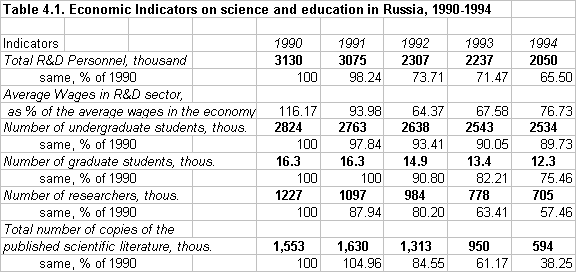
4. Some of the tendencies in Russian science can be seen from Table
3.1 and Box 4.2. We can see that the number of those employed in the R&D
sector is falling along with the falling status of the R&D sector in
the economy (dropping wages). At the same time, the number of undergraduate
students in colleges is reducing at considerably slower rate.
Box 4.1 A Russian scientist makes his mind about choosing
an occupation
|
5. We can conclude from the same data that although the amount of contracts,
probably financed by grants, is growing (Box 4.2), the basic research is
shrinking in the R&D institutions (falling amount of fundamental research
financing, number of the published scientific literature and inventions
applied). This is also a very dangerous trend indicating that scientists
are capitalizing on their past achievements in doing contract work, and
grants are apparently insufficient in financing the material base for doing
basic research.
Box 4.2 Dynamics of R&D activities in one of the Russian defense-oriented
scientific institutions
|
At the current stage, it is important for the government to determine the strategic goals of the country’s development and start to support those directions in science which are instrumental in achieving these goals. It is clear that if the country bases its development pattern on the promotion of traditional industries, a strong science is not needed. The absence of a rationale for science’s support is probably the major reason behind the scientific sector shrinking. The essential measure which has to be taken in the shortest run, however, is the support of those institutions which form the core of Russian science. There is some evidence that unless urgent measures are taken in the nearest future the dwindling of Russian science will assume an irreversible character, since the major scientific schools are about to die out (and some of them already have).
Source: Rogov (1996).
Abelson, Philip (1996) The Changing Frontiers
of Science and Technology, Science, July 26
Alakhverdyan, Alexander et al. (1996)[The
Foreign Sponsors of Russian Science: Vampires or Santa Clauses?] Mirovaya
Ekonomika i Mezhdunarodnie Otnosheniya (ME i MO), no.6.
Aldhous, Peter (1994) A Scientific Community
on the Edge, Science, May 27.
Allakhverdov, Andrei and Pokrovsky, Vladimir
(1996) Fortov Named to New Post; Saltykov Out, Science August 23.
Antyushina, N. M. (1995) [Adaptation of the
R&D Sphere to the Market Conditions], Obschestvo i Ekonomika, no. 10-11.
Astreina, M. and Lenchuk, E. (1995) [Scientific
and Technological Cooperation between Russia and the West], Vestnik RAN,
no.10.
Averch, Harvey (1985) A Strategic Analysis
of Science and Technology, Johns Hopkins Univ. Press, Baltimore.
Bailes, Kendall (1978) Technology and Society
Under Lenin and Stalin, Princeton.
Balzer, Harvey (1985) Is Less More? Soviet
Science in the Gorbachev Era, Issues in Science and Technology, summer.
Balzer, (1996) Dismantling Russia’s Technotopia:
Six Ministries In Search of an Industrial Policy, in Sedaitis.
Batenev, V.S. (1995) [The Role of Contemporary
Russia in International Scientific and Technological Cooperation], Vneshniaya
Torgovlya, no.12.
Bergson, Abram (1983) Technological
Progress, in A.Berson and H.Levine, eds. The Soviet Economy: Toward the
Year 2000, Allen & Unwin, London.
Bergson, Abram (1991) The USSR Before the
Fall: How Poor and Why, Journal of Economic Perspectives, 5, 4.
Berliner, J. (1983) Entrepreneurship in the
Soviet Period: an Overview, in Guroff, G. and F. Carstensen, eds. Entrepreneurship
in Imperial Russia and the Soviet Union, Princeton
Black, Cyril (1979) The Scientific-Technological
Revolution: Economic to Scientific Determinism? Discussion paper no.59,
Kennan Institute for Advanced Russian Studies, Washington, D.C.
Branscomb, Lewis (1992) America’s Emerging
Technology Policy, Minerva, no.3
Dahlman, Carl (1996) Technology, Development,
and the Role of the World Bank, WB working paper.
Dalum, B., Johnson, B. and Lundvall, B. (1992)
Public Policy in the Learning Society, in Lundvall, B.-Å., ed. National
Systems of Innovation, Pinter, London.
Dasgupta, Partha and David, Paul (1994) Toward
a New Economics of Science, Research Policy, 23.
Dezhina, I. (1996) [Financing Russian Science:
New Forms and Mechanisms], Voprosy Ekonomiki, no.10.
Dodgson, M. and Rothwell (1994) The Handbook
of Industrial Innovation, Edward Elgar.
Dosi, G. (1982) Technological Paradigms and
Technological Trajectories, Research Policy, 11, 3.
Etzkowitz, Henry (1996) Losing Our Bearings:
The Science Policy Crisis in Post-Cold War Eastern Europe, Former Soviet
Union and USA, Science and Public Policy, February.
Faltsman, Vladimir (1992) The New Role of
the Defense R&D in the Economy of Russia, in Wolf, Charles, ed. The
Role of the Military Sector in the Economies of Russia and Ukraine, RAND.
Fastenko, O. and Chistova, V. (1996) [On Financial
Problems in the Defense Complex and on Perspectives of Its Development],
Finansy, no.7.
Freeman, C. (1994) Technical Change and Technological
Regimes, in Hodgson et al., eds.
Freeman, C. (1995) The ‘National System of
Innovation’ in Historical Perspective, Cambridge Journal of Economics,
19, pp.5-24.
Fyodorov, Y. E. (1996) [The Russian Policy
towards the Caspian Oil], paper presented at the seminar "Caspian Oil and
International Security", Moscow, March 5-6, 1996
Gaponenko, N. (1995) Transformation of the
Research System in a Transitional Society: The Case of Russia,, Social
Studies of Science, vol.25.
Goldmann, M. (1983) USSR in Crisis. The Failure
of an Economic System, WWNorton and Co., N.Y.
Graham, L.(1992) Big Science in the Last Years
of the Big Soviet Union, Osiris, 7.
Graham, L. (1993) The Ghost of the Executed
Engineer. Technology and the Fall of the Soviet Union, Harvard University
Press.
Gross, D. and Witten, E. (1996) The Frontier
of Knowledge, Wall Street Journal, July.
Hahn, R. (1971) The Anatomy of a Scientific
Institution. The Paris Academy of Sciences, 1666-1803, University of California
Press, Berkeley.
Hanson, P. (1982) The End of Import-Led Growth?
Journal of Comparative Economics, 6.
Hanson, P. and Pavitt, K. (1987) The Comparative
Economics of Research, Development and Innovation in East and West: A Survey,
Harwood Academic Publishers.
Harvey, M. et al. (1972) -Science and Technology
as an Instrument of Soviet Policy, University of Miami Press.
Helmstadter, S. (1992) The Russian Brain Drain
in Perspective, RFE/RL Research Report, October 23.
Institute of Economy in Transition (1996)
[Russian Economy - 1995. End of Year Report. Trends and Perspectives],
Moscow.
Kaminski, B. and Yeats, A. (1995) OECD Trade
Barriers Faced by the Successor States of the Soviet Union, Russian and
East European Finance and Trade, March/April.
Kassel, S. (1989) Soviet Advanced Technologies
in the Era of Restructuring, RAND.
Kneen, P. (1993) The Soviet Scientific Legacy:
Some Differences of Interpretation, Science and Public Policy, 20, 4.
Kneen, P. (1995) Science in Shock: Russian
Science Policy in Transition, Europe-Asia Studies, 47,2.
Kompaneetz, A. (1996) [The Drain of Ideas],
Kommersant-Weekly, July 1.
Kontorovich, V. (1990) The Long-Run Decline
of Soviet R&D Productivity, in Rowen, H. and C. Wolf, eds. The Impoverished
Superpower: Perestroika and the Burden of Soviet Military Spending, ICS
Press, San Francisco.
Kontorovich, V. (1994) The Future of the Soviet
Science, Research Policy, 23, pp.113-121.
Kovalev, S. (1996) On the New Russia, The
New York Review of Books, April 18
Lateef, K. S. (1994) The Evolving Role of
the World Bank, The WB, Wash. D.C.
Levin, A. (1989) Soviet Science Policy in
the Perestroika Period: an Overview, Report on the USSR, May 26.,
Levin, A. (1991) New Draft Legislation on
Science Policy in the USSR, Report on the USSR, May 31.
Levin, A. (1992) Changes in Russian Science
Administration and Policy, RFE/RL Research Report, February 14.
Levin, A. (1992) The First Steps in Russia’s
New Science Policy, RFE/RL Research Report, no.42.
Lewis, R. (1994) Technology and Transformation
of the Soviet Economy, in Davies, R.W. et al., eds. The Economic Transformation
of the Soviet Union,1913-1945, Cambridge University Press.
Mamardashvili, M. (1996) Medium ili
Vseobschee Chustvilische? Literaturnaya Gazeta, July 17.
McClelland, J. (1979) Autocrats and Academics.
Education, Culture, and Society in Tsarist Russia, University of Chicago
Press.
Ministry of Science and Technology (1996)
[The Science Doctrine of Russia. A Draft], Vestnik RAN, no.1.
Mirowski, P. (1996) On Playing the Economics
Card in the Philosophy of Science: Why It Didn’t Work for Michael Polanyi,
paper presented to the 1996 meeting of the PSA, Cleveland.
Mirskaya, E. Z. (1995) Russian Academic Science
Today, Social Studies of Science, 25
Molnár, G. and Tarján, T. (1995)
Productivity Lag and Intellectual Background, in Kovács, János,
ed. Technological Lag and Intellectual Background, Dartmouth, Aldershot.
Moore, J. (1994) Science in Central in Eastern
Europe, in Teich, Albert et al., eds. Science and Technology Policy Yearbook,
1994, AAAS, Wash. D.C.
Mowery, D. (1994) Science and Technology Policy
in Interdependent Economies, Kluwer Academic Publishers, Boston.
National Academy of Sciences (1994) Science
and Engineering Indicators, 1993.
Nature (1994) What Next for Science in Central
Europe?, December 15.
Nelson, R., ed.(1993) National Innovation
Systems. A Comparative Analysis, Oxford, N.Y.
Noav, A. (1992) An Economic History of the
Soviet Union, 1917-1991, Pinguin.
OECD (1994a) Science, Technology and Innovation
Policies. Federation of Russia. Vol.1. Evaluation Report, Paris.
OECD (1994b) Science, Technology and Innovation
Policies. Federation of Russia. Vol.2. Background Report, Paris.
OED (1994) Lending for Industrial Technology:
Lessons from Six Countries, OED Precis, no.70, June.
Parrott, B. (1983) Politics and Technology
in the Soviet Union, MIT Press, Cambridge.
Pavitt, K. (1990) What Makes Basic Research
Economically Useful? Research Policy, 20.
Persky, J. (1991) Lange and von Mises, Large-Scale
Enterprises, and the Economic Case for Socialism, Journal of Economic Perspectives,
5,4.
Piskunov, V. and Saltykov, B (1992)
in Science and Public Policy.
Polanyi, M. (1975) The Contempt of Freedom.
The Russian Experiment and After, Arno Press, N.Y.
Prendergast, C. (1993) A Theory of "Yes Men",
American Economic Review, 83, 4.
Presnyakov, V. and Sokolov, V. (1992) [Export
Controls and Russian Interests], ME i MO, no.11
Rakitov, A.I. (1995) [The Russian Science:
Its Past, Present and Future], Voprosy Filosofii, no.3.
Riasanovsky, N. (1967) The Emergence of Eurasianism,
California Slavic Studies, vol.4.
Rodrik, D. (1995) Taking Trade policy Seriously:
Export Subsidization as a Case Study in Policy Effectiveness, in J. Levinson
et al., eds. New Directions in Trade Theory, University of Michigan Press,
Ann Arbor.
Rogov, S.M. (1996) [Russia’s Security in a
Multipolar World], Vestnik RAN, no.3.
Sagdeev, R. (1988) Science and Perestroika:
A Long Way to Go, Issues in Science and Technology, summer.
Sagdeev, R. (1993) Science and Revolutions,
in G. Peterson, ed. Tanner Lectures on Human Values, 14.
Sagdeev, R.(1994) The Making of a Soviet Scientist,
John Wiley & Sons, N.Y.
Sakharov, A., V.Turchin and R.Medvedev (1970)
[Appeal of Soviet Scientists to the Party-Government Leaders of the USSR],
Survey, no.76.
Saltykov, B. et al. (1990) [Science as a Structural
Element of the National Economy], Nauka, Moscow.
Sapir, J. (1996) Defense Conversion and Restructuring
in the Russian High-Technology Sector: Is There an Alternative to Uncontrolled
Exports? in Sedaitis.
Schweitzer, G. (1995a) Can Research and Development
Recover in Russia? Technology in Society, 17,2.
Schweitzer, G. (1995b) Conversion Activities
in the Russian Weapon Laboratories, Technology in Society, 17,3.
Sedaitis, Judith, ed. (1996) Commercializing
High Technology: East and West, Center for International Security and Arms
Control, Stanford.
Skilling, Gordon and F. Griffiths, eds. (1971)
Interest Groups in Soviet Politics, Princeton.
Smirnov, Sergei (1996) [A Fundamental Thing
in Itself], Nezavisimaya Gazeta, July 7.
Smith, Bruce (1990) American Science
Policy since World War II, Brookings Institution, Wash. D.C.
Stephan, P. (1995) An Essay on the Economics
of Science, forthcoming in Journal of Economic Literature.
Tsapenko, I. and Yurevich, A. (1995) [The
"Dwindling" Science] (‘Nauka "ubyvayuschaya"’), ME i MO, no.12.
World Bank (1992) Marshaling Knowledge for
Development, WB Policy Research Bulletin, vol.3, no.2.
World Bank (1993) Building a Technological
Base for Development, Development Brief no.19
Yanov, Alexander (1996) G. Zyuganov’s Patriotic
Communism, Moscow News, March 14 -20.
Zakharov, Aleksei (1995) [Democratic Opposition
in the Process of Creation of the Russian Academy of Sciences], Rubezhi,
1.
Zaleski, E. and H.Wienart (1980) Technology
Transfer between East and West, OECD, Paris.
Zinoviev, Alexander (1978) The Yawning Heights,
Random House, N.Y.
Titles put in brackets ([ ]) are translated from Russian
(1) (OECD, 1994b) and (Institute of Economy in Transition,
1996, p.121) Return
(2) The first volume (Evaluation Report) was prepared
by OECD experts on the basis on the Background Report (second volume) prepared
by the Russian Ministry of Science and Technology. Return
(3) In analyzing these groups, we shall use the group
conflict model entertained by a number of Sovietologists (Bailes , 1978,
p.8-11; Skilling and Griffiths, 1971; Parrott, 1983; Yanov, 1996) who described
the Soviet political process as an interaction and competition among several
elite groups with divergent interests within the Soviet officialdom. Parrott
(1983) gives an illuminating description of the construction of the Soviet
technology policy through these groups’ interaction. Return
(4) Polanyi (1975), p.44. Return
(5) Cited in Harvey et al. (1972), p.2. Return
(6) Militarization of the Academy of Sciences was
eased after the controversy between the academicians Keldysh and Artsymovich
(the former was the Academy’s president in the 1970s) was resolved in Keldysh’s
favor. Artsymovich argued that the Academy should be a temple of pure research,
a republic of science similar to Castalia described in Hesse’s Glass Bead
Game. On the contrary, Keldysh insisted that Academy should become a formal
headquarters of all industrial innovation in the country. In practice,
because of the institutional environment in the USSR (and also due to Keldysh’s
military science background) this initiative led to further militarization
of academic science (see Sagdeev, 1994). Return
(7) See Saltykov et al. (1989), pp. 133-136. Rakitov
(1995) gives another explanation for militarization and overstaffing in
science: According to him, Soviet leaders assumed that in the event of
a nuclear war, 9/10 of all industry, transport and communication
systems, etc. - including scientific personnel - will be lost. Therefore
it was considered necessary to create a gigantic excess of these resources.
This explanation does not contradict my story. Return
(8) Examples are replete. Although laser was first
discovered in the USSR, the experimental laser fusion program at the Lebedev
Physics Institute was delayed for many years for lack of slab surface coatings
of the necessary optical quality, which were necessary components. The
most striking example is Soviet computer technology. Despite a considerable
pull of high-skilled computer scientists, progress in the industry was
sluggish because of the lack of a broad range of supporting technologies
and low reliability of many that were available. There was a considerable
lag in microelectronics, a critical supporting technology for computers
which, in turn, was hampered by deficiencies in supporting technologies
such as chemical technology, materials processing, and lithography. The
lag in microelectronics led to deficiencies in Soviet microprocessor technology,
with a far-reaching impact on a wide range of Soviet industries (Kassel,
1989). Return
(9) In many cases, technology transfer brought new
problems. Complementary inputs were needed for effective utilization of
purchased technologies, and these inputs were not provided by the Soviet
industry; in other cases, gaps and disbalances between different industrial
branches increased as a result of technology transfer (Noav, 1990, pp.318-319).
Return
(10) For example, the Institute of Radioengineering
and Electronics and The Lebedev Physics Institute together employed
the same number of PhDs as the whole electronics and communications industries.
(Kassel, 1989). Return
(11) As Lamberton (1994) pointed out, "Copying must
include replication of at least some of the information and organizational
costs of the pioneer" (p.305). Due to inadequate skills of Soviet personnel
and lack of communication with foreign scientists, this was hardly possible.
Return
(12) A remarkable exception is Kontorovich (1994).
Return
(13) Cited in Balzer (1988), p.35. Return
(14) An important fact is the macroeconomic consequences
of the Soviet technology policy. As Goldmann noted, USSR was a perfect
trade partner for the West: it exported low-cost raw materials and purchased
technologies which were usually on a later stage of their life-cycle, thus
prolonging the latter and financing R&D of the Western seller. On the
other hand, despite Soviet side’s expectations, the 1975 Western recession
hurt the Soviets badly: the demand for Soviet raw materials significantly
dropped and a substantial deficit in the external trade with the West emerged
(Goldmann, 1983, p.137). Return
(15) Despite the fact that hard currency deficit which
was felt in 1975-1976 (and which resulted in profound crises of "import-led
growth" in Poland and Hungary in the late 1970s) was eliminated in the
USSR in 1978-1979 thanks to windfall profits from oil exports (Hanson,
1982). Return
(16) Sources: Faltsman (1992), Kassel (1989), Popular
science, August 1994. Return
(17) Presnyakov and Sokolov (1992). Return
(18) Interestingly, Mamardashvili seems to assimilate
humanities to "technology", as M.Polanyi did in his article "Science: Academic
and Industrial" (see Mirowski, 1996, p.15). Return
(19) In light of the above argument, we can say that
Elena Mirskaya’s (1995) explanation attributing the Russian science’s
crisis to the fact that Russian civilization is intrinsically ‘traditionalist’
and therefore scientific rationality is alien to it (and hence the presence
of scientific culture is artificial and vulnerable in it), does not stand
to the facts. For example, in the early 20th century Russia there
were strong ‘modernist impulses’ among Russian intelligentsia (though in
specific forms), and optimism of power of science was widespread. In the
1960s and 1970s ‘scientific euphoria’ was also extremely strong. The crisis
of scientific ethos can be explained not by the traditionalist traits in
the Russian culture, but rather by Russia’s abandoning the traditionalist
(in Mamardashvili’s sense) pattern of life. Return
(20) The response to an official’s query about an
Eastern European researcher’s work, illustrates the new ideological environment:
"When I answered, ‘Science and technology policy’, he said: ‘Why should
it be influenced? Why intervene?’ I did not mention any intervention, just
the policy making as a process… Policy equals centralization and control
[in their minds]" (Etzkowitz, p.16). Similarly, when the academician S.
Shatalin (who, together with G. Yavlinsky and a number of other economists,
co-authored the ‘500 Days’ program of reforms, which is considered to be
a gradualist one in comparison with Gaidar’s strategy) was asked whether
his program contained anything on science, he could not bring forth anything
concrete (Zakharov, 1995). Return
(21) For instance, as Nature (1994) points
out in regard to Poland, "even senior government officials admit that Poland
has not decided whether it is going to be a high-technology country… or
one whose economy is based more on service industries and modern agriculture"
(p.595). Return
(22) See, e.g. Izvestiya, January 10, 1996
and Mirovaya Ekonomika i Mezhdunarodie Otnosheniya, nos. 3,4, 1996
Return
(23) Kinelev (1996) p.236. Return
(24) See Moore (1994) for a detailed description
of these government agencies in different East-European countries. Return
(25) The Ministry’s principles were also stated in
"The Science Doctrine of Russia" (Ministry of Science and Technology, 1996),
the document signed by President Yeltsin in May, 1996. Return
(26) Piskunov & Saltykov (1992). Return
(27) See Aldhous (1994), Dezhina (1996), Gaponenko
(1995, p. 699), Levin (1992b). Return
(28) Institute of Economy in Transition (1996, p.122)
Return
(29) Some SSC’s have to spend up to 70% of their budgets
on electricity bills. Return
(30) This comparison was made by M.Kirpichnikov, director
of the Department of Science and Higher Education of the Russian government
(Nezavisimaya Gazeta, November 11, 1995). Return
(31) In the mid 1996 Saltykov pointed out that unless
the government spends at least 3% of GDP on science and technology, all
the programs for selective support for science and other declarations incorporated
in the "Science Doctrine" would be just rubbish. In 1996 the planned expenditure
on R&D amounted to 0.5% of GDP, of which only 28% was allocated by
August, 1996 (Dezhina, 1996, p.79). Return
(32) Balzer (1996, p.53). Return
(33) Finansovie Izvestiya, June 7, 1996 and
Poisk, no.5, 1996. Return
(34) They include rocket engines, airspace engines,
nuclear physics, compositional materials, etc. Return
(35) See Faltsman (1992) Return
(36) Fastenko & Chistova (1996, pp. 13, 15). Return
(37) Gaponenko (1995, p.697) and Poisk, no.13, 1996.
Return
(38) Dezhina (1996, p.86). Return
(39) For example, in 1993, due to massive exports
of raw materials from Russia, oil prices fell by 20.7 per cent on world
markets. This produced a cost-cutting effect in the majority of Western
industries, and the ultimate result was a remarkable decrease of inflation
in OECD countries. Return
(40) Russian nuclear scientists have been reported
to be offered as much as $300,000 in annual salaries in some of the
Middle East countries. Return
(41) Compiled on the basis of Alakhverdyan (1996),
Dezhina (1996), Kompaneetz (1996), Schweitzer (1995b), Poisk, no.7,
1996 Return
(42) "Rating of popularity" measures the degree to
which the fund is known to the Russian scientists interviewed. Return
(43) Such as composition, heat-resistant alloys, armor
plate. Return
(44) The discussion of relative effectiveness of funding
regimes draws heavily on (Stephan, 1995, pp.41-42). Return