 ,
,
Universal Banking and Innovation: the Case of Russia
University of Notre Dame, December
1996
Introduction
Since 1992, Russia along with many other post-socialist countries have been implementing massive privatization programs. The voucher privatization in Russia has been cited as a major unequivocal success of the economic reform. However, privatization is not the end in itself, and its ultimate goal is the creation of an efficient and dynamic economy. Such an economy is characterized inter alia by a rapid speed of innovation activities, which is recognized by many developing countries allocating increasing amounts of resources into their R&D systems. The problem of innovation is particularly relevant for Russia, since this country has a highly skilled labor force and inherited a massive system of basic and applied research. It is widely recognized that Soviet science was a world leader in many areas of natural sciences and managed to create advanced technologies which, however, could not be efficiently used by the industry due to systemic impediments to innovation and high level of militarization in science.
After the completion of the Cold War, the military competition ceased to be the rationale for the government’s funding of science, and it was hoped that the Russian private enterprises exposed to competition would be motivated to finance R&D projects, and therefore competitive technologies, possessed primarily by the military-industrial complex, would enable the country to embark upon sustainable economic growth. These hopes have not materialized so far. While several East European countries did register economic growth, in Russia GDP fell again by 4% in 1995 [although considerably less than in 1994 (-15%)], and this is certain to happen this year too. The funding of R&D has dropped from 1983 to 1995 approximately ten-fold in real terms. The share of technologically new products in total production has reduced in Russia from 7.2% in 1992 to 2.6% in 1994, and the number of industrial enterprises which undertake in-house R&D has fell by 60% from 1990 to 1994. (1) For one thing, the Russian military-industrial complex has proved not to be a pool of advanced technologies, and a considerable share of the R&D complex, like the economy in general, has demonstrated its inefficiency. Moreover, it is well known that military production can not be easily and quickly transferred to civilian markets due to specific technological culture in the military sphere (2). However, one of the central reasons for underinvestment in R&D is harsh financial situation in many industrial enterprises, caused by tight monetary policies pursued by the government under the pressure from IMF. As one of the observers noted, Russian enterprises cannot implement new technologies even if they were granted to them for free.
This poses the question of capital markets’ formation which would channel financial capital into industry. We define the financial system as the set of institutional arrangements for the transformation of savings or credit to investments (Christensen 1992). Particular configurations of financial institutions may affect 1. The rates at which resources are accumulated; 2. Employment of resources; 3. Economic efficiency of their uses (Dosi 1990). The important feature of these institutions in the world of uncertainty is that they not only provide resources but also create particular markets for corporate governance - mitigating the problems of information asymmetry and moral hazard - , which in its turn can affect the relative expected profitability of different types of investment projects, and in this way determine the country’s long-term economic performance.
The main problem any capital market has to solve is how to assure that investor of capital will get his money back. In the modern world we can observe a number of mechanisms preventing the industrial manager from behaving opportunistically. In this paper we are interested in how particular solutions of this problem influence the incentives to undertake R&D-intensive projects. We shall confine our analysis to large enterprises, leaving aside the venture enterprise. Firstly, although many arguments were offered suggesting that small venture firms innovate more aggressively than large corporations do, the evidence still proves the validity of the Schumpeterian argument about the significance of oligopolistic competition for innovation: While the number of inventions in large and small companies is equal, there are still more innovations in large corporations; and there is an inverted U-type relationship between market concentration and R&D intensity (3). Secondly, the core of the Russian economy is composed of (very) large enterprises.
The focus of this paper is on the particular form of financial market organization, namely, universal banking. Universal banking can be defined as the ability of a bank to own and control non-financial entities, in addition to engaging in a broad range of financial activities. It is a widespread form of industrial organization in a number of countries; and recently it began developing in some post-socialist economies too. Moreover, the promotion of financial-industrial groups (FIGs) - as universal banking is called in Russia - has become the center of the government’s industrial policy. Although FIGs are to perform a number of functions, my special interest is whether they will stimulate investments in R&D projects. Furthermore, I shall concentrate on the relations between banks and enterprises (‘the banker’ and ‘the manager’) within FIGs, leaving aside cross-ownership of shares between enterprises - another interesting aspect of FIGs.
In the 1st part, I shall begin with formulating the essence of the stylized “R&D project” and “standard project”. Then I shall draw upon corporate finance literature to show how different types of financial contracts between owners of financial capital and the ‘manager’ lead to different shares of the two projects in the total investment portfolios. Although these contracts are diverse, in the world we observe the prevalence of either equity markets or long-term bank lending in each country. Therefore we can compare R&D financing in ‘market-based systems’ and ‘institution-based systems’,- first by means of theoretical arguments, and then by looking at particular countries: ‘Anglo-Saxon’ economies (USA and Great Britain), on the one hand, and continental Europe and Japan (where the institution-based system prevails), on the other. The major conclusion of the 1st paper is that in institution-based systems fostering universal bank- type relationships, theoretical analysis demonstrates and empirical evidence supports the existence of more incentives to innovate.
In the 2nd part of the paper, I shall first depict the macro- and microeconomic contexts in the Russian economy, in which FIGs emerged. I shall outline the motivations behind banks’ and enterprises’ participation in and the government’s support of FIGs, and show how FIGs have evolved from 1993 onwards. Basing on the arguments developed in the 1st part of the paper, I shall give an appraisal of universal banking in the Russian context, and whether their development is likely to lead to better innovative performance in the economy. My major conclusion is that the emergence of FIGs in Russia, as well as in other post-socialist countries which mimicked the Soviet industrial structure, is quite logical and may indeed smoothen the underinvestment problem. However, universal banking is not an unmixed blessing. This point is evident if we look at the performance of a similar type of organization in the post-socialist Chile in 1973-1983. The Chilean example seems to be much closer to the Russian realities than Korean chaebols or Japanese keiretsu. Chile is a kind of controlled experiment which demonstrated that the formation of universal banking in a formerly socialist economy, accompanied with macro- economic austerity and the government’s withdrawal from financial markets’ regulation might well lead to a financial crash.
We shall then proceed to discuss the necessary government policies aimed at making FIGs efficient. Proposals for further research will follow.
In conclusion, a few words about the existing literature on universal banking in the Russian context. Since FIGs are a relatively recent phenomenon, the literature - in both Russian and English - is very limited. As far as I know, there are only four English-language articles directly dealing with universal banking in post-socialist countries so far: Freinkman 1995, Smitenko and Karaeva 1994; Starodubrovskaya 1995; Cumings 1994. Several other authors presented some arguments in favor (Shleifer and Vishny 1996, p.55; Stiglitz 1995, pp.226-28; Tirole1991) or against (Joskow et al. 1994, pp.346-51) universal banking in post-socialist economies. It is reasonable to think that in the nearest future a substantial number of new contributions will pick up the topic. Since the consensus in corporate finance literature gravitates towards the approval of universal banking, the Russian phenomenon is likely to be treated positively.
The general efficiency criterion in any financial system is the system’s bias against firms and projects which are going to show a future economic performance worse than others. The financial system thus serves as a selection device which allocates resources to more efficient ‘managers’ and exerts a disciplining pressure on their performance so that the investor gets his money back. It is important to distinguish between static and dynamic efficiency. The central question which then arises is whether static efficiency in resources’ allocation will necessarily translate into dynamic efficiency, or evolutionary viability, of the system. Suppose that selection process is determined by changes of market shares of individual firms:
D fi = A[Ei - E’]fi, where fi - market share of firm i; Ei - competitiveness of i-firm and
E’=S fiEi - average competitiveness.
Every criteria of allocation which are positive in the Ei’s will satisfy the static efficiency. However, as we will show below, under the conditions of uncertainty, asymmetric information and moral hazard, long term aggregate performance may not be monotonic into the efficiency rules by which financial investors, on the grounds of all presently available information, discriminate among alternative employments of their funds (Dosi 1990, p.306).
Long term performance in a modern economy, largely depends on its ability to innovate. Following Dosi, we shall define innovation as “processes of learning and discovery about new products, new production processes and new forms of economic organization, about which, ex ante, economic actors possess only rather unstructured beliefs on some unexploited opportunities, and which, ex post, are generally checked and selected by some competitive interactions in product markets.”
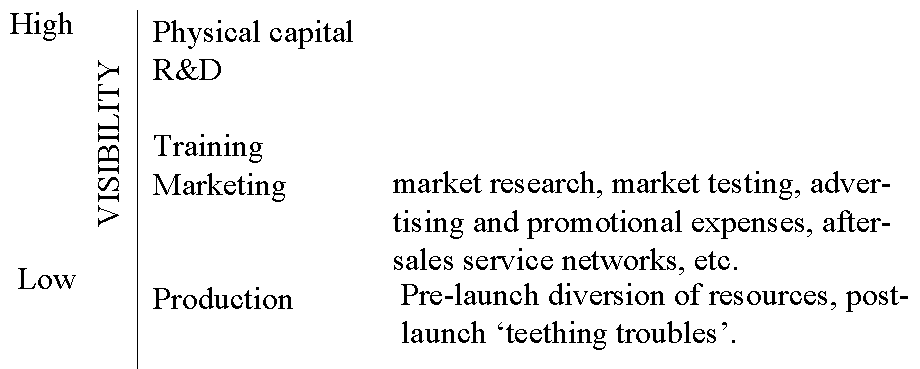
We can then distinguish between two types of projects: ‘R&D project’ and ‘standard project’. R&D project will feature characteristics of innovation, and can be formalized as being relatively long term and involving a reorientation of the enterprise’s resources, which is undertaken by the manager, but can hardly be visible by an outsider. The R&D project thus includes elements which exhibit low external visibility (see fig.1). On the other hand, the standard project is relatively short term and does not possess the innovation properties.
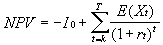
The profitability of any investment project is determined on the basis of its net present value:
,
where Io is initial investment needed, which is expected to bring subsequent cash flows in each period Xt, starting in period k and continuing until T, discount rate being rt. The problems which can arise include: where to get Io (the question of capability to invest)? How to evaluate Xt and when will it begin to accrue? Will additional I be needed after Io has already been invested?
Suppose the manager of an enterprise has to decide which of the two projects he will undertake, depending on the opportunities of raising financial resources for the new project. What options is he faced with?
Figure 1. Elements of innovation and their external visibility
First, he might invest from the retained profits, thus raising Io himself. Indeed, retentions are the dominant source of investment finance in all countries: they represented in 1970-85 91% in Great Britain,85.9% in USA, 70.9% in Germany and 57.9% in Japan (Mayer 1990, p.310, 315). However, the manager might not be able to raise a sufficient amount of internal funds or he might be interested to diversify the risk associated with the investment. In that case, he will have two options: either to issue equity or to borrow from a bank. In both cases the manager becomes the agent of shareholders or lenders. It is reasonable to assume that the manager will possess superior information about the project: some of the manager’s pay-off relevant information is not known to the lenders (hidden information). If the lender cannot efficiently carry out monitoring of the manager, he will undertake some kind of credit rationing: it is not a good solution to simply raise the interest rate, since it will drive borrowers with reliable but not extremely lucrative projects out of the market; and since in that case the principal’s risk in the direction of higher interest rate is too high, he will lower the rate and choose some mechanism of distinguishing reliable borrowers (adverse selection). Thus there will be an equilibrium with credit rationing (Stiglitz and Weiss 1981). The manager’s task in this case is to signal that he is a good manager and thus win rationed resources. He will do it by adopting such a project which the low-quality manager will not pick. Suppose the manager is to choose from the two-item menu: R&D project and standard project.
We can model the procedure as follows. The investment process goes over two periods. To reflect R&D project’s longevity, we will assume that R&D project pays a return only at the end of 2nd period: 2Qia, whereas standard project pays Qia at the end of 1st period and again Qia at the end of 2nd period, where a is known in advance, while Q reflects the manager’s ability (type) and becomes known only at the outset of 2nd period. The manager knows his type and approaches the lender with a view of financing a project. The cost of R&D project is assumed to be 2Io,while the standard project costs Io at the beginning of 1st period and again Io at the beginning of 2nd period. We can formally prove (see Goodacre and Tonks 1995; Webb 1993) that the good manager will identify himself by picking the standard project and thus showing his better performance already after the 1st period. In this way the separating equilibrium will exist in which there will be underinvestment into R&D project.
Similarly, we can observe ‘short-termism’ in the equity market, if the stock is dispersed among many shareholders. Suppose again that the R&D project takes two periods to implement, compared to one-period standard project; and the R&D project generates higher future cash flows (f) but requires some sacrifices of current income c. This trade off is shown on fig.2 (4). Manager may not be sure that he will stay with the firm after the 1st period and he will therefore choose c’ corresponding to the standard project, in this way showing his reliability. Of course, if shareholders can figure out the trick, they can urge the manager to undertake c, but due to the asymmetry of information they perceive higher current earnings as a signal of the company’s better performance, since, being dispersed, they cannot monitor the manager because monitoring possesses public good properties. The uncertainty about the true trade-off (solid line) is shown on fig.2 by the dashed lines
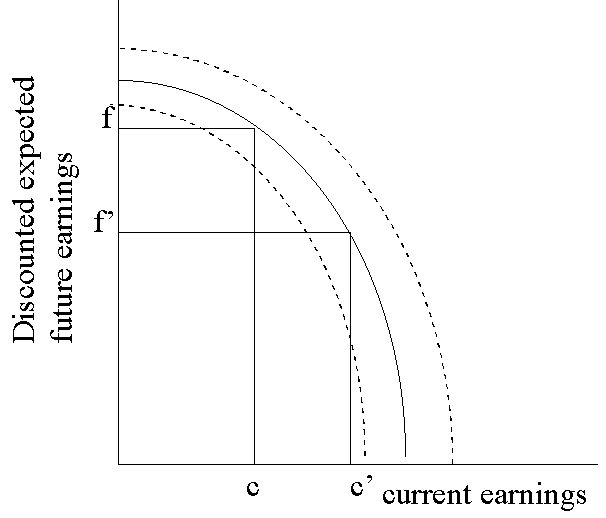
Figure 2.
Another related type of problem is that managers can behave opportunistically and undertake actions profitable to themselves but detrimental to the lenders (hidden action). This is usually the conflict between shareholders and the manager: if the manager holds less than 100% of equity, he may not be interested in undertaking too risky profit-enhancing activities, since he cannot capture the entire gain but bears all the cost (5). In this case the lender or shareholder can propose ex ante a highly contingent (high powered) contract dependent on observables (salary, bonuses, stock options, a threat of dismissal if the income is low) (6). But R&D observables are available only in the long run, and since managers seek promotions and are afraid of being sacked, they will invest in short term projects with high NPVs. As Shleifer and Vishny (1996) point out, high powered incentive contracts create enormous opportunities of self-dealing for managers, especially if they deal with poorly motivated boards of directors. They can, for example, negotiate for themselves salary contracts contingent on short-term observables. The moral hazard problem is exacerbated by the fact that most contracts are incomplete (7): all future contingencies cannot be contracted and hence it matters who will possess residual rights in the case of bad outcomes. Disperse shareholders or lenders unable to monitor will be likely to be more short-term oriented in an incomplete contracting world.
One more relevant problem is the conflict between shareholders and lenders. Suppose the manager wants to raise finance through debt. Equityholders will be interested in undertaking high risk projects using this debt (“go for broke”), since they can reap benefits if it is a success, while if it fails the banker will suffer the whole burden. The banker who rationally anticipates such behavior, will become more risk-averse, and investment projects may eventually be financed suboptimally.
So, we can conclude that financial systems based on dispersed shareholding or in which lending does not give significant control rights to the banker, is likely to generate a discrepancy between static and dynamic efficiency and lead to underinvestment into innovation projects.
How can the described problems be mitigated? One of the possible devices to prevent moral hazard is to give the manager a substantial equity stake. It will discipline the manager and motivate him towards value maximization. Shareholders will believe that the manager acts in their interests, and he, perceiving the trust, may switch from myopic short-termism towards R&D projects (‘convergence of interests’ hypothesis). Indeed, Morck, Shleifer and Vishny (1988) found the evidence of a positive relationship between the increasing managers’ stakes and Tobin’s q (showing market valuation of the firm) in the sample of firms they studied. However, beyond some level, high stakes will give the manager enough control to guarantee employment and attractive salary for himself (entrenchment hypothesis) [and Tobin’s q will consequently fall], and the critical boundary is not always straightforward.
Another solution is the creation of an effective system of legal protection of investors, which can protect them from opportunistic managers. Such a system is present in the USA, and it is especially efficient in venture capital sphere. However, such a system is not a universal phenomenon, and it may take a very long time to construct.
Managers may also abstain from opportunistic behavior in order to create good reputation for the firm (Diamond 1989). It is a popular argument, corresponding well to reality. However some economists, admitting that there is much truth to it, do not believe that it is powerful enough, due to backward recursion problem: if at some point in future the manager’s cost of raising outside funds are lower than the cost of paying what he promised to investors, he will rationally default on this payment. Investors, predicting this possibility, will not finance the firm (8).
An undoubtedly very powerful device to motivate the manager to be efficient or to replace inefficient management is the threat of takeover. In many cases takeovers lead to flexible restructuring of inefficient corporations and serve as a good motivating device for managers. In the 1980s, USA witnessed an unprecedented wave of hostile takeovers, which involved many well-known corporations. In 1986, at the height of activity, there were 3,336 announcements in the US of mergers and acquisitions. The dollar value of these transactions was $173bln. (up from $44 bln. at the start of the decade). By 1988 the number of transactions had fallen, but their total value reached $250bln. (Milgrom and Roberts 1992, pp.483-84). This provided a good occasion to estimate how takeovers influence R&D activities. Hitt et al. (1991) and a number of other studies reported in that article found an empirical evidence of lower innovative performance of American companies that were subject to acquisitions. How to explain that? First, R&D activities are positively related to long-term performance, and takeover strategies, which are more short-term oriented, may inhibit ‘the championing culture’ in corporations. Secondly, acquisitions are usually very costly undertakings (costs are reported in Shleifer and Vishny [1996]), and the raiders may have to sacrifice their R&D expenditures. This led some experts to argue that the firm may grow either through acquisitions or innovations. Next, managers in raider companies may acquire technologies which are new to them but not to the market, and this will reduce the aggregate innovative performance. Last but not least, as Shleifer and Vishny (1996, p.30) argue, only a minor share of the 1980s takeovers had a disciplinary character. In many cases they were a form of managers’ empire-building. Thus Schumpeter’s prediction that mergers would lead to a lower R&D intensity, due to economies of scale, and higher R&D outputs was not supported by the 1980s US evidence: both R&D intensity and outputs fell as a result of takeovers.
The solutions which we described so far develop primarily within the financial system largely relying on equity markets. Now we turn to another set of institutions mitigating information asymmetry in the investment process: existence of large investors. They include large shareholders
and large creditors, or some combination of both. This is the phenomenon of universal banking which has been around in world economies since the 19th century. The major pioneering contribution to the corporate governance literature dealing with the phenomenon is Diamond’s (1984) article on financial intermediation.
The first and most straightforward advantage of large shareholders and creditors is that they overcome the free-riding problem which prevent dispersed shareholders from monitoring the manager. They become insiders in the company by sitting on the boards of directors, and have powerful incentives to monitor the companies. Usually we can observe the case when a large lender is at the same time a large shareholder, and increases the banker’s interest in the company’s performance since, provided the project is a success, the lender will not only get the loan back, but also reap high interest on equity. Since a 50% shareholder can easily prove his vote in the case of dispute, large shareholding may be efficient if the system of shareholders’ rights protection is underdeveloped. The manager will not have to send noisy signals to the public and will be likely to develop long-term relationships with the banker; and their ‘interactive learning’ will lead to mutual trust and understanding, which is crucial for a contemporary economy’s success in innovative performance (Lundvall, 1992). A large creditor will be likely to have residual rights in the default case in the incomplete contract setting; and this will further reduce the moral hazard problem. In cases of trouble in the company, the banker will try to restructure the company without withdrawing from it (‘voice’ versus ‘exit’). Generally, this type of relationship can generate a stable environment in the economy and a high level of innovation. But this form of organization has its pit-falls too. First, the banker and the manager may ‘lock in’ a particular type of technological behavior and may be too inflexible to explore new opportunities (Dosi 1990). Next, in major countries where universal banking is practiced regulations require banks to hold a fraction of their assets in no-interest-bearing accounts, thus banks have to cover the cost by charging higher interest than individual investors. Then, bank loans are generally less liquid than publicly traded debt (Hoshi et al. 1990, p.122). Lastly, banks have their own agency problems, and as a result the banker-manager relationship may be far from a perfect synergy (Shleifer and Vishny 1996, p.37). Thus universal banking has its pros and cons. Some authors argue that as soon as the manager has developed a reputation in the market through his stable relations with the banker, the ties binding them may weaken.
So, we can see that industrial investments usually take place either in a ‘market-based’ system, where finance is provided primarily through equity markets, and ‘institution-based’ system, where large shareholders and creditors provide finance through long-term cooperation with enterprises. The former system is exemplified by Anglo-Saxon economies (USA, UK), and the latter system prevails in such countries as Germany, Japan, Korea, Sweden. Some other economies (France, Switzerland) are in between. In the rest of the chapter we shall briefly review the performance of financial systems in the two groups, with an emphasis on innovation intensity.
In Germany, the origins of the credit-bank system date back to the 1840s when a coherent industrial policy began to be undertaken in the country. German universal banking has demonstrated its viability, despite the fact that the US tried to demolish the system after the WWII, and became the cornerstone of the country’s postwar success. The system of universal banking means that the German banks have: (i) big equity stakes in industrial companies; (ii) representatives on the boards of these companies; (iii) equity stakes in one another. The shareholder power of universal banks is enlarged through exercising proxy votes (Depotstimmerecht). Three Grossbanken – Deutsche Bank, Dresdner Bank and Kommerz Bank – are known to have very ’intimate’ relationship with best German industrial firms. One of the brightest examples is the holding by Deutsche Bank of a 28% equity in Daimler-Benz AG (9). The advantages of German universal banking are as follows: (i) turning lenders into shareholders can help minimize conflicts between debt- and equity-holders; (ii) allowing banks’ representatives in the board of directors to get an insight into the strategy of the firm to which they lend can encourage them to take a long-term view of their allocation of credit; (iii) giving banks voting rights ensures better corporate governance by putting some constraint on a company’s managers. Thanks to these advantages, industrial companies get an easy and reliable access to a low-rate long-term financing. Indeed, after the WWII the German industry became increasingly interested in long-term forecasting of the key variables in the operation of industry. The industry has actively cooperated with the banks in developing such planning. For instance, Siemens’ management has been developing five-year forecasts at the beginning of each year in cooperation with Deutsche Bank. As a result, many empirical studies demonstrate higher profitability of corporations involved in universal banking (e.g. Cable 1985).
In Japan, zaibatsu – large industrial groups united by holding companies that exist with the sole purpose to hold interest in other firms – were the skeleton of the prewar economy. However, in 1947, General McArthur, driven by anti-trust considerations (and most importantly determined to prevail a revival of a strong industrial base in Japan) banned zaibatsu from existence. Nevertheless zaibatsu were revived later as keiretsu, this time the holding companies being officially banned but existing de facto. Keiretsu have been formed around six major Japanese banks and are kept toge-ther by ‘spiritual’ and contractual ties, rather than by a legally formed holding company. The strong spiritual core keeping keiretsu together is strengthened by regular meetings of Presidents’ Clubs. In general, Japanese (as well as German) corporations are characterized by high debt-equity ratios (see Table 2), managers’ risks of high debt and the costs of regular and heavy interests payments being alleviated by the high speed of technical change (Carrington & Edwards 1979, 191-93). If the banking system is used to give loans to the industry, a limited amount of savings can lead to a large amount of investments through the velocity effect of loans in creating credit: Consider a banker advancing a loan to the manager. As soon as the banker credits the company’s account with the loan, the sum total of money in bank accounts increases by the amount of the loan. This increases the banker’s ability to lend to another manager. This logic is not undermined by the pos- sibility that the first company will make a payment to some other party out of the loan, as long as the payment remains within the banking system. Thus loans create credit, which in turn crates more loans. Japan’s investment-saving equilibrium equation can therefore be written as:
Is + Id = S + D, where Is = savings backed investment; Id = debt-induced investment; S = savings; D = debt. Indeed, in Japan the long-term industrial investment credit supplied by the trading banks was in the late 1970s 10% of the GNP in excess of any savings made in the economy (Carrington & Edwards, p.192).
In South Korea, the creation of large firms - chaebols - in the 1960s was one of the major instruments of the government’s technology policy of promoting ‘strategic industries’. Although chaebols are not merged with banks, their interaction has been quite active, since the government owing commercial banks was able to significantly affect the formation of chaebols by allocating to them scarce foreign exchange and preferential financing (Kim 1993, pp.362-63). As a result, in 1980, 10 largest chaebols accounted for as much as 48.1% of GNP and carried out the bulk of R&D in Korea.
In the USA, stock markets played a minor role in the early stage of the development of modern capitalism. Several investment banks (such as the Morgan investment bank) played a substantial role. Bankers controlled railroad trusts, and many utility systems were controlled by bank-related holding companies. Large ‘interest groups’ such as DuPont, Mellon, and Rockefeller dominated the corporate scene (Tirole 1991, pp.237-38). But ever since after the 1929 stock market crash, the US has taken a clearly negative attitude towards integration of banking and industrial capital. The US Congress identified the securities operations of commercial banks as one of the main causes of the Depression (recently widely questioned), and passed the Glass-Steagall Act in 1933. The act prohibits commercial banks to invest in corporate equity and other securities, thus banning the existence of universal banking (10). Thus in the Anglo-Saxon econo-mies, investment capital can primarily be raised through new equity issues. Capital market may invest into the already existing shares which can lead to inflating paper values and creation of a large secondary market for shares and bonds. Financial speculations may divert resources to non-productive activities, while the banking system which is prohibited to hold stakes in equity will primarily finance consumers’ expenditures. Hence in the Anglo-Saxon world innovation activities are affected mostly through effective demand, while in the countries with an institution-based systems - through intensive banks’ investments into industry on the long-term basis (Carrington and Edwards, p.193).
Tables 1 and 2 give some empirical evidence showing relative innovative performance in institution-based and equity market-based economies. From Table 1 we can see that although total R&D expenditures as percentage of GNP are rather homogenous in the four countries, the composition of R&D reveals major differences. In the USA high R&D level is achieved mostly by virtue of high military expenses and a high share of government funds in the industrial R&D, whereas in Germany and Japan military R&D are much lower and the government expenses as
Table 1. R&D expenditures
in four OECD countries, 1991 (11).
|
|
|
|
|
|
| Total R&D expenditures/
GNP (%) |
|
|
|
|
| Non-defense R&D
expenditures/GNP (%) |
|
|
|
|
| Industry expenditures/
total R&D expenditures (%) |
|
|
|
|
| Industry funds/industry
R&D expenditures (%) |
|
|
|
|
| Government funds/
industry R&D expenditures (%) |
|
|
|
|
| Company (country) | R&D spending (mln. of pound sterling ) | Market value of equity to assets ratio (%) | Debt to equity ratio (%) |
| Hoechst (Germany) |
|
|
|
| Bayer (Germany) |
|
|
|
| BASF (Germany) |
|
|
|
| ICI (UK) |
|
|
|
| Glaxo (UK) |
|
|
|
well, while high levels of R&D expenditures are achieved due to the active industry’s spending. On the micro-level the above observations are further illustrated by Table 2. We can see that German companies with much higher levels of debt are also much more active in R&D than the British corporations. Indeed, many experts argued that difference in financial markets was instrumental in German companies’ (e.g. Philips and Siemens) better response to the Japanese challenge in comparison with American corporations. (A good example is the consumer electronics industry in which such corporations as RCA refused to make the necessary investments into their core technology of component manufacturing. They chose to import components from Japan to gain short-term profits at the cost of long-term competitiveness) (Prakke 1988).
This evidence seems to offer an unequivocal indication that universal banking is more efficient than equity-based systems. This argument can be supported by the increasing pressure in the US to relax the present restrictions on commercial banks in investment banking. On the other hand, Japan and Germany exhibit currently a reverse movement: towards disintermediation and securitization (Steinherr and Huveneers 1992). As we pointed out above, universal banking exerts certain significant costs. When companies associated with universal banks have developed their reputation and, due to long-term cooperation, a rigid integration between the bank and the firm is no longer necessary. For example, as Odagiri (1992, p.35-36) notes, Japanese banks intervene into firms’ affairs within the keiretsu only in extreme cases. Therefore we can conclude that relative advantages of the two systems of finance should be evaluated in evolutionary context.
Universal banking, coupled with a strong role of the state, is present in almost all economies in the initial phases of development or in times of major economic restructuring. This is consistent with Gerschenkron’s discussions of economic development. The essential need for powerful financial institutions is illustrated by the US attempts to destroy universal banking in the postwar Germany and Japan - the attempts which both failed. Then universal banking provides learning processes in the economy and leads to high level of innovative activities. At some point universal banking boundaries become too rigid for the economy and it begins to search for more flexible institutions. However, if this evolutionary pattern of development is artificially prevented, as it has been the case in the USA (Shleifer and Vishny 1996, pp.51-52), inadequacies which accumulate in the economy may eventually force it to introduce some elements of universal banking.
This leads us to the next part of the paper where we shall look at the role that universal banking is to play in Russia and other post-socialist economies.
Before the major economic reform were started in Russia, its the core of its economic structure was composed of large enterprises grouped around branch ministries, usually each ministry with its own bank. Distorted price mechanism could not serve as a reliable informational device, while central plans could not account for everything in the increasingly complex economy; and therefore these mechanisms were augmented with systems of informal networking developed among enterprises’ managers. Another important informational and coordination device was the Party, since it provided communication between economic agents on different levels and was able to exert discipline on them.
The Soviet system built up a massive R&D complex which employed in 1981 more than 1,200 thousand people (versus 890 thousand in the USA). The strongest part of Soviet science was concentrated in the Academy of Sciences, which dealt primarily with basic research, but carried out some important applied research as well. However, the largest number of Soviet scientists were employed in the applied research institutes belonging to branch ministries. The paradox of the Soviet R&D system was that it failed to generate dynamic innovation process in the economy (due to inter alia barriers and lack of communication between major elements of R&D structure, disincentives to innovate in enterprises, inflexible planning and diversion of resources to the military sphere ), and, on the other hand, has become a leader in many cutting edge technologies (see box 1).
One of the major goals of economic reform is undoubtedly to make use of the Russian scientific and technological potential, after the systemic obstacles to innovation have been eliminated.
What major economic tendencies has Russia witnessed in the past few years?
1. The massive privatization program. By January 1994, 90,000 enterprises were privatized. The intricacies of Russian privatization led to the situation when majority shares in more than 75% of all privatized enterprises de facto belong to the managers ( Lieberman et al. 1995; McFaul 1995). As we saw in the previous chapter high equity stakes in the manager’s hands are likely to result in his ‘entrenchment’ - highly opportunistic behavior, which is eased by the fact that the ministry system has collapsed and there is no pressure from above. In particular Russian circumstances, these managers’ major objectives include the preservation of maximum employment and exploitation of old capacities:
“the management is principally
dedicated to preserving traditional product lines, which
may have no markets, as
their core activity. In many cases, enterprise managers have
consolidated their control
by buying shares in the aftermarket and are simply killing time
hoping for a miracle (and
credits)” (Shleifer and Boycko 1994, p.75).
2. Tight monetary policy led, on the one hand, to the reduction of effective demand and, on the other hand, to a drastic fall in the enterprises’ capabilities to invest.
3. Old communication mechanisms such as the Party, enterprises’ networks, ministries are gone 4. In general, the current stage of Russian reform can be described as a noisy phase (Tirole 1991), characterized by a high level of uncertainty. This uncertainty is of five types:
The indirect negative consequences
of stabilization programs [include a combination] of a
quick move to convertibility
with widespread price liberalization when neither financial
markets nor trade system
infrastructures exist. Such a move could become a kind of
massive ‘noise’ creation,
distorting all explicit signals upon which the stabilization program
relies to achieve a more
efficient resource allocation. Relative prices and other profit
factors would then become
highly unstable, with wide variations across the national
territory.
5. In these circumstances, the major profitable economic activities include financial speculations, trade, weapons exports, and raw materials exports. As long as the ‘export drive’ is concerned, Russia has succeeded in escalating weapons and oil/gas exports to the international markets. For example, in 1995 Russian arms exports increased by 47% and reached $2.5bln (13). However, we can argue that such export orientation, although currently inevitable, does not lead to long-term sustainable development: Firstly, arms exports are accompanied with reductions of R&D in the military sector, and therefore Russian exports will soon lose their technological attractiveness and the markets will be lost. Secondly, raw materials exporters’ strategies are highly myopic: they maximize the total revenue without attention to the price dynamics and long-term trends in the world markets. If the Russian economy continues to rely on export-oriented traditional industries, this may eventually result in a major crisis, should the world market change its behavior (14).
6. A strong banking sector has formed in Russia. Several Russian banks are among the first 1000 most powerful banks in the world. Some financial institutions evolved from the former ministry banks; others earned their capital in financial and trade speculations; still others were established by large enterprises (Freinkman 1995). Many of these banks are turning from speculative activities towards attempts to cooperate with the industry. Indeed, several large banks have associated themselves with particular industries. However, the banks’ incentives to make industrial investments are weak: for instance, The Central Bank, in order to finance the state debt, keeps interest on state securities and the discount rate excessively high; profitability of industrial investments cannot compete with the state securities, and consequently the share of bank credits in the Russian enterprises balances has dropped from 50-60% in the late 1980s to 7-10% in 1996 (15).
7. As it was already mentioned in Introduction, innovative activities of enterprises have drastically dropped, and Russian technological opportunities remain largely unexplored. The problem is exacerbated by the fact that Russian technology exporters face high trade barriers in OECD markets (16).
With this background in mind, we can now look at how financial-industrial groups (FIGs) have been developing in Russia. According to the Russian law, FIG is a group voluntarily formed by the legal entities who wish to integrate their technological, economic, and other resources to undertake investment and/or other projects. FIGs must include manufacturing and service firms, as well as banks or other credit institutions, and may include investment institutions, non-state pension and other funds, insurance organizations, and fully state- or municipally-owned enterprises on the conditions specified by their owners (Kalin 1996). The promotion of FIGs has become the core of the government’s industrial policy, which is reflected in the Presidential Decree of 1993 and the Law on FIGs adopted in 1995 (Balzer 1996, Kalin 1996, Sapir 1996) The government can either form FIGs itself or stimulate their activities through incentive mechanisms which include: (i) ability of the group to convert the debt of its members into the equity of the parent company; (ii) flexibility in financial management (FIGs are given the right to determine their own type of equipment depreciation and to reinvest the cash flow sheltered by accumulated depreciation into activities of the FIGs); (iii) government guarantees for domestic and foreign investors; (iv) tax incentives; (v) direct financial support of the group by the state; (vi) transfer of the state’s residual ownership stake in privatized companies to a FIG.
In 1996, 28 FIGs officially existed in Russia. They usually include from 8 to 30 members; the share of state property in FIGs does not exceed 25%; there are vertically and horizontally integrated FIGs. Overall, Russian FIGs unite more than 450 enterprises; of the 100 largest enterprises 11 are involved in FIGs; of the 30 largest Russian banks, seven have either joined or formed FIGs. In 1995 the FIGs produced 10% of the country’s GDP (Kalin, p.8).
What are the forms of property relations within Russian FIGs? There are several of them. (i) A bank can purchase the industrial firm’s equity. This is very common form of FIG formation, thanks to the shares-for-loans deals practiced by the Russian government, when it exchanged large equity stakes of state enterprises for bank loans; another possibility is the accumulation by a bank or an investment fund of large equity stakes through the collection of large numbers of vouchers from the public. (ii) The purchase or the establishment by an industrial company of a financial institution. (iii) Establishment of a legal entity by an enterprise and a bank.
Judging by the fact that the Russian FIGs have registered an aggregate 3% production growth compared to a 3% fall in GDP, FIGs seem to be a positive development. Indeed, Russian press abound with success stories about domestic FIGs.
The theoretical arguments and historical evidence that we presented in the previous chapter make us conclude that in the current circumstances in Russia, the emergence of FIGs is a logical and positive tendency. Firstly, in almost all countries going through a period of restructuring we can observe the formation of universal banking which is a natural antidote during the ‘noisy’ phase; it mitigates high level of uncertainty and asymmetric information and leads to stable long-term investment process and intensive innovation activities. Secondly, Russian FIGs is a natural response of economic agents to the destruction of old communication channels. Thirdly, the presence of large shareholders or lenders will militate against the ‘entrenchment’ of Russian enterprise managers by disciplining or replacing them (cf. Shleifer & Vishny 1996, p.55). Thirdly, universal banking is quite reasonable in cases when good legal protection mechanisms for investors and developed equity markets are underdeveloped (Shleifer & Vishny 1996; Stiglitz 1995; Tirole 1991). Lastly, FIGs may be able to compete more aggressively on foreign markets and the government will be able to pursue a more focused industrial and investment policy.
Nevertheless, other considerations make us less optimistic. First, look at the distribution of Russian FIGs across different sectors (Figure 3). We can conclude from it that FIGs operate primarily in the traditional industries which are not innovation-intensive. As I argued above, the current pattern of Russian economic development, as long as it relies on traditional industries may not be sustainable in the long run. Furthermore, we saw that universal banking is a good in
Figure 1. Russian Financial-Industrial Groups: Employment in Different Sectors of Activities, % of total, 1995 [Source: Kalin (1996), p.159.].
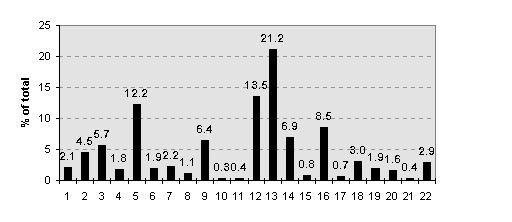
| 1. New technologies in oil and gas extraction | 12. Copper and nickel production |
| 2. Radio-electronics | 13. Steelworks |
| 3. Electrotechnical equipment | 14. Production of ecologically clean chemicals |
| 4. Ship-building | 15. Wood processing |
| 5. Auto industry | 16. Oil processing and oil chemistry |
| 6. Heavy and transport machinery | 17. Technological equipment for food production |
| 7. Telecommunications | 18. Construction |
| 8. Medical equipment, pharmaceuticals | 19. Extracting industry |
| 9. Aluminum production | 20. Rubber |
| 10. Metals | 21. Jewelry |
| 11. Alloy production | 22. Consumer goods |
creating stability in the economy while the system based on equity markets and acquisitions exhibits higher flexibility. Universal banking may create powerful lock-in effects (Christensen 1992; Dosi 1990), and in the case of a major external shock the breakdown of the system may be reinforced by the existence of universal banking. In the Russian context, instead of restructuring the economy, FIGs may lead to the conservation of the traditional economic structure, which had led to the inefficiency of economic system in the Soviet period (17). This trend can be strong provided the powerful lobbyists representing traditional industries in the establishment remains strong. The evidence of its strength can be deduced from the composition of state investments in 1993: more than 70% of investment went to the fuel-energy and agro- industrial complex; not more than 10% went to machinebuilding, and less than 2% to light industry [Balzer (1996), p.56]. As one of the authors in Kalin’s (1996) collection noted, “The source of a particular concern is the continuing recession in those industries which are regarded as priorities in the developed countries: electronics, instrument-making, machine-tool construction, aerospace and nuclear industries” (p.129). There are some signs of consensus in the Russian establishment that the economic development should be based on natural resources and arms exports, and everything else should be imported from abroad, - the position finds considerable support the Western circles.
Another important danger is that FIGs may form with purely speculative purposes. Firstly, rents create rent-seekers, and the incentives for the FIGs provided by the government can motivate managers and bankers to engage in a ‘fictitious marriage’ with the purpose, for instance, for the bank to get a lower reserve level and for the manager to get elimination of his debts. This is quite possible because the current legislation gives almost no incentives to the banks to carry out production investments within FIGs. Again we can find some warning signs in Kalin’s collection:
“An excessively growing influence
of the banks in FIG’s relative to the industrial structures,
without a manifest orientation
towards investments, can lead not to an improvement in
investment activities but
rather to the transfer of revenues from production to more
profitable commercial and
trade operations.” (p.135).
This trend towards speculations within universal banking is not a novelty. The similar processes could be observed in the post-socialist Chilean economies between 1973 and 1983 (Diaz-Alejandro 1985; Yotopoulos 1989). Following the 1973 military coup, in accordance with the Chicago school prescriptions, Chile began a policy of liberalization: financial markets were progressively liberalized, the role of the government minimized and all quantitative restrictions on financial flows eliminated. Simultaneously, a thorough privatization was carried out, and of the 500 government-controlled enterprises in 1973, only 19 remained in public ownership in 1979. Privatization involved the banking sector as well: in 1975, 18 of 19 Chilean banks were auction-ed off. Throughout the 1970s the formation of large conglomerates (grupos) could be observed in the Chilean economy. At the same time, due to several factors financial capital became also highly concentrated. So, the Chilean privatization in fact led to the concentration of economic power in 20 industrial (grupos) and financial (financieras) groups. Since production investments were not profitable, the grupos and financieras focused on indulging in accumulation of financial assets through (opened) international credit markets. This activity was not inhibited by any limitations due to the government’s effective withdrawal from any regulations in the credit market. Oftentimes grupos and financieras merged in order to ease their capital gains, and by early 1980s the conglomerated had an extremely high non-operating/operating earnings ratios. This process collapsed in 1983 when 8 private banks then two biggest and several smaller grupos went bankrupt, because of the explosive amount of liabilities which they had held. They led to a wave of re-nationalization in Chile - the phenomenon that was called “the Chicago road to socialism.”
To sum up, although universal banking creates opportunities for restructuring and innovation activities in the economy, especially at the ‘noise’ stage of economic development, it is not an unmitigated blessing. First, transitional economies exhibit a high degree of path-dependence in the behavior of economic agents (Hausner et al. 1995). Borrowed institutions are usually culturally filtered and may well be adapted to the behavioral patterns existing in the economy (Dalum et al. 1993). Therefore not only should formal economic mechanisms be changed but the agents’ way of thinking, too. This requires a long evolutionary learning process and an active involvement by the state. Otherwise the economic development may continue within outdated and inefficient old technological trajectories.
Furthermore, as the Chilean example shows, if unregulated, the concentration and merge of industrial and financial capital may lead to financial speculation surge and rent-seeking, instead of industrial innovations. It is not surprising that Korea, while promoting chaebols, kept commercial banks under the government control, and Japan’s MITI was also very active in regulating capital markets. With that in mind, some economists argued in favor of public development banks in industrializing economies (Bardhan 1995, p.11).
We can assert therefore that the research on universal banking in the post-socialist countries should welcome the emergence of the phenomenon on the basis of the contract theory arguments, presented in this paper, but should not confine the attention to contracting only. This research must be more sensitive to the processes of institutional change and path-dependence in post-socialist economies. One of the major mistakes which is likely to be widespread is the position that FIGs should be welcomed but the government should practice a hands-off approach towards them. As I said in Introduction, corporate finance literature largely acquiesces in the existence of universal banking. However, equally popular among mainstream economists is the government-failure argument based on the public choice theory. Usually the state is depicted as a rent-maximizer. For instance, in some privatization theories (Boycko, Shleifer and Vishny 1996; Shleifer and Vishny 1994), the ‘politician’ is modeled as a populist interested in maximum employment with the view to reelection, and the conclusion is made that the ‘politician’ should be kept at arms length from the ‘manager’. As Bardhan (1990) points out, this kind of political economy grew partly in reaction to the widely observed enormous waste of resources and rent-seeking activities spawned by the regulatory state. Although this literature should be credited for its skepticism, it is also obvious that it tends to neglect a highly successful active government role in many developing countries. The crucial condition for this effectiveness is the insulation, or independence, of the ruling technocratic elites from interest groups in the society. Depending on the degree of this insulation, we can distinguish between ‘strong’ (East Asia) and ‘soft’ (Africa, South Asia) states (Bardhan 1995). The strong state can act as a Stackelberg leader initiating a collective action in developing strategic industries and changing economic agents’ patterns of behavior. The weak state would instead be a Stackelberg follower, unable to precommit and serving the interests of powerful interest groups. The efficient government policy is not necessarily characterized by a high degree of intervention, but by its quality and unaffectedness.
Therefore universal banking may be instrumental in realizing Russia’s high technological potential by stimulating innovation activities, only if it is accompanied by efficient government policies in investment and finance. Otherwise, Russian economy, instead of going Chinese or Korean way, may go Chilean way.
The research on universal banking in post-socialist economies is now in the infancy stage. In the present paper I have tried to elaborate a theoretical and historical background for analyzing the phenomenon of Russian FIGs. Although we have a rich literature on corporate governance, the studies of particular countries convince the reader that the arguments valid for one type of institutional setting may turn out to be misleading in another setting. As for Russia, Shleifer and Vishny (1996) point out that systematic literature on this country’s corporate governance is almost non-existent. I think that good theoretical arguments and generalizations are characterized by good intuitions, and the latter depends on the intimate knowledge of the phenomenon under study. Therefore further research should be directed at field studies and data collection on the processes peculiar to Russian universal banking. The main questions that have to be posed include: how the particular Russian mechanisms of universal banking influence the banker’s and the manager’s incentives? What kind of regulations should government promote? Will FIGs involve former military enterprises? How to direct universal banking from purely speculative activities to productive investments? Which industries should become priorities and how R&D process can best be influenced in each particular industry?
Much attention should be paid to further country studies: Why the same phenomenon of universal banking led to so different results in Korea and Chile.
I think that the major tentative result of my studies so far is that the theoretical tools which the corporate governance literature gives us and the rich historical experience enable us to effectively approach the phenomenon of Russian FIGs. Universal banking is not unequivocally good and may produce quite divergent results in different setting. Therefore we should study universal banking in Russia being cautious and skeptical towards the existing ‘stylized facts’ and theoretical models.
Balzer, H. (1996) Dismantling Russia’s Technotopia: Six Ministries In Search of an Industrial Policy, in Sedaitis
Bardhan, P. (1990) Symposium on the State and Economic Development, Journal of Economic Perspectives, vol.4, no.3.
Bardhan, P. (1995) The Nature of Institutional Impediments to Economic Development, U of California at Berkeley, working paper.
Bolotin, V. (1995) [Financial-Industrial Groups: Opportunities, Reality, and Law-Making], Finansy, no.7.
Boycko, M., A. Shleifer and R. Vishny (1996) A Theory of Privatization, Economic Journal, March
Cable, J. (1985) Capital Market Information and Industrial Performance: the Role of West German Banks, Economic Journal, March.
Carrington, J. and G. Edwards (1979) Financing Industrial Investment, Praeger Publishers, N.Y.
Christensen, J. (1992) The Role of Finance in National Systems of Innovation, in Lundvall.
Cohen, W. and Levin, R. (1989) Empirical Studies of Innovation and Market Structure, in Schmalensee, R. and R.D. Willig, ch.18.
Cumings, B. (1994) Central Europe’s Model Bank, Economist, August 27.
Dalum, B. et al. (1992) Public Policy in the Learning Society, in Lundvall.
Diamond, D. (1984) Financial Intermediation and Delegated Monitoring, Review of Economic Studies, 51.
Diamond, D. (1989) Reputation Acquisition in Debt Markets, Journal of Political Economy, 97.
Diaz-Alejandro, C. (1985) Good-Bye Financial Repression, Hello Financial Crash, Journal of Development Economics, 19.
Dosi, G. (1990) Finance, Innovation and Industrial Change, Journal of Economic Behavior and Organization, 13.
Freeman, C. (1994) The Economics of Technical Change, Cambridge Journal of Economics, 18.
Freinkman, L. (1995) Finance Capital and the Formation of the New Industrial Structure in Russia, Problems of Economic Transition, August.
Goldmann, M. (1983) USSR in Crisis: The Failure of an Economic System, WWNorton, N.Y.
Goodacre, A. and I. Tonks (1995) Finance and Technological Change, in Stoneman, P., ed. Handbook of the Economics of Innovation and Technological Change, Blackwell.
Harris M. and A. Raviv (1991) The Theory of Capital Structure, Journal of Finance, vol. XLVI, no. 1.
Hart, O. and B. Holmstr³m (1987) The Theory of Contracts, in T. Bewley, ed. Advances in Economic Theory- 5th World Congress, Cambridge U Press, GB.
Hausner, J., Jessop, B., Nielsen, K., eds. (1995) Strategic Choice and Path-Dependency in Post-Socialism, Edward Elgar, Aldershot.
Hitt, M. et al. (1991) Effects of Acquisitions on R&D Inputs and Outputs, Academy of Management Journal, vol.34, no.3.
Holmstr³m, B. and Tirole, J. (1989) The Theory of the Firm, in Schmalensee, R. and R.D. Willig, eds, ch. 2.
Hoshi, T. et al. (1990) Bank Monitoring and Investment: Evidence from the Changing Structure of Japanese Corporate Banking Relationships, in Hubbard.
Hubbard, G., ed. (1990) Asymmetric Information, Corporate Finance, and Investment, U of Chicago Press.
Jensen, M. and W. Meckling (1976) Theory of the Firm: Managerial Behavior, Agency Costs and Ownership Structure, Journal of Financial Economics, vol.3, no.4.
Joskow, P., R. Schmalensee, and N. Tsukanova (1994) Competition Policy in Russia during and after Privatization, Brookings Papers on Economic Activity.
Kalin, A., ed. (1996) [Financial-Industrial Groups in Russia: Current Situation, Perspectives, Normative-Methodological Basis], Ekonomika i Zhiz¸, Moscow.
Kassel, S. (1989) Soviet Advanced Technologies in the Era of Restructuring, RAND.
Kim, L.(1993) National System of Industrial Innovation: Dynamics of Capability Building in Korea, in Nelson.
Lieberman, I. et al. (1995) Mass Privatization in Central and Eastern Europe and the Former Soviet Union. A Comparative Analysis, World Bank, Washington D.C.
Lundvall, B. Õ., ed. (1992) National Systems of Innovation, Pinter, London.
Mayer, C. (1990) Financial Systems, Corporate Finance, and Economic Development, in Hubbard.
McFaul, M. (1995) Agency Problems in the Privatization of Large Enterprises in Russia, in M. McFaul and T. Perlmutter, eds. Privatization, Conversion, and Enterprise Reform in Russia, Westview Press, Boulder.
Milgrom, P. and J. Roberts (1992) Economics, Organization and Management, Prentice Hall.
Morck, R., A. Shleifer and R. Vishny (1988) Management Ownership and Market Valuation, Journal of Financial Economics, 20.
Nelson, R., ed. (1993) National Innovation Systems, Oxford U Press, N.Y.
Odagiri, H. (1992) Growth through Competition, Competition through Growth. Strategic Management and the Economy in Japan, Clarendon Press, Oxford.
Odagiri, H. and A. Goto (1993) The Japanese System of Innovation: Past, Present, and Future, in Nelson.
Popova, T. (1996) [Financial-Industrial Groups in Russia: Present and Future], Moskovskaya Pravda, Sept.27
Prakke , F. (1988) The Financing of Technical Innovation, in Heertje, A., ed. Innovation, Technology, and Finance, Basil Blackwell.
Sapir, J. (1996) Defense Conversion and Restructuring in the Russian High-Technology Sector: Is There an Alternative to Uncontrolled Exports? in Sedaitis.
Saunders, A. and I. Walter (1994) Universal Banking in the United States, Oxford U Press, N.Y.
Schmalensee, R. and R.D. Willig, eds (1989) Handbook of Industrial Organization, vols 1,2. Elsevier.
Sedaitis, Judith, ed. (1996) Commercializing High Technology: East and West, Center for International Security and Arms Control, Stanford.
Shleifer, A. and M. Boycko (1994) Next Steps in Privatization: Six Major Challenges, in I. Lieberman and J. Nellis, eds. Russia: Creating Private Enterprises and Efficient Markets, World Bank.
Shleifer A. and R. Vishny (1994) Politicians and Firms, Quarterly Journal of Economics, November.
Shleifer A. and R. Vishny (1996) A Survey of Corporate Governance, NBER working paper no. 5554.
Smitenko, B. and L. Karaeva (1994) The Formation of Financial-Industrial Groups in Russia, Studies on Russian Economic Development, vol.5, no.4.
Starodubrovskaya, I. (1995) Financial Industrial Groups: Illusions and Reality, Communist Economies and Economic Transformation, vol. 7, no. 1.
Steinherr, A. and C. Huveneers (1992) Institutional Competition and Innovation: Universal Banking in the Single European Market, in A. Mullineux, ed. European Banking, Blackwell, Oxford.
Stiglitz, J. (1995) Whither Socialism? MIT Press, Cambridge, MA.
Stiglitz, J. and A. Weiss (1981) Credit rationing in Markets with Imperfect Information, American Economic Review, vol.71.
Tirole, J. (1991) Privatization in Eastern Europe: Incentives and the Economics of Transition, in O. Blanchard and S. Fischer, eds., NBER Macroeconomics Annual 1991.
Tylecote, A. (1994) Financial Systems and Innovation, in M. Dodgson and R. Rothwell, eds. The Handbook of Industrial Innovation, Edward Elgar.
Webb, D.C. (1993) The Trade-off between Cash Flow and Net Present Value, Scandinavian Journal of Economics, 95 (1).
Webster, L. (1994) Newly Privatized Russian Enterprises, World Bank Technical Paper no. 241.
Yotopoulos, P. (1989) The (Rip)Tide of Privatization: Lessons from Chile, World Development, vol. 17, no. 5.
Zeckhauser, R. and J. Pound (1990) Are Large Shareholders Effective Monitors? An Investigation of Share Ownership and Corporate Performance, in Hubbard.
(1) Finansovie Izvestiya, June 7, 1996 and Poisk,
no.5, 1996. return
(2) See essays in Sedaitis, ed. (1996). return
(3) Cohen and Levin (1989), pp.1074-75 and Freeman
(1994), p.483. return
(4) Zeckhauer and Pound (1990) return
(5) See Goodacre and Tonks (1995), pp.308-11; Harris
and Raviv (1991), pp.300-301 and Jensen and Meckling (1976). return
(6) See Jensen and Meckling (1976), Shleifer and Vishny
(1996), pp. 12-14. return
(7) The best discussions of incomplete contracting
are presented in Hart and Holmstrom (1987) and Holmstrom and Tirole (1989)
return
(8) Shleifer and Vishny (1996), pp.19-20. return
(9) Saunders & Walter (1994), pp. 86-104. It was
estimated in 1981 that the Big Three banks controlled about 70% of all
shareholders’ proxy votes cast at company meetings. return
(10) In Britain the situation is similar: see Steinherr
and Huveneers (1992). return
(11) Source: Odagiri & Goto (1993), p.104. return
(12) Source: Goodacre & Tonks (1995), p.303. return
(13) The Financial Times, February 20, 1996.
return
(14) Indeed, a similar export strategies was one of
the reasons of the USSR’s collapse: see Goldmann (1983). return
(15) Finansovie Izvestiya, August 22, 1996.
return
(16) Kaminski and Yeats (1995) and Finansovie Izvestiya,
May 30, 1996. return
(17) This is the argument defended by the former Russian
reformist premier-minister Ye. Gaidar (see Balzer 1996, pp.56-57).
return

