



Comments?


- From the Editor-in-chief
- Bacteria?? Viruses?? Ouuuuuch ....
- Kaplan: Maximizing Your Candidacy
- A Hearty Welcome
- Why you should look twice at Occupational Therapy
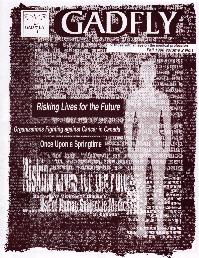
- Risking Lives for the Future -- Use of Human Subjects in Medical Research
- Organizations Fighting Against Cancer in Canada
- The Codes Behind the White Plague
- Devilish Tricks with Tiny Chips
- The Princeton Review's Analysis of the Aug 15 `98 MCAT
- Interesting Quotes
- Once Upon a Springtime ...
From the Editor-in-chief
Clement Zai
Greetings to new and returning UofT students. Summer never seems long enough. Nonetheless, The Gadfly Publication is going into its second year of production, and since it is now a bymonthly publication, we've added some varieties to its ingredients. Each issue begins with information about an undergraduate medical science Department, its program and student union activities. The Pre-Med Society has agreed to continue its association with the Gadfly this year. They will be providing information you need to know about the medical school application procedures as well as upcoming Pre-Med Society events. For those students who have not yet decided on their future careers, you may find the description of Paramedical Professions in each issue quite tempting. If you are interested in medical research, you might like to take a look at the introduction of a Medical Research Institution in Canada. This year we will include Interesting Quotes from legends like Albert Einstein, Sir William Olsen, etc. They might be of use at some points, not just during medical practice, but in life. Furthermore, there will be a Science section with the News in medicine and Breakthroughs in medical technology. In each issue, someone will be sharing with us a Personal Experience with an illness. Finally, you can Test Your Medical Knowledge with some questions (this could be a review for some of you). We hope that this new recipe will be to your liking. Enjoy.[To Top]
Bacteria?? Viruses?? Ouuuuuch ....
Alan Fung
- A small bacterium weighs as little as 10-12 g. A blue whale weighs about 10 g. Yet, a bacterium can kill a whale.
- Microbes inhabited planet Earth as mush as 3 465 million years ago, aeons before the ermergence of Homo sapiens.
- I used to look down upon these tiny creatures, “they do all harm and
no good.” Stupid me; I had not given a careful enough thought on them before
I made that unfair judgement.
“Industries of beer and cheese would be rendered impossible if there were no microbes in carrying out the fermentation,” I was reminded, “moreover, microbes are reponsible for the breakdown of dead animal and plant bodies into simple elements or compounds and the recycle of them – as in carbon, nitrogen and phosphorus cycles. Microbes are actually the basis of all life forms.” I listened carefully and relfected on these thoughts as Dr. Kushner revealed to me the importance of microbes in our life. He was certainly right. Where would the world’s oil supplies come from if there were no microbes to decompose the dead bodies?
Trained as a chemist at Harcard, Dr. Kushner is now the Professor Emeritus of the Departments of Medical Genetics & Microbiology and Botany at the University of Toronto. Dr. Kushner launched his quest in microbiology when he was doing his PhD at McGill. With over 160 publications, he is certainly an expert in the field, especially in the microbial physiology in extreme environments.
Kaplan: Maximizing Your Candidacy
(Part 1 of 4)
All of the sixteen Canadian medical schools are looking for applicants who have demonstrated intelligence, maturity, integrity, and a dedication to the ideal of service to society. However, how they each determine that you have these qualities and characteristics will vary tremendously.[To Top]Many students believe that in order to be a competitive medical school applicant, they must major in the biological sciences. In fact, the majority of admissions committees give little if any consideration to an applicant's undergraduate major. Rather admissions committees are looking for well-rounded, broadly educated applicants who have demonstrated a high level of scholastic achievement, intellectual curiosity, and a passion (as well as aptitude) for the sciences. Regardless of your major, you will still be responsible for completing the premed requirements of every medical school to which you apply.
Although many Canadian medical schools require biology, physics, inorganic and organic chemistry, humanities and English, there are variations. The best source for specific information on prerequisites is the MSAR (Medical School Admissions Requirements), which lists the requirement of all Canadian and U.S. allopathic medical schools.
Most admission committees will begin with a review of the candidate's academic history in order to determine that he or she has the foundation upon which to successfully negotiate the medical school curriculum, pass the licensing exams, and ultimately become a successful physician. It is at this early stage that your undergraduate academic performance and MCAT scores will be evaluated.
Because it is an objective way to compare applicants, eleven of the sixteen Canadian medical schools require the Medical College Admissions Test (MCAT). Though it's hard to believe that a single test could indicate how good a medical student you'll be, the evidence seems to indicate that the MCAT does predict how good a medical student you'll be. A November 1996 article in the journal Academic Medicine concluded that MCAT scores are an excellent indicator of success in medical school and on the medical boards.
In addition to selecting for intellectual qualities, the application process is designed to select applicants who have demonstrated maturity, integrity, and a dedication to the ideal of service to society. One way assessing your nonacademic qualities is to look at how you have lived your life, and one way of doing this is to assess the nature and depth your extracurricular activities. Another way is through letters of recommendation. When drafting your letters, it is imperative that your recommendation writers keep in mind the interpersonal qualities sought by admissions committees and assess your qualities as an applicant in that context. Finally, most medical schools will conduct a personal interview prior to acceptance.
This is a brief overview of a very complex subject. For a better understanding of the medical school admissions process, you will find Kaplan's lecture series on the medical school admissions process to be invaluable. A second resource that applicants have found extremely informative is Kaplan's book Medical School Admissions Adviser. Here, myself and the current or former deans of admissions give you an inside look at the admissions process.
Finally, to maximize your candidacy, you should try to meet with a faculty advisor at your school or admission's officer at the med school's you are interested in. He or she should be your best friend. It's never too early to make an appointment to meet with one of these people. After all, the earlier in your academic career you meet with him or her, the sooner you'll be off on the right path!
Maria Lofftus, is Director of Academic Services for the Health Sciences Division of Kaplan Educational Centers and is the former Assistant Dean of Admissions at the University of California San Diego, School of Medicine. A nationally recognized expert and lecturer on med school admissions, Ms. Lofftus is the past Chair of the Committee on Admissions for the Association of American Medical Colleges (AAMC). Her lectures on med school admissions are an integral part of Kaplan's MCAT preparation course.
Call 1-800-KAP-TEST for more MCAT and Med School Information.(In the next issue, Maria will discuss "Choosing the Right Medical School")
180 Bloor St. West, Upper Concourse Toronto, Ontario M5S 2V6 (416) 967-4733 Fax (416) 967-0771
With over 150 locations throughout the United States and Canada
Pre-Med Society News: A Hearty Welcome
By Sowmya Kanikkannan
Once again, U of T holds out its arms to embrace its students for yet another year in hopes of educating them for a better tomorrow. Designating ourselves as the new and improved Pre-Med Society to serve the ever growing pre-med population, we extend a hearty welcome to our new and returning members. Welcome![To Top]The primary mandate of the Pre-Med Society is to give undergraduates and graduates opportunities to learn about various aspects of medical schools (admission process, MCAT, etc.). In addition, we act as a medium for exchanging useful information about medical school and undergraduate programs in general. We provide a forum for students to meet others who share similar goals and assist other clubs in fund-raising events and social events. Finally, we provide members with a chance to develop leadership skills.
Information about the Pre-Med Society including updates, all Pre-Med events, summaries of previous meetings, the latest scientific discoveries, job/volunteer opportunities and several other articles will be published in Gadfly. We encourage all members to pick up copies from locations around their classes and official Pre-Med meetings.
Don't forget to keep checking our web site (http://www.utoronto.ca/premed/index/html) which will be continually updated with additional information throughout the year. Members will be notified of meetings and events through e-mail and phone. Due to the immense size of the Pre-Med population, we urge all members to check their e-mail frequently!
Our plans for this year include ensuring that our members are taking the correct steps to prepare themselves for medical schools. We will have several guest speakers from the Faculty of Medicine and Medical Students Association. Owing to the enormous size of our membership, we are aiming to increase the number of meetings and events this year by collaborating with the Human Biology Students Union (HBSU), UNICEF, and CUBE (Club for Undergraduate Biomedical Engineers), just to name a few. We are aiming to expand to Scarborough and Erindale Campuses as well this year. The Ontario Medical Schools Symposium will be held in conjunction with the Human Biology Students Union. Our annual MCAT Simulation will also be held for members wishing to practice for the MCAT. The fourth edition of our Pre-Med information package, containing updated information about Canadian and American Medical Schools will be issued to our members early in the year to assist them with applying Medical Schools. Depending on the interest of our members, we may hold a social event for students to meet others with similar goals. All members are encouraged to provide feedback and suggestions for events are welcome. We encourage everyone to get involved in the Society in order to get the most out of it. Elections for 1st, 2nd, 3rd, and 4th-year representatives will be held in our first general meeting. Don't miss the draw for Kaplan's MCAT Flash Card in our first meeting! There will also be opportunities for individuals to volunteer their time in order to arrange club events by getting involved in our sub-committees.
Our first meeting will be held in the fourth week of September or early in October. Additional information about it will be provided through e-mail, overheads, posters, phone calls, and our web site. The executive committee of the Pre-Med Society welcomes you once again! Hope to see you at our first meeting.
Executive Committee of the Pre-Med Society (98-99)
President: Sowmya Kanikkannan (416)491-9572 [email protected]
Vice President of Administration: Azy Moaveni (905)764-9559 [email protected]
Vice President of Research: Mohammed Ali Warsi (416)537-6353 [email protected]
Secretary: Nupura Krishnadev (905)275-5955 [email protected]
Treasurer: Nancy Quon (416)703-2892 [email protected]
External Affairs: Janelle Jordan (416)562-1470 [email protected]
Social Convenor: Sharmeen Ravji (416)222-2297 [email protected]
Communications Director: Rajesh Nair (416)286-0731 [email protected]
Events Coordinator: Shabab Boparai (416)425-4995 [email protected]
Pre-Med Representative to CUBE: Francie Smirnakis (905)475-5428 [email protected]
CUBE Rep to Pre-Med: Gillian Hillel (416)636-0020 [email protected]
Why you should look twice at Occupational Therapy
Knock, knock... Perhaps you are in a Basic Medical Science or Life Science program. You (and perhaps your grandparents and your entire clan of relatives) are thinking about what a nice ring "Dr." would add to your name. Wait...maybe it's time to step back and think about what you really like about being in the health profession. Are you a good listener? A creative problem solver? Maybe, just maybe, being a doctor is not the only answer for you... We knew you might be a tough crowd to convince, so we asked not one but two gracious, enthusiastic occupational therapists to tell us why their eyes light up happily when they describe their job...[To Top]Azeena Ratansi, Women's College Hospital, Physical Medicine & Stress Management
PERSONAL DEFINITION: OCCUPATIONAL THERAPY
The keyword in occupational therapy is client-centered! The goal is to maximize the client's function in daily living, and engage the person in purposeful activities, whether mentally, physically or socioculturally, and to optimize their function in respect to their work, home and leisure...DON'T LEAVE HOME WITHOUT IT:
It's important to have empathy, and especially to be flexible and have good communication skills. As an active listener, you have to be open-minded to the needs of your patients that may differ from your own -- maybe all that is important to her is to be able to cook a hot meal for herself, not to walk 5 miles. Also, in this profession you have to be prepared to adapt to the changing roles in health care -- different occupational therapists may do entirely different jobs depending on their work programs.WHY I'M IN LOVE WITH MY JOB!
There is such a holistic approach to this job. Beyond just getting involved in patients' physical functioning, you may help them with their emotional sense of self and their cognitive judgments. You take the person as a whole into account, in the context of their environment. For example, when the client goes home, is she going to forget to turn off the stove? What can be done? There is such a variety to this job, and you can specialize in a number of areas: there's the neonatal field, a pure medical field where you may help patients after strokes, for example, or the psychiatric field where you may arrange anger management clinics for patients; or, if you are dealing with vocational rehabilitation and ergonomics, you may work entirely outside of a clinical setting and do work site assessments in manufacturing plants. There's always personal interaction. And [with an irrepressible smile!], there is nothing better than knowing that you have made such a difference in someone else's life!PERSONAL BACKGROUND
After a general B.Sc. at Waterloo, I knew I wanted a profession in the health field but I hadn't quite decided what specifically. After a lot of research (at some U. of T. libraries, actually) I arranged to visit a variety of sites and settled on occupational therapy! The O. T. program I did at Western was intense, but don't think that you just graduate and that's it! Ongoing training is important -- you are constantly honing your skills and learning the current standards and information out there. For example, you want to know when a better design or material for splints has been developed.THROUGH THE LOOKING GLASS: WHAT'S NEW AND CHANGING
There are still a lot of misconceptions about occupational therapy. As far as I can see, there is no decrease in demand for occupational therapists in terms of community care, but there may be a shift from inpatient to more outpatient practices, and more case managers and coordinators than before.AND OH YES, YOU SHOULD DEFINITELY KNOW THIS...
If I had to base my career choice after only visiting one occupational therapist, I'd never have gone into this profession! You definitely should visit a wide variety of places to decide if a profession is for you! After only one or two years in university, it's hard to know what is out there. [Words of advice to searching students?] No regrets! [beaming] This is such a dynamic job, and you are constantly learning and growing!Look twice...
Maria Puopolo, Orthopaedic and Arthritic Hospital; former board member of the Ontario Society of Occupational Therapists, regional directorPERSONAL DEFINITION: OCCUPATIONAL THERAPY
(Boy this is the hardest question! Okay... just remember, different people define it differently and there is no all encompassing definition!) It is a form of rehabilitation that utilizes activity to implement treatment, focusing on a person's occupation, including their activities of daily living, which encompasses self-care, leisure, productivity, and so on. After a patient has had a total knee replacement, what do they do when they get home? For example, after a patient has had a total hip replacement, they cannot bend beyond 90° to avoid dislocation -- how can they dress themselves? So we educate patients on how to avoid certain movements and to use assistive devices like reachers, so that they can dress themselves safely and independently, without breaking any rules yet without needing someone else to take 6 weeks off to take care of them! A client-centered focus is a big, big thing.DON'T LEAVE HOME WITHOUT IT:
As occupational therapists, you need creativity -- there is no recipe to provide treatment a certain way. You need to adapt and be a good problem solver. You have to be willing to work with people and respond to different people's styles, and respect the quality of life that they have in mind. For example, some people don't like using a lot of equipment, and don't want the fuss and bother of long-handle bath sponges, while other people would be really upset about not washing below the knees.PERSONAL BACKGROUND
Straight from high school I went into the 4-year program at U. of T., and I have been out for 2 years. I loved the program -- doing it in Toronto and having many hospitals I could apply to was great. I had previous placements at the Hospital for Sick Children, and at Lyndhurst, an excellent spinal cord rehabilitation center.HOW I ENDED UP HERE...
Actually, I initially threw around the idea of physiotherapy; I spoke with a nursing friend and described all the things I liked, about rehabilitation and having room to be creative and making a difference, and she suggested that I look into occupational therapy instead. After visiting several hospitals I decided that as an occupational therapist I would have the very direct impact on a person's day-to-day life that I was looking for.THROUGH THE LOOKING GLASS: WHAT'S NEW AND CHANGING
There seems to be a real trend to have occupational and physiotherapists treat patients together at the same time, with interdisciplinary charting and combined reports. We may look at patients with different approaches, but overall, it's an excellent team, both interested in getting the patients well.
I think therapists trained now are better equipped to deal with the environment as it is. What I had was more hospital-based learning, with the assumption that you'd have the support of other therapists, doctors, nurses, social workers, managers and others. The reality now is fewer hospital jobs and more jobs out on your own in the community. The aim is to be as efficient as possible in providing care -- what kind of program can you implement so as to provide quality care yet not waste insurance money, and so not only get business but keep it? The schooling I had provided comprehensive information on the skills, theory and professional conduct, more than what is required day-to-day, but now they are focusing more on business aspects needed for private practice.
I'd also like to see more people knowing about what occupational therapy is. Each occupational therapist and student can have an important role in making that happen, just by talking to one other person about occupational therapy...BY THE WAY...WHERE ARE THE MALE O. T. 'S?
I was just about to remark on that! I'd like to see more males in occupational therapy. I wouldn't be surprised if less than 20% or even 10% of occupational therapists were males; there were no males in the first 2 graduating classes here, and I remember there were only 7 males out of 63 in my class!AND TALK ABOUT INSPIRING!...
I volunteered for one-and-a-half years as the regional director of the OSOT, the Ontario Society of Occupational Therapists, at times balancing that with 2 jobs, private practice, and training for a marathon... [and with that, all smiles, she runs to respond to a call...]DID YOU KNOW?

Deadline for applying to the U. of T. Occupational Therapy B.Sc. program: Feb. 1/1999
- Occupational Therapists are health care professionals; to practice in Ontario, you must be a member of the College of Occupational Therapists of Ontario, and pass the National Certification Examination.
- Starting salary in Ontario: ~ $41,500; Senior Positions: $ 52,500 ++
Applicants must have a minimum of 70% on 10 completed Arts and Science courses, including certain prerequisites. Consult the Fact sheet from the U. of T. Dept. of Occupational Therapy for more information! If you are a University of Toronto student, you may obtain an internal application from Admissions and Awards, <[email protected]>.Thanks to: Women's College Hospital, Orthopaedic and Arthritic Hospital, Canadian Association of Occupational Therapists, College of Occupational Therapists of Ontario, Ontario Society of Occupational Therapists, University of Toronto Dept. of Occupational Therapy
Stay tuned next issue for an exciting encounter with another mystery health profession!
Risking Lives for the Future -- Use of Human
Subjects in Medical Research
Clement Zai
Organizations Fighting against Cancer in Canada
Since the birth of medicine, mankind has made significant advances in the combat against ill health. All these improvements are brought forth through medical research. The extensive use of computer simulations and animal models are often less than adequate in our attempts to better understand the course of an illness or the effects of a new treatment on our health. Therefore, experimentation on human subjects is inevitable. In recent years, growing public knowledge of human rights has given rise to a great deal of controversies concerning the balance between the associated benefits and risks for research subjects; other issues such as informed consent are also being drawn into this ongoing ethical storm.Suppose there is a newly developed drug which is claimed to be capable of relieving hypertension, a stress-related medical condition which often involves abnormally high blood pressure. Hypertension not only puts strain on the cardiovascular system but also poses a threat to one's mental stability. After years of extensive testing with chemicals, in software programs, and with living cell cultures, the neural depressant has proven itself to be effective with no apparent side-effects. However, to ascertain that the drug really works on human beings in real life, the researchers have recruited several thousand individuals for the study.
It should be obvious that no one would put their lives on the line for something they know nothing about. What could be the benefits? To subjects with hypertension, an effective drug would be a direct benefit to their mental and physical health. It would mean lowering blood pressure and relieving stress. To the researchers, it would not only mean recognition and sponsorship for future projects, but would also provide the background for creative inspiration into new approaches for tackling with other medical mysteries. To society, an effective treatment would mean helping other people with the same or similar ailments. Even if this new drug fails to give sufficient improvements to any current medication, the knowledge gained by this research project can put the society a step closer to something more effective. What about subjects without hypertension? What benefits can the research bring them? Though they won't benefit directly from the success of the project, in many cases, money rewards serve as an incentive, especially for those who are in need of immediate financial assistance. Besides, many of these healthy people can benefit indirectly by helping someone they know, a relative or a friend. Unfortunately, as there are possible benefits there are definite risks involved in the study.
Not all chemical processes within the human body are well understood. Unanticipated reactions between the depressant and any chemicals in the body may occur with the introduction of the new medication, for both people with and without hypertension. Moreover there can be a reaction of the new medication with the ones currently taken by the participants with hypertension. That is why there is a wash-out period of a few weeks before the new medication is administered in most studies. During this wash-out period, the symptoms of hypertension will become noticeable. To patients with hypertension, the chances of fatality during this period is remote, but for patients suffering from degenerative diseases like Alzheimer's or AIDS, taking off all medications would mean letting the disease progress further without control. The aggravation of the symptoms may kill the patients within days.
In addition to physical risks, psychological disturbances such as paranoia may linger after termination of the experiment. This is especially relevant for psychiatric research in areas such as stress reduction because the new drug that may relieve symptoms of stress and hypertension may consequently be too potent for some people, causing depression and possible suicidal behaviors. Even the research environment may sometimes be unsettling for some people (for example, claustrophobic individuals may find it very uncomfortable while taking a brain-activity scan using Magnetic Resonance Imaging in confined space), and the experience can become traumatic and emotionally devastating. Are the subjects willing to give their lives and their sanity to some research of which the outcomes they may never share? Yet without them, many drugs and medical procedures like the use of radiation in therapies and diagnostics might never have been discovered, and the field of medicine may never evolve. Since it is their right to decide on what can be done to their bodies, the weighing of the benefits against the odds and the decision-making should fall onto the hands of the potential research subjects. They would need all the information necessary to make a decision that they will be responsible for, but how can they be assured that all the relevant information has been communicated clearly by the researchers? This is where the Nuremberg Code comes in.
The Nuremberg Code is now one of the most highly regarded codes of conduct for any research, yet it was not a subject of concern until 1947 (after World War II) when Nazi medical doctors were brought to justice in Nuremberg Germany for inhuman acts against Jews, Russians, and others in concentration camp experiments. It contains a 10-point statement on medical ethics calling for informed consent by research subjects in experiments and avoidance of the physical and mental suffering of participants.
At the same time, however, a syphilis study involving over 600 African-American men was in progress on the other side of the globe. The research into the natural history of this contagious venereal infection began in 1932. The subjects were informed about a "special free treatment" involving injections with various drugs containing the heavy metals arsenic and bismuth which was "believed" to reduce the mortality and morbidity of syphilis. Soon after, it was already suspected that some complications commonly attributed to syphilis were caused by the treatment. By 1936, it became apparent that more infected men had developed complications, and 10 years later the death rate among those with syphilis was twice as high as it was among normal controls. In the 1940s, the discovery of penicillin, known to be safe and effective for the treatment of syphilis, was kept from the knowledge of the participants as the researchers saw this "now-or-never" opportunity slowly slipping away. It was evident that syphilis shortens a man's life expectancy by "about 20 percent", but the study was not interrupted and antibiotic therapy was never offered. The study was in violation of everything the Nuremberg Code called for, but it continued behind closed doors until it was exposed in the national press in 1972. The public was outraged. It was not until then that informed consent was required, safety-monitoring and review boards were created, and ethics was stressed in the education for researchers to save guard the lives of research subjects around the world.
Canada is among the many countries worldwide with a number of ethical rules other than the Nuremberg Code being promulgated. For example, the protection of particularly vulnerable groups (prisoners, mentally challenged people (Belmont Report, 1978)), and the ethical evaluation of research procedures by ethics committees (Helsinki-Tokyo Declaration, 1975). However, even in the 1990s, studies in which lives of human subjects are threatened or endangered (like the use of placeboes in place of conventional treatment in AIDS (Acquired Immunodeficiency Syndrome) drug tests conducted in developing countries) are being denounced, indicating the lack of rigidity in the enforcement of these rules by the government.
It seems that until technology allows, human subject use in medical research will continue to be essential for our understanding and the subsequent progressions in medicine. On the other hand, ethical issues surrounding research will continue to be part of the daily news as more lives will be put at risk for science. With elevating public pressure and growing public awareness of human rights, it is hoped that the government will finally begin to take the codes of conduct for researchers more seriously.
References:
Code of Conduct for Research involving Humans (Draft Document). The Medical Research Council of Canada, The Natural Sciences and Engineering Research Council of Canada, The Social Sciences and Humanities Research Council of Canada. Prepared by The Tri-Council Working Group. Minister of Supply and Services Canada, 1996.Evans, Donald. Evans, Martyn. A Decent Proposal: Ethical Review of Clinical Research. John Wiley & Sons Ltd., England, 1996.
Levine, Robert J. Ethics and Regulation of Clinical Research, 2nd ed. Urban & Schwarzenberg, Baltimore-Munich, 1986.
Volunteers in Research and Testing. ed. by Bryony Close, Robert Combes, Anthony Hubbard, John Illingworth. Taylor & Francis Ltd., London, 1997.
URL: http://www.acponline.org/journals/annals/15aug97/currazi.htm Bio-Medical Ethics. Professor Charles D. Kay, Wofford College.
URL: http://www.acponline.org/journals/annals/15aug97/currazi.htm Currents: Steps Still Being Taken To Undo Damage of "America's Nuremberg". Annals of Internal Medicine, Aug, 1997.
Karen Wong
The Canadian Cancer Society -- Mission Statement[To Top]
"The Canadian Cancer Society is a national community-based organization of volunteers, whose mission is the eradication of cancer and the enhancement of the quality of life of people living with cancer."Introduction
The first Cancer Committee in Canada was formed by the Medical Association in Saskatchewan in 1929. This drove the establishment of a national organization dedicated for cancer control, the Canada Medical Association's National Study Committee. In 1938, the Canada Cancer Society for Control of Cancer was formed, which was renamed as the Canadian Cancer Society several years later.
The Canadian Cancer Society has a national office in Toronto, 10 provincial divisions, and over 600 community locations across Canada. Currently, about 350 people work full-time for the Society and there are approximately 350,000 volunteers.Services and Programs
1) Cancer Information Service
To enquire up-to-date information about cancer and other related topics, just call: 1-888-939-3333
2) Patient Services Program
The objective of this program is to improve the quality of life of people living with cancer (family and friends) by assisting them to cope with psychological changes and providing them social and emotional support.
3) Public Education Program
As its name indicates, its goal is to educate the public about the prevention of cancer and to change people's knowledge and attitude about this disease
4) Projects
- "Promotion of Youth Tobacco Prevention"
- "Promotion of Breast Health and Cervical Cancer Screening"
- "Promotion of Healthy Eating"
- "Awareness of Prostate Cancer"How To Help the Society?
National Cancer Institute of Canada -- Mission Statement
- Make a donation to the organization by mail, by phone, or in person at any Canadian Cancer Society office.
- Volunteer for the Society! Call the local Society office for further information
"To undertake and support cancer research and related programs in Canada that will lead to reduction of incidence, morbidity, and mortality."Introduction
Initiated by the Department of National Health and Welfare and the Canadian Cancer Society, the National Cancer Institute of Canada (NCIC) was formed in 1947 to fight against cancer. NCIC achieve its mission through supporting clinical and laboratory research, facilitating and sponsoring activities related to cancer control, coordinating with other related agencies and offering training programs.Cancer Research
1) Research Grants and Awards
The research programs are supported by funds from the Canadian Cancer Society (CCS), Terry Fox Foundation (TFF), and Canadian Breast Cancer Research Initiative (CBCRI). For example, the CCS individual operating grants are given to scientists to initiate a design and execute the research in cancer and to research in areas relevant to cancer. Awards are also given to outstanding researchers, such as the Terry Fox Cancer Research Scientist Award which is instituted to senior career researchers who are highly accomplished.
2) Programs and Networks
The NCIC Clinical Trials Group (CTG), the Terry Fox Cancer
Research Workshops, and the Canadian Genome Analysis and Technology Program (CGAT) are some of the research programs undertaken or sponsored by NCIC.
3) Advisory Committee on Cancer Control
The purpose of this committee is to "position National Cancer Institute of Canada as a national leader and facilitator in cancer control research and planning"
4) Advisory Committee on Research
This committee gives advice to the National Cancer Institute of Canada's Board of Directors regarding cancer researchCCS and NCIC
These two organizations are in partnership and both are dedicated to control cancer. NCIC focuses mainly on cancer research while CCS raises funds and educates the public about cancer. Each of them has a very significant role and they together achieve their missions.Address
Canadian Cancer Society
National Office and National Cancer Institute of Canada
10 Alcorn Avenue, Suite 200
Toronto, Ontario
M4V 3B1
Telephone: (416) 961-7223
Fax: (416) 961-4189Web page
For more information about CCS and NCIC, please visit:
http://www.cancer.ca/
The Codes Behind the White Plague
Gabriel Chan
Did you know how much damage a genetic code comprised of[To Top]4,411,529 base pairs with around 4000 genes could do? It encodes a strain of pathogenic bacteria that has claimed more lives than any other single infectious agent has. This genetic code is responsible for an annual death rate of three million, and for forming a deadly partnership with the human immunodeficiency virus (HIV). It codes for Mycobacterium tuberculosis, a strain of bacteria that has claimed the title as “the captain of all the men of death”. The entire genome of this uniquely dangerous bacterium has been recently sequenced by scientists.
The blueprint of M. tuberculosis, uncovered by Stewart Coles and his colleagues in the 11 June 1998 issue of Nature, marks a new phase in the battle against “one of mankind’s most successful predator”-1. It contains all the information about not only the physiology of the bacteria (how they live, grow, proliferate, infect people and become drug resistant), but also about how they could be treated. Thanks to these researchers from the United Kingdom, we now have the sequence of every potential drug target and of every antigen we may wish to include in a vaccine.
However, deciphering this mass of genetic information – 4.4 million base pair – and turning them into useful understanding and application may not be an easy task. Nevertheless, researchers have learnt a great deal about the bacteria from their genes. For example, the genome sequence reveals a large metabolic potential that allows the bacteria to survive in a variety of environments. Cole et al. have also identified a series of genes that encode proteins involved in transcriptional regulation, indicating a potentially flexible response to the changing fortunes encountered during an infection.
How the bacteria become pathogenic and cause diseases is of major concern. Cole et al. have identified a repeated DNA sequence that encompasses a putative cell-entry protein, hinting at a parallel with pathogenicity islands found in other bacterial pathogens. There is also evidence that M. tuberculosis have the capability to transfer the genes that cause diseases, through a process known as “horizontal transfer.”Perhaps more important than the ability to cause disease is the way the bacteria resist treatment – dodging the immune system and resisting antibiotic actions. Fortunately, the genes tell us more about that, too. Cole et al. have identified the set of genes – the so-called polymorphic G-C rich sequences – that encodes proteins with short peptide motifs made up of common repetitive domains. By altering the pattern in which these proteins are expressed, pathogens present the immune system with a moving target, thereby increasing their chance of survival.
The cell wall also helps the bacteria to survive by keeping antibiotics out of the cell, making treatment difficult. Deciphering the code for the unusually complex cell envelope of M. tuberculosis thus becomes an important task. Mirroring the complex structures of the cell wall, which had been analyzed by generations of researchers, into the myriad of genes would provide a “cornucopia of potential drug targets.”1 -Also, a deeper understanding of cell envelope will promote better use of existing drugs and facilitate the conception of new therapies.
Thus, with the blueprint at hand, the genes that program the bacteria may now be used against themselves. Recent development in the genetic manipulation of M. tuberculosis makes possible new “wet lab” products and attenuated strains for vaccine testing. DNA vaccination against tuberculosis opens up additional strategies in the search for protective antigens by whole-genome screens. So, after several decades in the slow lane of classical microbiology, M. tuberculosis is once again at the cutting edge of science.
References:
Douglas B. Young. “Blueprint for the white plague”. Nature. Vol. 393. 11 June 1998.
Cole et al. “Deciphering the biology of Mycobacterium tuberculosis from the complete genome sequence.” Nature. Vol. 393. 11 June 1998.
Devilish tricks with tiny chips
by Tony Cheung
As microprocessors transformed electronics a few decades ago, science is about to be revolutionized by the use of silicon chips in “tiny labs”. Recently, scientists have attempted to use silicon chips to isolate, analyze and identify various types of biological cells. These tiny labs can be very advantageous to laboratory works; for example, they enable scientists to decrease the size of laboratories, increase the efficiency of scientific works and minimize the time required for tedious procedures. This new technology will prove to be extremely useful as we consider its applications.[To Top]Traditionally, bacteria are identified by the time-consuming laboratory analysis which is too slow for scientists who work under pressure. But with the new chips, long hours of waiting could now be reduced. Knowing that each type of cells responds to a specific frequency, Ron Pething and his group theorized on a chip which could be tuned to oscillate at different frequencies, so that the targeted microorganisms can be attracted. In other words, this chip “moves cells around by turning them into tiny dipoles with the aid of an external electric field.” The technique is useful in separating different species of microbes, but fails to isolate a particular strain of species.
Moreover, Pething hopes to establish a miniature lab, as small as a Pentium chip, which can isolate and categorize cells. This machine will be so sensitive that bacteria do not have to be grown on agar gel before testing and even viruses can be examined. However, the actual equipment is still under rigorous development and is unlikely to be available for at least a few more years. Since the current procedures used by the water industry are too time-consuming and inefficient in examining possible contaminants, people are very keen on the “tiny chip” technique that promises quicker results of the water that will go into the taps of our homes.Furthermore, the chips can be used to analyze things that are even tinier than bacteria and viruses – DNA. In order to analyze DNA sequences, scientists have to use the PCR process to duplicate millions of copies of the DNA. However, PCR needs “relatively large amounts” of DNA because current thermal cycling techniques are “inefficient.” De Mello and his group are designing a chip that would perform both PCR and electrophoresis. The PCR process can be accomplished in less than 30 seconds with heat dissipated rapidly through a narrow capillary, while strong electric fields are used to generate quick separation during electrophoresis. The government shows interest in this project because it can help in sequencing the human genome and analyzing the DNA of soldiers killed in the battlefield efficiently.
There are many other applications of the silicon chips which cannot be thoroughly discussed here. For example, the microchip technology can perform accurate quality control in analytical chemistry which allows chemists to have unprecedented control over their reactions. This technology can not only speed up drug discovery, but also provide more insightful details of complex chemical reactions. On the other hand, there are still some drawbacks to this invention, as most of the miniature labs require large pieces of equipment for at least part of the process. Just as the silicon chips had transformed the computer industry a few decades ago, they are now proving themselves in yet another field – the scientific research laboratories.
References:
Knight, Jonathan. Shock Treatment. New Scientist. Jun 6, 1998.
Ward, Mark. Devilish Tricks with Tiny Chips. New Scientist. Jun 6, 1998.
The Princeton Review's Analysis of the Aug 15 `98 MCAT
[To Top]Overall, the August 1998 exam was slightly more difficult than AAMC 's MCAT Practice Test III ("MPT III"), but, as usual, different forms had varying difficulty levels for the subtests. We identified six series--G, H, M, P, S, and T--with several forms in each.
Verbal Reasoning:
All forms contained nine passages, with source credits collected all at the end of the booklet. Topics included the politics (foreign and domestic), art history, literary criticism, mythology, a philosophical discussion of morality, population biology, and even Grizzly bears. There were many questions of the strengthen/weaken, support/challenge, agree/refute variety, as well as many that asked for specifics from the passage or to consider how the author would respond to new information. And although inference questions were popular, main-idea questions were not. Passage length was, on average, consistent with that in MPTIII, although there were reports of a "killer" passage with 10 accompanying questions. In general, the Verbal subtest was found to be a little more difficult than that in MPTIII.Physical Sciences:
Everyone noted that the breakdown was as even as it could be: 6 Physics and 5 G-Chem (or vice versa). Most of the General Chemistry passages were reported as straightforward, with graphs and tables of data that often provided the answers without scrutinizing the passage text, although reading the passages which centered on an experiment was particularly helpful. Electrochemistry seemed quite popular. Physics was consistently reported as challenging, with the difficulty level surpassing MPTIII. This was due chiefly to the abstract text and a good number of conceptual questions. However, by maintaining calm and confidence and a mastery of the fundamentals -- and by checking back to the equations in the passage and the data in the graphs -- the questions could be successfully attacked. As usual, the percentage of questions requiring mathematical calculation was low (on the order of 15-25%), dimensional analysis was very helpful, and the free-standing questions were usually regarded as straightforward.Writing Sample:
The two prompts on Saturday's exam were:Biological Sciences:
- "The essential function of law in a democracy is to protect the rights of individuals."
- "Most modern advertising prevents consumers from making rational choices."
The split between Bio and O-Chem favored Biology, with the most common breakdown being 7 Bio passages and 4 O-Chem passages. The free-standing questions also leaned more toward Biology than O-Chem and offered no surprises. The BioSci section of this August's MCAT was generally regarded as more difficult than MPTIII. Genetics was popular in Bio this administration, and the Bio passages tended to be a bit more descriptive than experiment-based. O-Chem was reported as intimidating, with lots of structures and mechanistic steps, but, again, the questions yielded to various analytic test-taking techniques.
Interesting Quotes
by Julie Chou
"Statistics are somewhat like old medical journals, or like revolvers in newly opened mining districts. Most men rarely use them, and find it troublesome to preserve them so as to have them easy of access, but when they do want them, they want them badly." John Shaw Billings[To Top]"Always carry a flagon of whiskey in case of snakebite, and furthermore, always carry a small snake." W.C. Fields
"To write prescriptions is easy, but to come to an understanding with people is hard." Franz Kafka
"Physicians think they do a lot for a patient when they give his disease a name." Immanuel Kant

"Of the symptoms for which physicians are consulted, pain in one form or another is the most common and often the most urgent. Properly assessed, it stands pre-eminent among sensory phenomena of disease as a guide to diagnosis." Charles H. Mayo
"The most beautiful thing we can experience is the mysterious. It is the source of all art and science." Albert Einstein
"Science without Conscience Spells but the Destruction of the Soul" Rabelais
Once upon a springtime...
Iris Sun
Are you suffering from the big bad wolf in The Little Red Riding-Hood Syndrome? Friends frequently ask, "what a great stuffy, runny nose you have?" "That' s the better to not smell you." Some might ask, "what great watery red eyes you have?" "It's better not to let you see what I can do to you if you don't stop the cross-examination!" Just kidding, but irritability is also a common symptom of allergies.[To Top]Allergic rhinitis is a hypersensitive immune response to a generally harmless substance. Upon exposure to the allergen (allergy-provoking airborne substance), the antibody immunoglobulin E (IgE) triggers the release of histamine, leukotrienes and other chemicals from immune cells in the mucous membranes of the eyelids, sinuses and nasal passages. These chemicals may cause frequent sneezing, wheezing, and a clogged/runny nose. The symptoms may also include itchy, watery eyes, skin rashes, and a dry throat.
Why me? Why am I Dopey, Sleepy, Sneezy, and Grumpy? Doc says that I may have a genetic predisposition to allergies. General allergic tendencies may be inherited, but my relatives are not necessarily sensitive to the same allergens. Although the specific reasons as to why and to what extent some people respond to a particular allergen are unknown, it may be influenced by both environmental and genetic factors. Allergies can develop at any stage in one's life but the symptoms often diminish with time and treatment.
You can recognize that I have allergic rhinitis by my allergic salute - nose rubbing and allergic shiners - dark circles under the eyes. Don't worry, you won't catch my seasonal and perennial rhinitis. Allergies aren't contagious! Seasonal rhinitis (spring-fall allergies) is mainly caused by pollen and mold spores. Perennial rhinitis is all year-round and the allergens are often substances in our living environment. Not all hay fevers are caused by pollen. Some people may be susceptible mainly in the winter because closed ventilation causes greater exposure to house dust mites and molds. Other common allergens are animals (dander, urine, saliva), feathers and heavily polluted air. Temperature extremes and sunlight may also trigger allergy symptoms. Stress or other strong emotions won't cause allergies but it may initiate or worsen symptoms of an already present allergic illness.
I can't be Snow White, but I can be Happy! Although there is no permanent cure for allergic rhinitis, I can get temporary relief by minimizing my exposure to the allergens and turning to medication. Antihistamines may cause drowsiness and dry mouth but it can control my sneezing. Steroid nasal sprays are most effective for my stuffy nose. However, it can take 3 to 10 days to provide relief and a saline spray should be used to prevent the release of histamine and other chemicals from the nasal membranes, but it can take up to 3 weeks to work. My treatment program may also include decongestants and eye drops.
If I had persistent allergies, I may require immunotherapy (allergy injections). The allergy shots consists of small doses of my allergens. When the injections are taken periodically in a 3 to 5 year span, it enhances my tolerance and lessens the response of my immune system to the allergens. However, I may need to wait 6 months to 2 years for relief. Nose or sinuses abnormalities may also aggravate my allergy symptoms. Surgery complemented with medication may be required.
Self-help approach:
complete avoidance with allergens, if possible close windows and turn on air conditioning at home or in a car limit outdoor activities when pollen count high (above 500), especially between 5am - 10am, 6pm - 9pm and when the wind is strong shower or bathe after outdoor activities to remove pollen from skin and hair dust control - wash all bedding and stuffed animals in hot water (130oF) every 1 to 2 weeks, and clean home regularly avoid alcohol, which increases mucus production avoid cigarettes, which aggravates lungs and eyes
A component of the treatment process for allergic rhinitis patients is ongoing awareness about the illness, medication and their side effects. Don't be Bashful and consult your physician. Early diagnosis and treatment may impede critical complications so that you may live happily ever after!References:
http://www.allpets.com/allcats/clinic/health/allergy/causes.html
"People Allergies to Cats"http://www.bodywise.net/features/980518f14.shtml
"Bodywise features - Nothing To Sneeze At" by Carol Sorgenhttp://www.colorado.edu/wardenburg/healthbrochure/allerg/rhinitis/html
"Allergic Rhinitis (Hay Fever)"http://www.kpne.com/KPDirect/html/allindex.htm
"Allergies"http://www.mayohealth.org/mayo/9804/htm/asth-aller.htm
"Hay fever - Will you be Sneezy, Sleepy or Dopey this spring?"
"Understanding allergy - An adult's guide to relief"http://www.mediconsult.com/allergies/shareware/natal/symptom.html
"Symptoms of Allergy"
"Medizine September 1997 - Allergies"
"Allergic Diseases"http://www.methodisthealth.com/health/allergy/rhinitis.htm
"Allergic Rhinitis"http://www.pharm.sunysb.edu/classes/hbh330-331/MorrisLecture/Allergy/AllergicRhinitis.htm
"Allergic Rhinitis"
