(Booze)

 Alcohol is a depressant drug that reduces social inhibitions and relaxes. Alcohol is produced by the fermentation of fruits, vegetables or grains. Alcoholic drinks consist mainly of water and ethanol or ethyl alcohol to varying strengths. All alcoholic drinks have the ABV (alcohol by volume) percentage shown on the container which give an indication of their strength.
Pure alcohol has no colour or taste. Alcoholic drinks vary in colour and taste because of the ingredients which are used to flavour them. For example, beer get's its colour from malt and its taste from hops. Wines get their colour and taste from the kinds of grapes (red or white) used.
History
One of the earliest mentions of wine making is from an Egyptian papyrus dated 3,500 BC. However, alcohol drinking is thought to go back almost as far as the human race does. Alcohol has been central to social, religious and personal use all over the world throughout history. Although the making of alcoholic spirits like gin and brandy only started some one thousand or so years ago.
Effects
The effect of alcohol on the body varies from person to person and it depends on the amount of the drug is taken, the way is taken, bodt's size and weight, previous usage of the drug, taking it with other drugs, person's mood and type of the drug. Children and young people and women are usually more affected by alcohol than adult men. This is because they tend to have lower weights smaller livers and a higher proportion of fat to lean.
Immediate effects of alcohol
Heavy drinking over a short period of time can cause a hangover, headache, shakiness and possibly vomiting. Because of its effects on judgement, concentration, vision and coordination, drinking is a common cause of accidents, particularly car accidents and drownings. Alcohol can kill by interfering with the brain's control over breathing but people usually pass out before this happens.
Long term effects
Standard Drink
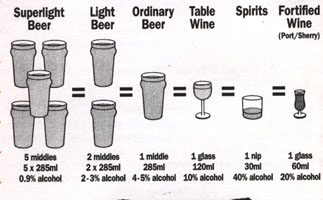
Alcohol is absorbed very quickly into the blood from the stomach, in as short a time as 5 to 10 minutes. The effects can last for several hours depending on the amount and how quickly it was drunk. Women absorb alcohol more quickly because their bodies contain less water. The water dilutes the alcohol and so the same amount of alcohol will produce a higher amount of alcohol in the blood. Alcohol drinks are not made up only of alcohol. Depending on the type of drink, the mount of pure alcohol varies from 2% to 60%. The stronger the drink, the higher the percentage of alcohol it contains. Because of this, it is useful to remember these measures called standard drinks.
Alcohol and driving
In NSW, the legal limit for drinking and driving for most drivers is 0.05 BAC. A limit of 0.02 BAC applies to L and P-plate drivers, drivers under 25 for their first three years of driving starting with the privisional licence, and drivers of heavy vehicle, public passenger vehicle and dangerous goods vehicle.
Sobering up
Sobering up takes time. About 10% of alcohol in the blood is discharged through breath, sweat and urine; the rest is broken down by the liver. The liver can only work at a fixed rate, getting rid of about one standard drink an hour.
Nothing can speed up the work of the liver, not black coffee, cold showers, exercise, vomiting or any other favourite remedy. Vomiting only removes the alcohol in the stomach that has not had time to be absorbed into the bloodstream-at most the last drink will be eliminated this way. Taking a shower or drinking black coffee may help someone who has been drinking to feel more awake, but it won't reduce their BAC.