
The Mason-Dixon Baseball League
Simplified Ground Rules
The Rules of Play -- Amended 3/12/2007
1) Teams are made up of real, live major league baseball players who are selected at a free agent auction draft that takes place on (or about) the first weekend prior to or following Opening Day.
2) Each team is composed of 23 players taken from the active rosters of either National or American League ball clubs (depending on which league your commish decided to use). You should have ten to twelve (10-12) Rotisserie teams for authenticity and realism, but fewer teams are OK. For example, a league with only five teams will most likely be a "superstar" league -- in other words, no one would have to draft Terry Mathews. (THANK THE GODS!)
The drafted teams must consist of:
3) Under normal circumstances, players are acquired by purchase at an open auction draft. Some years may require some tweaking of the draft, but spending is ALWAYS limited to a $30.00 payroll per team. Let’s call it a "sensible salary cap". (The original Rotisserie League and many "big time" leagues have $260.00 payrolls) Teams may of course spend less. The order of the draft is done by a "lottery drawing." The first bidder opens the auction with a minimum bid of .10 cents for any player. The bidding then proceeds around the room (at minimum increments of .10 cents) until only one bidder is left. The process is repeated, with successive owners introducing players to be bid on, until every team has a full roster of 23 players.
4a) For 2003 (and any other year we have expansion/contraction), we went ahead and instituted the "up the river/down the river" format to accomodate several teams folding and several new teams joining the league to keep the competitive balance intact. Here is the menu of events during such years:
4b) Returning owners may choose to keep up to 10 players. For every player that an owner chooses to keep, they exchange that frozen player for a draft space in the early rounds of the draft until such time as the draft round number matches the number of players already on that owner’s team. That owner will join the draft for the following round, and be added to the rotation so that they draft last in that “introductory round”.
4c) New owners will draft for players based on a random drawing, and will likely have the first 4-5 rounds to pick from the best free agents in the league – this should offer new owners a chance to build competitive teams before drafting directly against the returning owners.
4d) In a large contraction/expansion year, where there is unplanned and significant restructuring in the MDBL during the off-season, there will be no salary increase for frozen players, to help with the following assigned salary structure:
4e) Special Draft structure
4f) With this salary structure in place, we will draft in an “Up the river, down the river” format, where the first round draft order will be decided by random draw and the second round will proceed in the reverse order of teams from the first round. Even-numbered rounds will proceed in the “forward draft order” while Odd-numbered rounds will proceed in the “reverse draft order”. When an existing team joins the draft prior to the start of the next round, they will be placed in the draft so that they draft last in their “entry round.” During normal draft years, we will perform a regular draft order and only go ONE way, Deliverance-style, down the river.
5a) A player is eligible to be drafted for ANY position at which he appeared in 20 or more games the preceding year. If he did not appear in 20 games at any one position, he is eligible for the position at which he appeared the most times. Once the season starts, a player qualifies for a position by playing it once. Multiple eligibility is OK too. Just don’t try to draft Manny Ramirez or Kenny Lofton as your catchers! PLEASE NOTE: YOU MAY NOT DRAFT ANY PLAYER WHO IS NOT ON THE CURRENT MAJOR LEAGUE 40-MAN ROSTER BY DRAFT DAY
5b) **In certain circumstances, players will become eligible at a brand new position that they have not previously played -- mainly because their MLB team decides to move them. We'll call this is the "A-Rod/Mora Rule" -- since both Alex Rodriguez and Melvin Mora were moved to 3B by their MLB teams to start the 2004 season, although neither player played there much at all in previous years. Any player that falls under this umbrella rule will be discussed either before or on draft day to make sure all owners are aware and agree with the position switch. (Voting on individual player switches may occur if necessary.)
5c) ***In some cases, one or more of your holdover players may begin the season either on the disabled list or "down on the farm" in AAA (or lower if they play for the Devil Rays). With this in mind, we've developed a format for team owners to follow at the conclusion of the draft to allow them to replace those players in a fair and balanced manner. The first to replace one of its DL'ed players, will be the team that finished lowest in the standings the previous season; the second will be the second lowest finisher, etc., until all teams needing replacement talent have received one new player. In the event that one or more teams require more than one replacement player at the end of the draft, we'll repeat the process in the same sequence until all the rosters are filled with 23 ACTIVE players for opening day. PLEASE NOTE: IF A PLAYER GOES ON THE DISABLED LIST BETWEEN THE DAY AFTER THE DRAFT AND OPENING DAY, WE'LL FOLLOW THE TIME-HONORED "FIRST COME, FIRST SERVED" RULE, SINCE ALL TEAMS ARE EVEN UNTIL THE GAMES BEGIN.
6a) Trading is permissible from Auction Draft Day until Major League Baseball's official trading deadline (JULY 31st). After every trade, both teams must be whole (23 players each) -- that is, they must have the same number of active players at each position that they had before the trade. All trade proposals must be submitted to the commissioner's office for approval. The commissioner will always discuss the trade proposal with the co-commissioner to make sure it is a fair and balanced deal prior to approving and posting the trade on the CBS transactions page. In the event that a proposed trade involves one or both commissioners, other team owners will be consulted to ensure fairness. The transaction fee for in-season trades is $1.00 PER TEAM involved.
6b) While all rosters must be complete and set with 23 players at the end of the draft BELOW the $30.00 salary cap, there may be times during the season when owners will engage in trades as they look to improve their teams, not only for the remainder of the pennant race, but for the following year as well. As our teams must continue to adhere to our strict "roster-must-remain-whole-at-the-end-of-the-trade" clause that real baseball owners do not -- it has become necessary to allow ACTIVE salaries to creep above the $30.00 watermark ever so slightly to not only encourage trading, but to keep them within the realm of sensibility. To that end, this additional BALLOON CAP has been created, which shall remain at the maximum of 10% of the total salary cap -- which is only a $3.00 increase ($33.00 total ACTIVE salary per team during the regular season only). At no time may any team's ACTIVE salary rise above $33.00, FOR ANY REASON. Of course, due to the plethora of injuries occurring during the regular season, the overall salary [active + inactive] may, in fact, exceed $33.00, but that has happened to everyone's team throughout the history of the MDBL. This wiggle room will not prove problematic since ALL teams must return their ACTIVE salaries below the $30.00 threshold prior to the following season's draft day. **This rules takes effect at the beginning of the 2006 regular season.
6c) Off-season trading is permissible from the end of the World Series until March 15th (the roster deadline before the official MDBL Draft Day) the following year. Even in the off-season, the trade proposals must be submitted to the commissioner's office for approval. As with in-season trades, the transaction fee for off-season trades is $1.00 PER TEAM involved. The fees will be assessed to each team's billing statement for the upcoming season. **This rule took effect following the 2005 regular season.
7a) If a major league player is put on the disabled list, sent to the minors, traded to the other league, or released, he may be replaced by a player from the free agent pool. The price for such a replacement is $1.00. Replacement must be made by position. For example, you cannot replace a disabled catcher with an outfielder, even if the free agent pickings at catcher are slim, unless you have another player on your team who can be moved to the catcher slot (based on eligibility). The original player may either be released or placed on his Rotisserie team’s reserve list. When he is activated by his major league team, a reserved player may be activated by his Rotisserie team, at which time the replacement player called up into his slot must be either waived, moved to another position where a natural opening exists (and for which he qualifies), or moved to the reserve roster list, under the terms outlined below in #7b. A team may not release, reserve, or waive a player without replacing him with another active player. Any player picked up after the day's games have begun will be added the following game day!
7b) CLARIFICATIONS FOR #7a: *** Each team is limited to a maximum of THREE (3) reserve slots [1 pitcher, 1 infielder, and 1 outfielder]. NO CATCHERS MAY BE PLACED ON RESERVE ROSTERS!
**7c) Any replacement player shall receive a salary directly commensurate with the initial player's compensation along the following scale: (1) Any player who replaces a player who makes .50 cents OR MORE shall be paid .50 cents; (2) Any player who replaces someone who makes LESS than .50 cents, shall be paid .10 cents. For example: You are paying Bret Boone (SEA-2B) $3.00 and he breaks his leg sliding into 3rd base, so you place him on the disabled list and choose your replacement player, Mark McLemore (OAK-IF). McLemore's salary will be .50 cents since Boone's pay was higher than .50 cents. Now, if Boone only made .30 cents, McLemore would get .10 cents. Does this make sense?
**7d) Along those same lines, if your drafted player gets traded OUT OF THE AMERICAN LEAGUE, the player you receive to replace him will also receive a salary commensurate with the initial player's compensation along the same scale. After much debate and trial and error, this seems to be the fairest solution, and here's why. For example: You are paying Mike Schmidt (PHI-3B) $6.00, but the Phillies are in last place and decide to trade him to Baltimore to get rid of his salary for prospects. So...you have the rights to ONE of the players coming back over to Philly in the deal and you choose Todd Cruz (BAL-3B) to replace him. Cruz doesn't deserve $6.00 because he's not Schmidt, so his salary will be .50 cents since Schmidt's pay was higher than .50 cents. Even if you don't want any of the trade bait that comes over to Philly for Schmidt and you decide to grab a free agent from the pool, the salary rule still applies. No matter who is chosen to replace Schmidt, their pay must be .50 cents. Conversely, if Schmidt was making .40 cents, his replacement would receive .10 cents.
7e) *** Each team will also get TWO DROPS, which may be used at any time during the season. This means that team owners may, if they choose, drop any player during the course of the season -- for ANY reason. You ONLY get two of these, so use them wisely. The drops DO NOT rollover to the next season -- sorry Cingular subscribers! This should take care of any draft day boo boos.
7f) ***SUSPENSION CLAUSE*** -- As in the past, in the event that a player is disciplined/suspended by Major League Baseball and forced to miss games -- FOR ANY REASON (fighting, positive drug test, bad attitude, getting caught with Millie in the clubhouse, etc.) -- the player MUST remain on the active roster. His rotisserie team owner MAY NOT replace him for another active player.
8) Cumulative team performance is tabulated in SIX offensive and SIX pitching categories:
* Composite Batting Average (BA) [Total hits/At bats]
* Total Home Runs (HR)
* Total Runs Batted In (RBI)
* Total Stolen Bases (SB)
* Total Runs scored (RS)
* Composite On Base Percentage (OBP) [Hits+BB+HBP/AB+BB+HBP+SAC]
* Composite Earned Run Average (ERA) [ER X 9/IP]
* Total Wins (W)
* Total Saves (S)
* Total Holds (H)**
* Total Strikeouts (K's)
* Composite WHIP [BB+Hits allowed/IP]
(**-starting with our 2007 season, as voted by the membership, "HOLDS" replaced "Batting average against (BAA) [Hits allowed/Outs recorded+Hits Allowed]" in the pitching categories).
9) The teams are ranked from first to last in each of the twelve categories. For example, in a ten (10) team league, the first-place team receives ten points, the second-place team nine points, on down to one point for last place in each category. The teams with the most points at the end of the season wins the pennant. Obviously, if your team has eighty (80) points, either the draft went REALLY well, or your team is just THAT good!
10) The prize money is distributed as follows:
1st place - 50% of the total pot
2nd place - 25%
3rd place - 15%
4th place - 10%
IMPORTANT NOTICES AND TIPS!
--Never keep track of losses or defensive statistics. Why give yourself stress since these gruesome stats don't even affect you?
11) Under normal circumstances, every player you keep for the next season gets an automatic .10 cent pay hike, unless he led one of the twelve major categories (listed above under #8) at the end of the season, in which case he will receive an additional .10 cent pay hike (per category led). We don’t want any players filing for arbitration now do we?
12) Due to the constant Hot Stove trading and free agent movement, MDBL owners have until 12:00 NOON on March 15th to fix their post-season/pre-draft rosters. [In an expansion year, a team may only keep a maximum of thirteen (13) players on this list from season-to-season.[ This doesn't mean that owners cannot re-acquire their former players during the next season's draft in March/April; it just means only a chosen few can remain on the roster during the offseason. You may, of course, unload your entire team if you feel a house cleaning is necessary -- especially if you ended up having to pick up Terry Burrows, Juan Acevedo, Mike Oquist or Mike Dunwoody late in the year. The post-season roster list must be submitted to the commissioner's office no later than 12:00 NOON on March 15th -- with all the players on the list having been given their due raises and salary bonuses. In a non-expansion year, you may keep as many players as your salary and common sense allows. A $5.00 fee may be assessed for each day a team lollygags getting the roster into the commissioner's office. Do you know what that makes them? Lollygaggers! Enough said?
13) If a manager overbids on his/her $30.00 payroll, the last player he/she drafted is put back in the free agent pool. This works just like the supermarket!
14) The official website of the Mason-Dixon Baseball League is CBS Sportsline.com. Click here and register for FREE to join the fun and check on your team's progress.
** NEW FOR 2003 and beyond! Thanks to our new statistics service at CBS Sportsline.com, there is NO NEED to buy the newspaper or do stats every week on your own. The website will update stats on a DAILY BASIS. YAHOO!
** ESPN.com's "Game Log," the Elias Sports Bureau (TM), and USA Stats (1-800-USA-1980) are the official statistics resources for our league to check errors and discrepancies.



**Each team should still do its own statistics periodically to make sure the website is accurate. Any errors/discrepancies should be reported to the Commissioner's Office immediately so we can ensure overall accuracy.
** Before you do anything else, you must make up an appropriate name (and logo, if you like) for your team -- be creative, but try to make sure everyone will get the joke.
** Obviously, each of you might go with your own names, but if you have another personal tie in that’s well-known, give it a try. We look forward to hearing about them and seeing your new logo.
ROTO-MANAGERS BEWARE!
Your loyalty to your home town team may become destroyed during play!
At the draft AND at the end of the season, all team managers will usually get together and drink a toast with YOO-HOO. (This is an original Rotisserie League tradition, as you are toasting the league champion and all things baseball!).
GOOD LUCK EVERYONE -- HAVE A GREAT SEASON AND 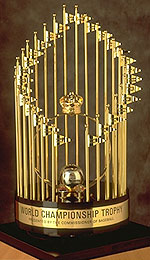

The TRUE Breakfast of Champions!
WELCOME BACK TO THE MDBL!

