Foxhound
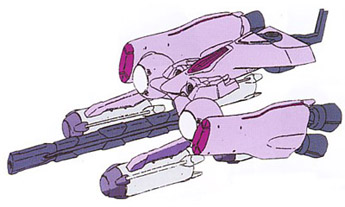

Post-war Foxhound pilots are taught that they are not just the underdogs of the battlefield, but also its unsung heroes. While their mobile armors are not as elaborate or versatile as the humanoid suits, they can still compete against them. Squadron and support tactics have replaced dog fighting, with Foxhounds acting in teams of no less than three against one target. A nuclear engine and additional armor have helped to lessen the Foxhound's reputation as a flying coffin, though there are still limitations to the design. While the little craft is nimble, its top speed is still just below that of an old Aeshma Wing. Its armor is still insufficient against most mobile suit-sized weapons, leaving the machine prey to a one or two-shot death. Fortunately, its firepower helps offset some of the defensive consequences, though strategists remind us that the machine still needs to catch a mobile suit to hit it.
The UAAF is not the only organization to continue using the Foxhound. Since the Space War, many of these units have been salvaged by pirate bands and other outlaws across the Earth Sphere. Some mercenary groups have even been paid by the Alliance in surplus Foxhounds, making the machine a mainstay among soldiers-for-hire. Most of these renegade mobile armors, however, lack all of the advancements of the latest F4 series version, and come equipped with an older three-to-five hour electrical batteries rather than a nuclear fusion core. The true danger of these machines, however, comes with the level of customization that they have undergone, with some mounting arsenals that Alliance engineers would gawk at.