- Hygogg -
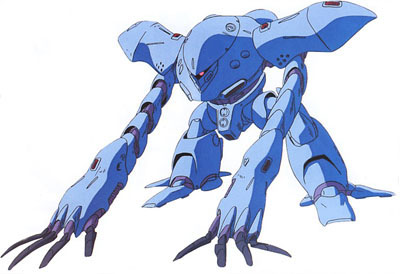
With its hunched appearance, huge claw arms, and aquatic turbine engines, the Hygogg was made to excel underwater. Looking like a monstrous sea creature, it proved surprisingly nimble in its natural environment, managing maneuvers that most conventional units found nearly impossible once submerged. Microturbines on its arms made it a particularly lethal close combat unit, though its potent maser cannons and missiles balanced it at a distance. With an almost infintie range of movement at their disposal, and the ability to strike targets beyond their watery domain, Hygogg pilots often avoided shorelines and engaged their foes from sheltered positions. When situations did require them to rise from the deep, Hygoggs, while terrifying, could easily fall victim to the awkwardness of their disproportioned limbs and top-heavy torsos.
Like the Anderson-Jones Gyan, the Hygogg was meant to appeal to Earthbound markets moreso than buyers among the space colonies. With a small production capacity, Trutrak could only roll out a little over three dozen units a year, though this number was actually well-suited for the very small aquatic mobile weapons market. The Hygogg officially went on sale just three years before the Third Space War, when it is picked up by a number of nations that were already aspiring to independence from the United Alliance. During the rebellion of the Corps, many of these machines, along with units owned by hired mercenaries, went toe-to-claw with such machines as the Triton. Following the war's disastrous conclusion, most surviving units were either kept by their original owners or found their way into the hands of the newly emerging kingdoms and would-be empires that sprang up across the Earth.
