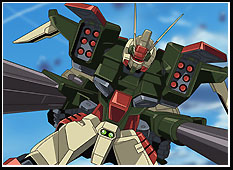
It has been a century since humanity began its migration to the stars. As generations of pollution, overpopulation, and natural abuse took their toll upon the Earth, the human race has sought to balance its own survival with that of its birthplace. Now, millions of people have been relocated to gigantic orbiting space colonies called Arks, preserving themselves within artificial replicas of Earth environments. From bustling cities, to sprawling fields, to arid deserts, the Arks are filled with transplanted memories of home that have been brought into reality. As expected, however, nostalgia has not been the only thing brought along into space.
The creation of the Arks, and the declaration of the Earth Sphere, began as a peaceful and cooperative initiative of the United Alliance of Nations. The Alliance, for the first time in its existence, had a common goal to work towards; none could deny the importance of preserving the Earth or humanity. However, in time, what began as simple overseeing of the colonies grew into virtual domination. With no government of their own, and no recognized culture, the colonies were treated as police states. Soon, they turned from institutions of science into dumping grounds for the poverty-stricken and "undesirables" of the human race.
Then came the first and second Space Wars
The second war was about justice. Nearly four years later, elements of the United Alliance became showing new signs of corruption as an ages-old organization known as Requiem took control of its governing council and its military. Dissenters within the Alliance ironically found themselves asking their former foes, the Grand Cross, for assistance in a new rebellion that would liberate their government. Months of fighting left both sides weakened, and nearly broken, before the rebel forces scraped through a victory. As events exposed Requiem's involvement in the past Space War, its destruction was made a top priority; that mission was accomplished.
When the second great war ended, the victorious leaders seemed convinced that they had survived the worst period of human history. More than half of the population of the Earth Sphere had perished, while the survivors were left with a ruined world and quiet mistrust of one another. Slowly, reconstruction began, with the restoration of the Earth seeming foremost important. However, the end of the wars did not mean the end of conflict; there was no new Golden Age upon the human race.
Over twenty years passed, and the Earth Sphere remained as fragmented and divided as ever. The once-great United Alliance stood as the impoverished caretaker government of the Earth, devoting its resources to healing the planet and restoring its dignity. The Grand Cross had become the nucleus for a new nation of space colonies, where unity and equality were the ideals of the day, but internal feuding the reality. Between them both, sat the Newtype Corps, an elitist organization originally founded within the Alliance. Made up of human beings that exhibited the unique ability to manipulate the phenomenon known as Resonance, the Corps took advantage of the desperate state of both super powers, and spent its years bidding time. It's leadership, drawn to the belief that their special talents translated into the definitive 'next-step' for humanity. marshalled resources and wove chains of influence across the entire Earth Sphere, forging a secret army of unparalleled technology fuelled by defiant rebellion.
In 114 CC, they struck, tearing a path through the rebuilt cities of the Earth, while simultaneously lashing out at the choice installations of space. The Earth Sphere was under siege over night, with no power, no government, and no individual exempted from the Corps' list of targets. In a matter of hours, the deceitful organization's supreme commander, Arthur Warden, declared that the Third Space War, the war that would "decide the destiny of the human race," had begun. The Corps' battle against the United Alliance Armed Forces seemed to end quickly and decisively, with the Earth command of the UAAF collapsing like a house of cards. The Alliance's space fleets fared nearly as bad, though managed to find help among both the Grand Cross and the multitude of independent colonies that had resisted the Corps' invasion. By the year's end, though Earth and its government had official surrendered to their attackers, the tattered UAAF continued fighting, despite their scattered state.
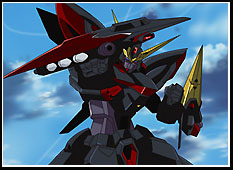
For the Grand Cross, the war has gone significantly better. The opening days brought a mixture of deceit and political diversions that attempted to alienate the colony nation from the falling Alliance. When the Corps saw that it could not play the two old enemies against one another, it resorted to conventional tactics, establishing task force for dealing specifically with colonial threats. Corps Vice-Commander Nicolai Seriyev lead this campaign, masterminding the creation of so-called ultimate weapons, the War Saints, with the help of the mysterious Coral Song Excelsius. Though they have proven to be nearly unstoppable, the deficiencies of those commanding them have kept these mobile weapon monstrosities from completely wiping out their obstacles. While battered in their own right, the armed forces of the Grand Cross have managed to weather the Corps' efforts, though not without significant losses. The replacement of Seriyev with the less moderate, arguably inhuman Excelsius promises the colonies a future drenched completely in blood and fire.
Recent events have drawn that future to even closer certainty. In a bid to bring a final peace to the Earth Sphere, the leaders of Ark Orion, key supporter of both the Alliance survivors and the Grand Cross, proposed moving their massive space colony from the L5 frontier to Earth's orbit. Acting as the forefront for an advance by all of the Corps' enemies, the Ark's scheming nobles hoped to seize the spotlight and use their gesture as dramatic testimony from the whole Earth Sphere; leading both space and those rebelling on the planet against the Corps' and towards a new era of peace. History would remember Ark Orion's grandeur, and celebrate its status with just adulation, crediting the colony nation for its boldness and bravery.
At least, that was the plan.
This move, and with it the entire spirit of the rebellion, was quickly soured when the Corps announced the reformation of the United Alliance government. Suddenly drawing back Naturals, the former government, and even the military that had been fighting them into the fold, the crafty Corps leadership went from a pack of usurping madmen to the instigators of a new peace. Though the Alliance remains under their control, they now have the blessing of its name to guide to guide their actions. Even with their council ruling only in appearance, it seems that the Earth's government are satisfied with regaining some scraps of power. Ark Orion, meanwhile, continues to move towards the planet, now unable to cease its journey. It now stands alone, and has been quickly been repainted as a hostile entity by their former friends in Alliance, for daring to drag the conflict onward.
Such are the perceptions that politics can shape in times of conflict. All that remains is to see how events play out; who lays historic claim to the role of hero, and who will live on in infamy as the villain.
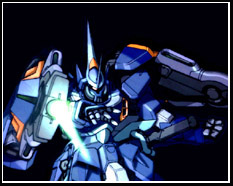
It is on Orion that the old prejudices between Naturals and Newtypes, the root of this conflict, have resurface. It is here where the moral debate surrounding human augmentation has come into focus. It is here where modern-day nobles watch and treat common citizens like pawns in their continuing games. The playing field is smaller, spanning streets, townships, and families, but no less epic than before.
Ark Orion is a place of intrigue, with wonders and dangers within arm's reach of even the most average individual. It is here diplomats play their petty political games, where soldiers wrestle against dangers to their home, where net-philes, pirates, slave traders, synthetics all seek their fortunes. From this point, we watch events unfold, as the outside world continues to war with itself, dragging their conflict to this distant, enigmatic place.
Yes, on Ark Orion, the unassuming can become the incredible, and the astounding can start to seem ordinary.
