JP. Paul. Billy. And Theo. Not exactly The Beatles, but they will probably have as much of an effect on Baseball Business Management as The Beatles did on Rock and Roll.
All four of these men are GMs of MLB baseball teams; the first three, JP Ricciardi, Paul DePodesta and Billy Beane, worked together in Oakland in the early 21st century…yeah, I know that sounds so strange, being it is still so early.
Billy Beane was a 1st round draft pick of the New York Mets in 1980. (Darryl Strawberry was the #1 overall pick of the NYM.) He had all the tools scouts drool over in a player: Speed, Arm, Glove, Batting for Average and Batting for Power. At least that was the ‘scouting book’ on him. But unfortunately he didn’t work out quite as well on the field as projected. Though for anyone making it to the Bigs, it is an great accomplishment. His stats.
Paul DePodesta is a Harvard Economics graduate that Billy hired to incorporate his ‘new’ found thought process on selecting, assembling and playing baseball players. His insights were often found via the computer analysis ran on 1000’s of minor league, college and high school players. He originally started out charting pitches for the Cleveland Indians major league squad. Now he heads up the Los Angeles Dodgers organization and among other things is a Ayn Rand fan.
J.P. Ricciardi was Director of Player Personnel under Billy Beane and became very noticeable to the Toronto organization during the writing of Moneyball. He was hired as GM of the Blue Jays in November 2001. His past jobs included coaching in the Yankees system, minor league instructor in the A’s organization and special assistant to Sandy Alderson, former A’s GM.
Theo Epstein is in much the same vein as the others. Following advice directly from Bill James, the Sabermetrics master, the Red Sox won the 2004 World Series and put together a team worthy of Bill James analysis.
They led the majors with a .289 batting average, set a team record with 238 home runs, and set a new record with a slugging percentage of .491, breaking the .489 mark of the 1927 Yankees.
All of these men have made waves to the hard-boiled common sense most ‘Baseball Men’ think they have in understanding the game. By using an effective and efficient philosophy, not coined under ANY name until ‘Moneyball’ came out, in utilizing the best resources of computer technology, understanding (or at least utilizing) Markovian processes and understanding the psychology of players, as well as the physiology of the human body, their management style has become the new Zen management philosophy of baseball.
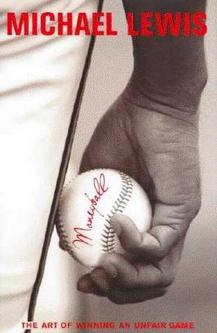
This Zen philosophy spelled out by Michael Lewis in ‘Moneyball :The Art of Winning an Unfair Game’ is really a threefold proposition.
- Maximize production by each player
- Minimize the cost per player to get that production
- Don’t get too ‘hung up’ on a particular players: because his salary demands will increase beyond the ability to pay for it. (And replacements can be found via the amateur draft process, minor league scouting, free agency, etc.)
The Oakland A’s in 2001 were spending $33.8 million to pay 27 players on their roster. Whereas, the Yankees, were spending $112.3 Million for 31 players. Roughly a 4-to-1 ratio. So, when final records were compared, who got the most bang for their buck?
Oakland won 102 games. Yanks won 95 games. (Seattle won 116 games - $74.2 Million.) Yes, the Yankees lost to the Diamondbacks ($85.8 Million) in the WS, but MONEYBALL is not about winning the World Series.
Analogy #1: "Moneyball tactics can get you to the Senior Prom, but you might not SCORE with your sexy date."
In a short series, 5 or 7 games, the theories of winning baseball games consistently go out the window. Over the course of a 162-game schedule, the theories are pretty solid with these caveats:
- Key injuries to the best performing players will skew the results
- Unexpected troubles in the ballplayer’s life, like marriage, divorce, legal troubles or some other life-altering event
- Changes to player’s mechanics or fielding placement can once again alter results
In all essence, the best one can do is put together a good product pre-season and tinker with it based on salary constraints and player performance. It sounds cold-hearted oftentimes, but it is a fact that certain teams are not able to spend money quite like the Yankees do.
More to come....