
The Missouri Compromise The institution of slavery had been a divisive issue in the United States for decades before the territory of Missouri petitioned Congress for admission to the Union as a state in 1818.
Dred Scott In 1846, Dred Scott and his wife Harriet filed suit for their freedom in the St. Louis Circuit Court. This suit began an eleven-year legal fight that ended in the U.S. Supreme Court, which issued a landmark decision declaring that Scott remain a slave. This decision contributed to rising tensions between the free and slave states just before the American Civil War.
Compromise of 1850 The annexation of Texas to the United States and the gain of new territory by the Treaty of Guadalupe Hidalgo at the close of the Mexican War (1848) aggravated the hostility between North and South concerning the question of the extension of slavery into the territories.
Kansas-Nebraska Act bill that became law on May 30, 1854, by which the U.S. Congress established the territories of Kansas and Nebraska. By 1854 the organization of the vast Platte and Kansas river countries W of Iowa and Missouri was overdue. As an isolated issue territorial organization of this area was no problem. It was, however, irrevocably bound to the bitter sectional controversy over the extension of slavery into the territories and was further complicated by conflict over the location of the projected transcontinental railroad.
Sectional Conflict Our nations great national tragedy, the Civil War.
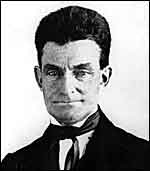
John Brown's Holy War Martyr, madman, murderer, hero: John Brown remains one of history's most controversial and misunderstood figures. In the 1850s, he and his ragtag guerrilla group embarked on a righteous crusade against slavery that was based on religious faith -- yet carried out with shocking violence. His execution set off a chain of events that led to the Civil War.
The American Civil War "...but one of them would make war rather than let the nation survive, and the other would accept war rather than let it perish, and the war came.".
The American Civil War A collection of links from South Dakota State University.
Shotgun's Home of the American Civil War From the blood soaked plains of Manassas, to the smoke filled skies of Atlanta, and finally to the tear filled eyes at Appomattox. For four of the bloodiest years in the history of this Republic the war raged. It started as Yanks and Rebs, it ended as "Americans"!
The American Civil War Literally thousands of books have been written on the single subject, or some detail of the subject of the American Civil War. I do not propose to write another one here. I cannot expect to entirely do justice to an event in American history which defined us as a people and redefined the country as a Nation, rather than as a mere experiment in Federal Republicanism.
AmericanCivilWar.com Search this site by keyword, battle or date for specific information.
The African American Civil War Memorial The African American Civil War Memorial honors the memory of Private Gordon.
The Valley of the Shadow The Valley of the Shadow Project takes two communities, one Northern and one Southern, through the experience of the American Civil War. The project is a hypermedia archive of thousands of sources for the period before, during, and after the Civil War for Augusta County, Virginia, and Franklin County, Pennsylvania. Those sources include newspapers, letters, diaries, photographs, maps, church records, population census, agricultural census, and military records. Students can explore every dimension of the conflict and write their own histories, reconstructing the life stories of women, African Americans, farmers, politicians, soldiers, and families. The project is intended for secondary schools, community colleges, libraries, and universities.

Crisis at Fort Sumter The presidential election of 1860 culminated more than a decade of increasing sectional conflict between the North and South, and, simultaneously, precipitated a new crisis that ultimately severed the Union. The election of the Republican party's candidate, Abraham Lincoln on November 6, 1860, began a chain of events that included the secession of seven deep South states the establishment of the Confederate States of America at Montgomery, Alabama, and the assumption of authority over federal property, such as customhouses and forts. The Confederacy's attempt to extend its sovereignty over forts that remained in Union hands, notably Fort Sumter in Charleston harbor and Fort Pickens at Pensacola, Florida, placed the rival governments on a collision course. These events transpired in the approximately 120 days between Lincoln's election in early November and his inauguration on March 4, 1861.