|
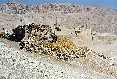
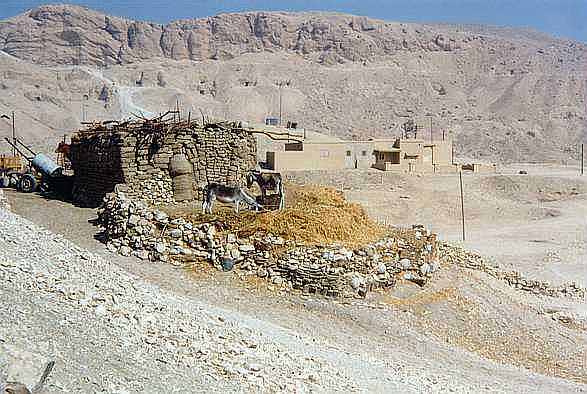
An extensive village was built on the site of the tombs of the nobles. The villagers used to make their living by selling artifacts looted from the tombs. |
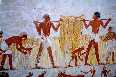
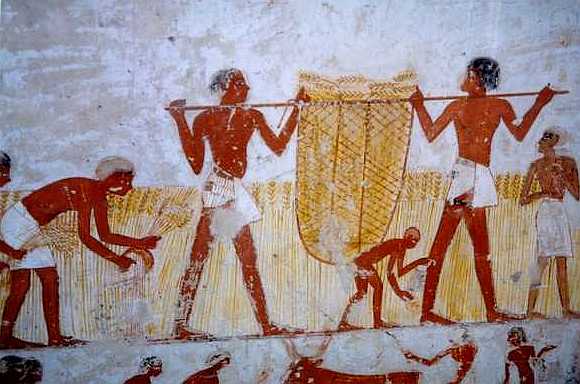
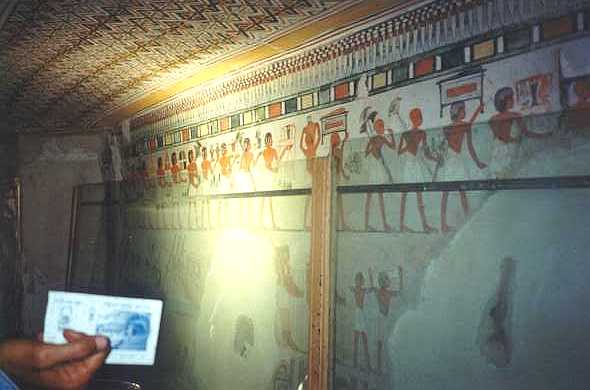
We visited two nobles tombs. The first was the tomb of Menna the second was the tomb of Nakht. Here in the tomb of Menna are scenes of daily life in the fields. Shown is a depiction of the gathering of wheat. |
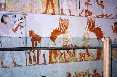
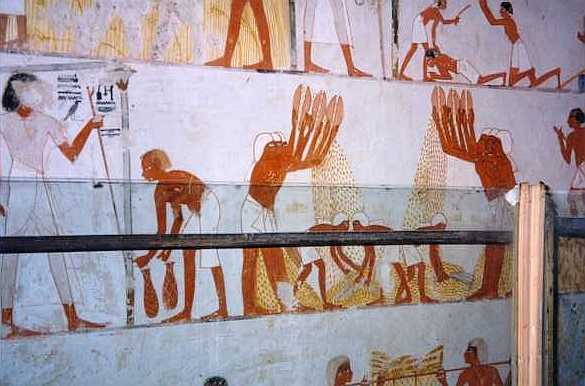
This painted segment shows the winnowing of the grain, or method of separating the wheat from the chaff. This same method is used today. |
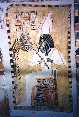
Menna was the scribe of the fields of Thutmose IV (1419-1386 B.C.). Menna's face had been rubbed out in most of the paintings. Apparently he had some enemies. |
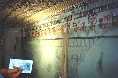
Illumination inside this tomb was provided by mirrors reflecting the Sun's light.This may have been the same method used when the walls were originally painted. |
|
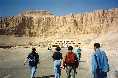
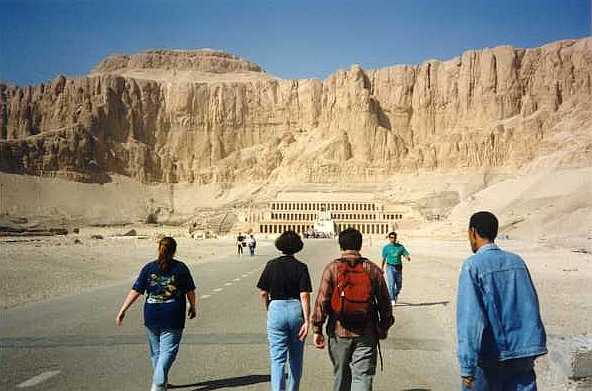
Next stop was the Mortuary Temple of Queen Hatshepsut (1498-1483 B.C.). This is one of the most famous sites in Egypt.
|
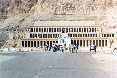
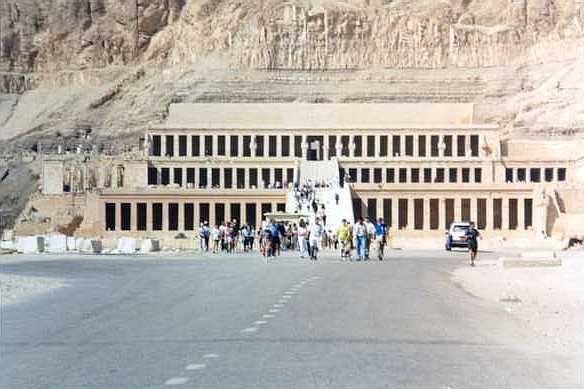
A Polish team of archeologists is restoring the temple. The size and design of the structure is impressive. |
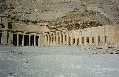
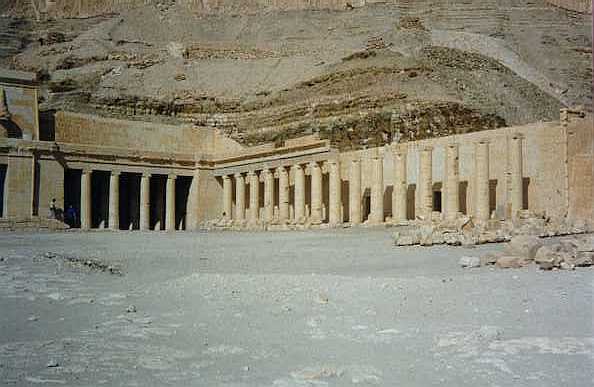
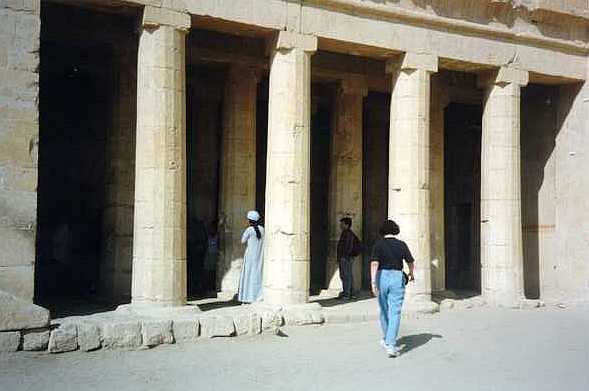
On the first terrace is a colonnade which inspired later Greek architecture. |
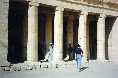
Here is a close up view. |
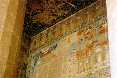
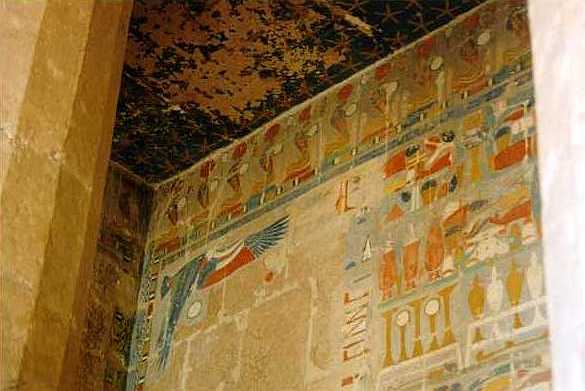
Many of the wall paintings retain their vivid colors. Here a protective vulture holds a cartouche. Also note the line of cobras at top. |
|
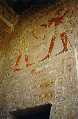
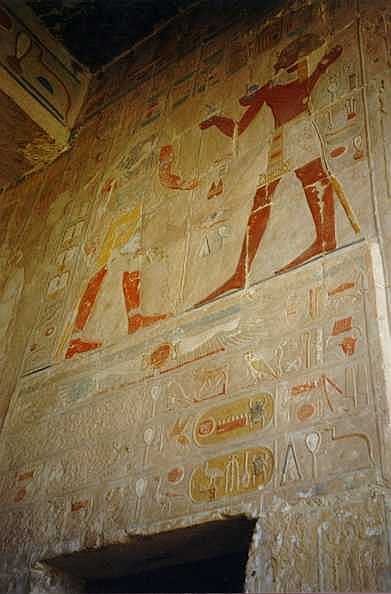
Hatshepsut's successor took pains to try to blot out her name from the monument. He was not totally successful. |
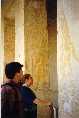
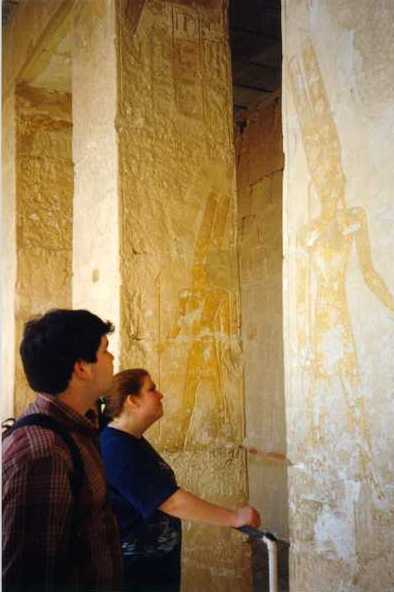
Here, Jason and Deborah listen as Hassan explains some of the paintings. |
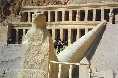
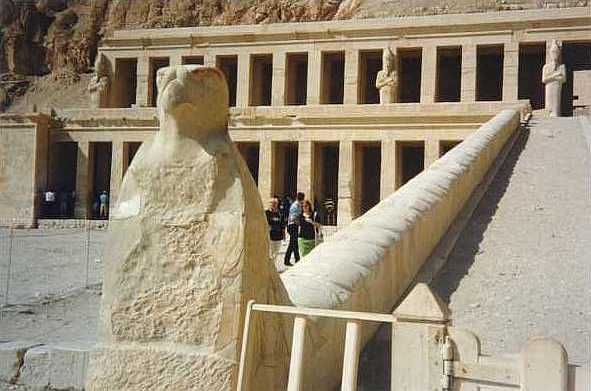
Falcons decorate the railings to the second terrace. |
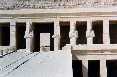
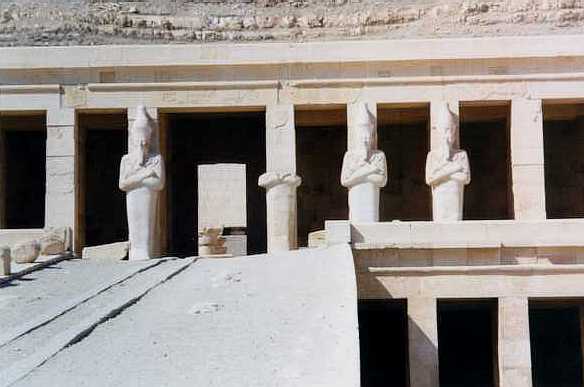
The colonnade at the top once had Osiride figures on all of the pillars. |
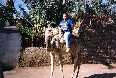
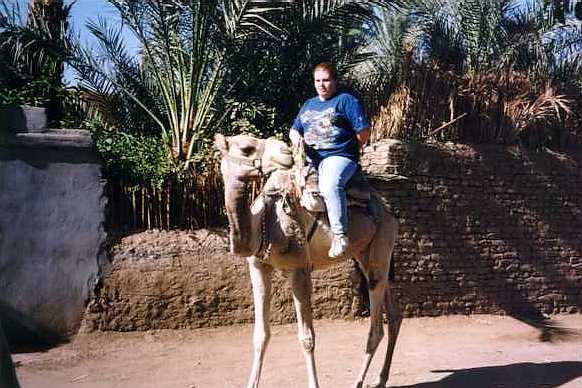
In the afternoon, Deborah decided to ride a camel. The camel looks pleased. |
|
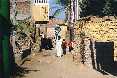
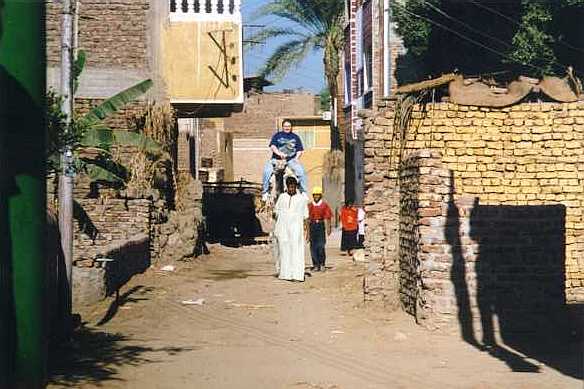
Here, Deborah is escorted through town. |
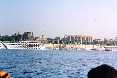
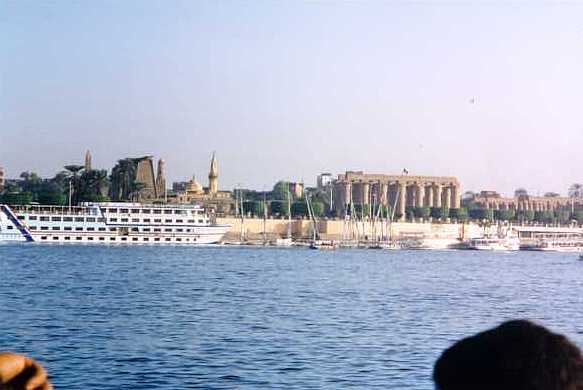
At 3:30 we crossed the Nile to go to Chicago House and have tea. You can see Luxor Temple on the shore. |
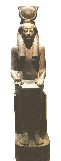
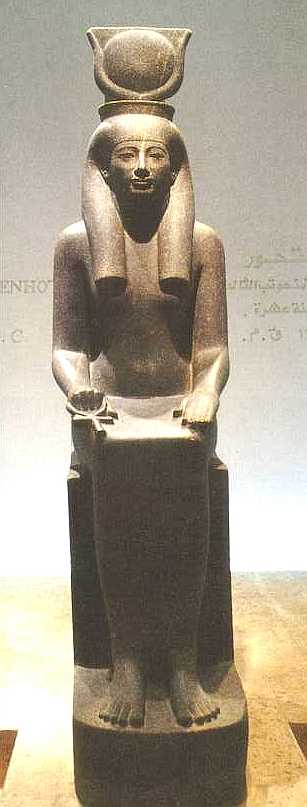
After tea we went to the Luxor Museum. It's main strength is a magnificent collection of statuary. Above is a seated figure of Hathor. |
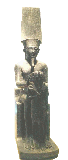
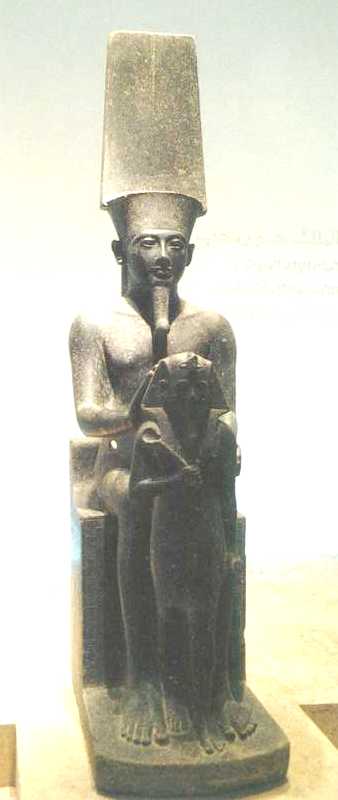
Here the Pharaoh Horemheb (1321-1293 B.C.) stands before the god Amun. |
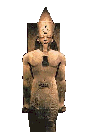
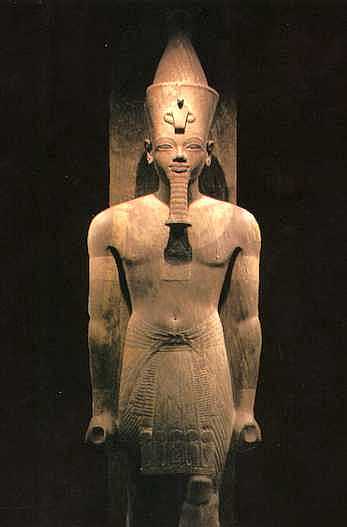
This is a statue of Amenhotep III (1386-1349 B.C.). That evening we had shish kabob in the Suq (market). Later we packed for our departure the following day to Aswan. |