|
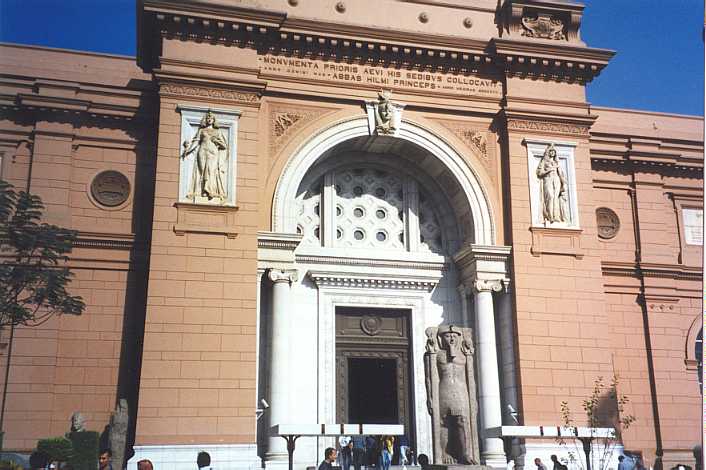
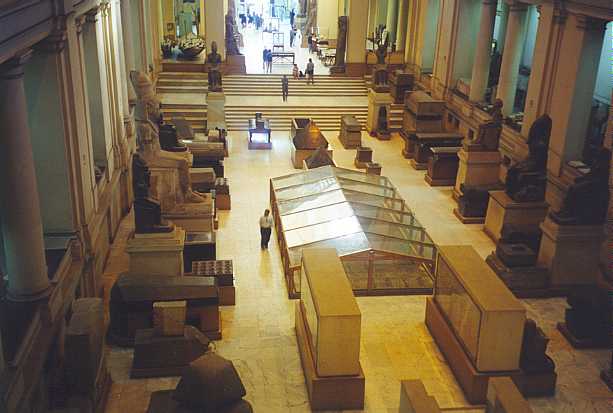
This is the Egyptian Museum in Cairo. The present building was opened in November 1902. |

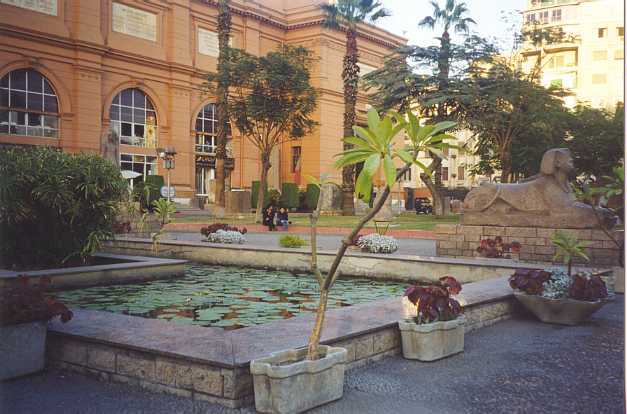
The front of the Museum is beautifully landscaped and adorned with many ancient sculptures.The Museum Director, Mohamed Saleh provided us with a guide. |

The first gallery we were led to contains the mummys of many of Egypt's most famous pharoahs. The display is very impressive and respectful. I took no photos. |

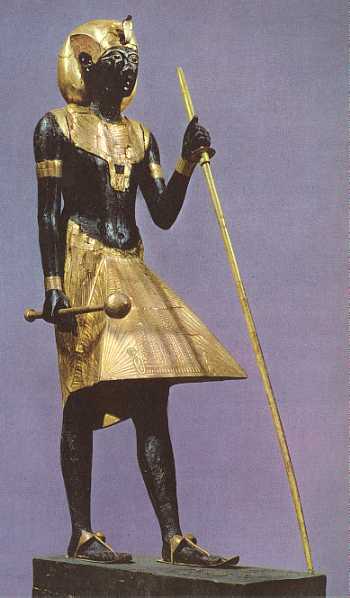
The most famous items in the Egyptian Museum are the contents of the tomb of Tutankhamen. Above is one of the sentinel statues of the king which stood to one side of the entrance to his burial chamber. |

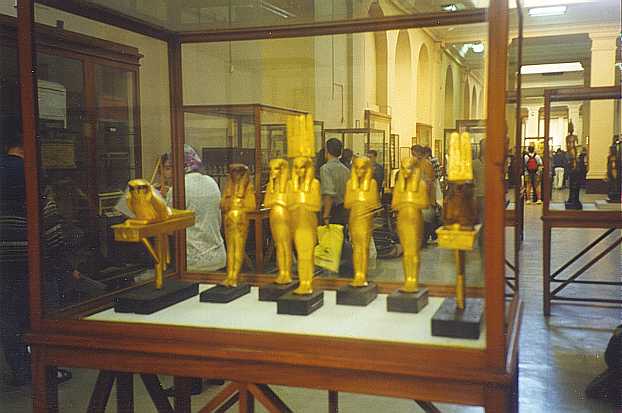
These are some of the gilded wooden statues of dieties that were found in the tomb. Tutankhamen ruled in the 18th dynasty, 1357-1347 BC. He died when he was 19 or 20 years old. |
|

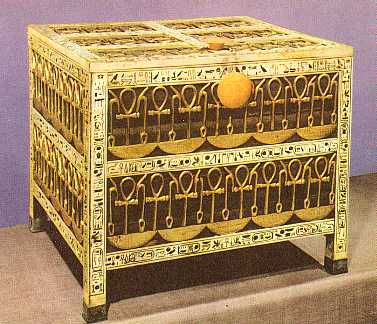
This is a coffer from a room in the tomb next to the burial chamber. It is made of wood and ivory with applied gold and silver. |

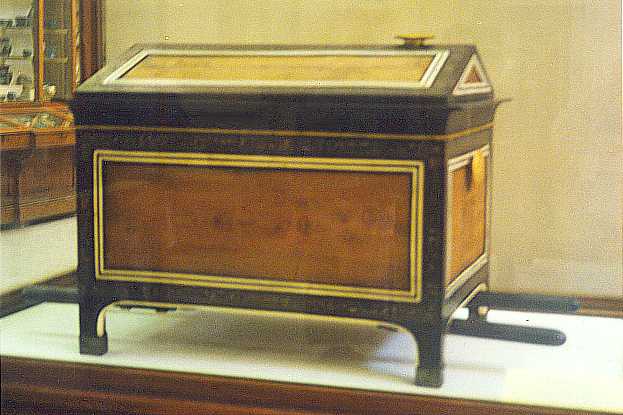
This chest is one of my favorites from the tomb. The wood grain is visible in the exposed cedar panels. |

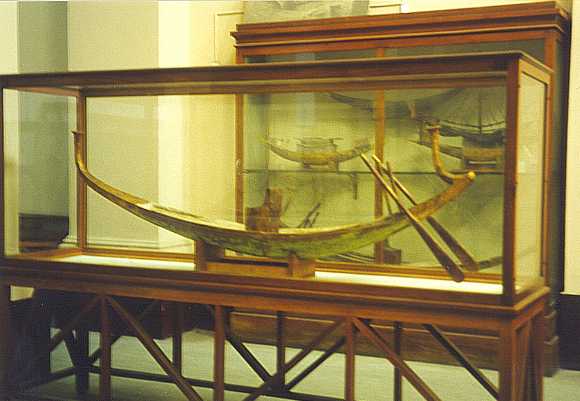
These are a few of the many boat models from the tomb. They are among the many items included for the king's use in the afterlife. |

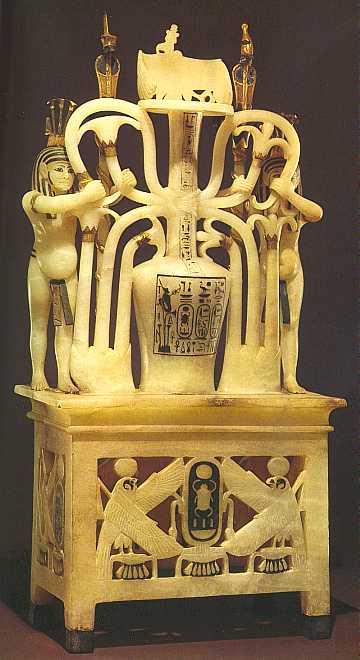
An alabaster perfume vase. It is decorated with the lotus of upper Egypt and papyrus blossom of lower Egypt. |

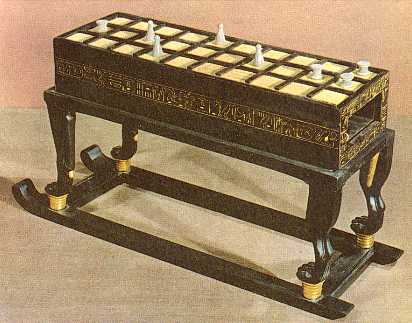
A game board for playing "Senet". It is made of ebony and ivory. |
|

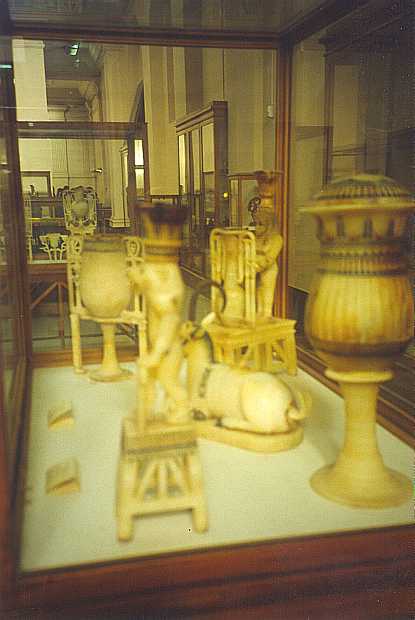
This lotus lamp is made of alabaster.
|

In this general view of many of the items carved in alabaster, the lotus lamp can be seen at center left. |

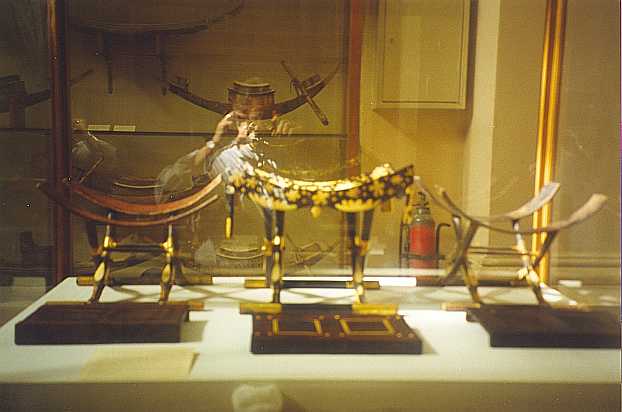
Tutankhamen's tomb held over 3000 objects. The items, like these handsomely crafted benches, are beautifully displayed. |

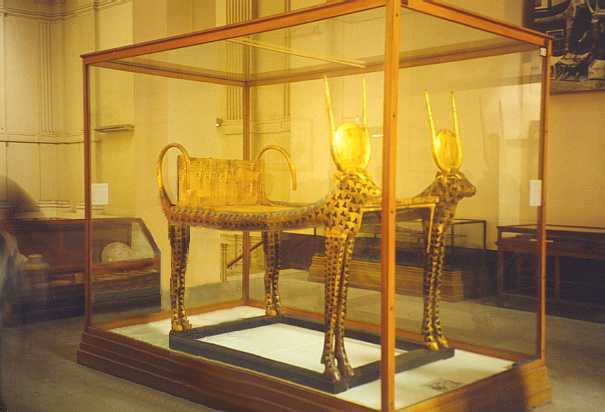
One of the ceremonial couches found in the tomb. It is adorned with figures of the goddess hathor. |

The king's gilded wooden throne. The young king and his wife are depicted on the chairback. |
|

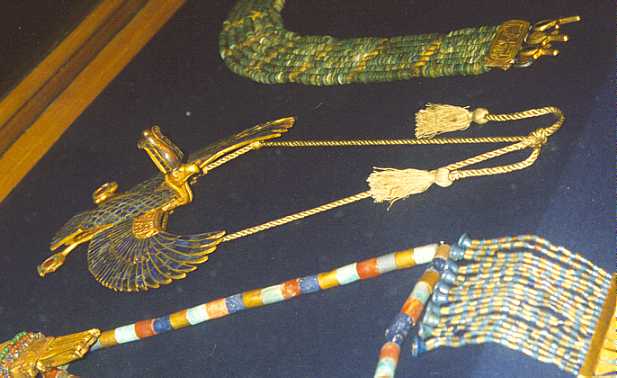
The new jewel rooms are magnificent. I managed to get this shot when I accidently allowed my flash to go off. |
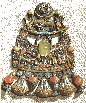
These are just a few of the items found in the young king's tomb. |

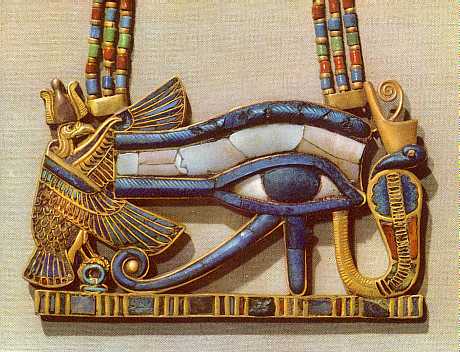
This pendant depicts the eye of horus with the serpent goddess of the North and vulture goddss of the South. |

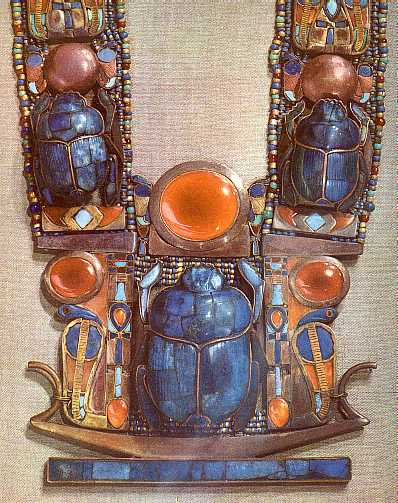
A pendant in the form of a boat. The scarab, symbol of the god's ressurection is flanked by two royal serpents. |
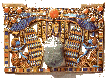
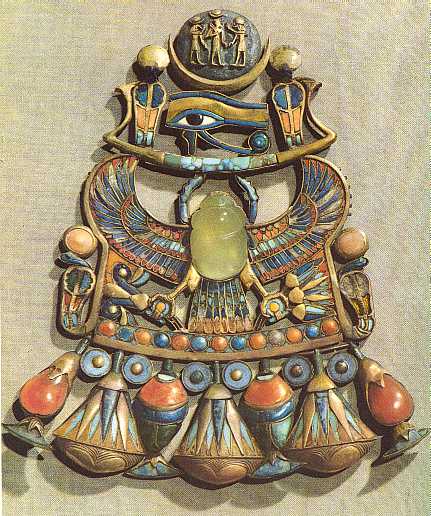
Pectoral decorated with a winged scarab protected by the two goddesses Isis (right) and Nephthys (left). |
|

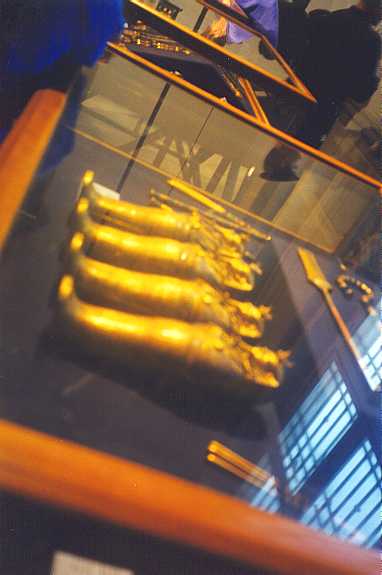
The jewel room contains many items of gold like these tiny gold coffins designed to contain the king's internal organs.
|

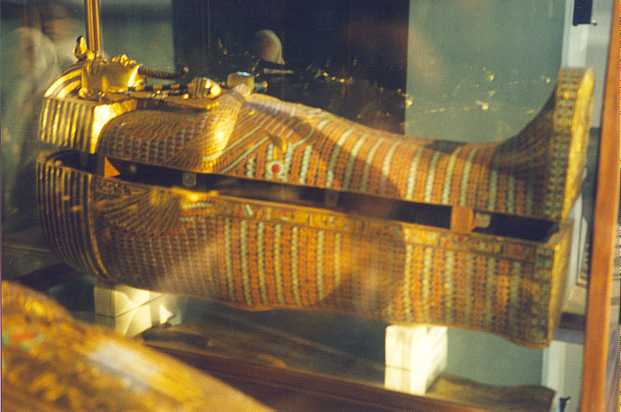
Tutankhamen's mummy was found within a nest of three coffins. Above is the second coffin. It is made of gilded wood. |

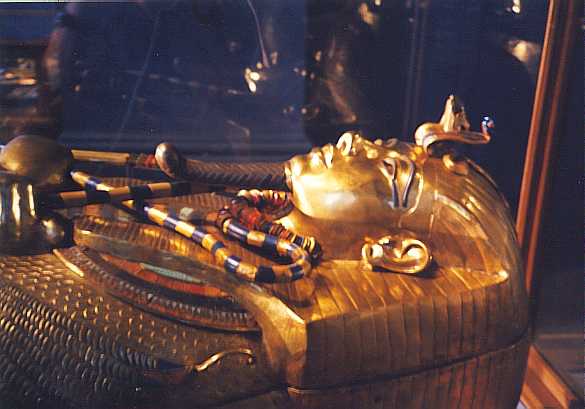
The king's inner coffin above is made of solid gold. It is over six feet long, an eighth of an inch think, and weighs 296 lbs. |

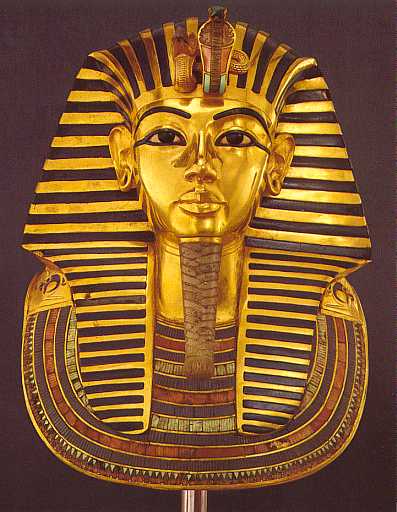
This is the solid gold mask found on the mummy of Tutankhamen. The king is depicted as the sun god, whose skin was made of gold. |

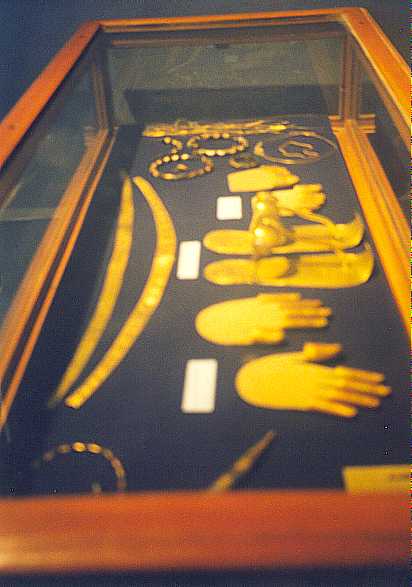
Above is a case containing the gold coverings of the king's fingers and toes. The amount of wealth displayed is staggering. |
|

An alabaster chest which held the four tiny gold coffins containing the kings viscera. |

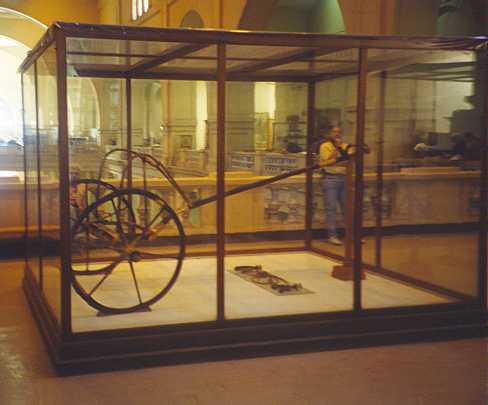
One of several chariots found buried with the young king. |

Although I have focused primarily on the collections from one tomb, the Egyptian Museum houses |

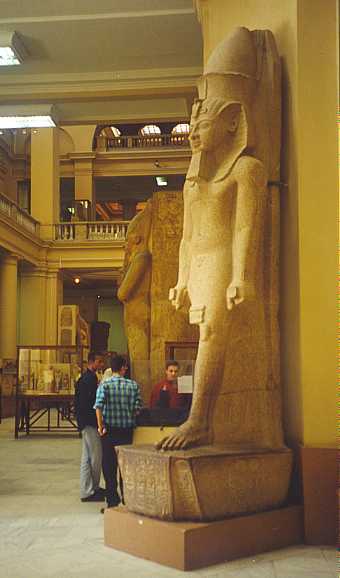
the finest group of sculpture and other artifacts from over 3000 years of ancient Egyptian history. Above is a statue of Ramses II. |

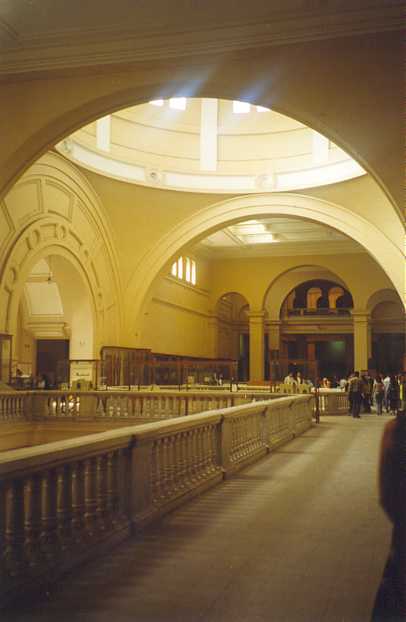
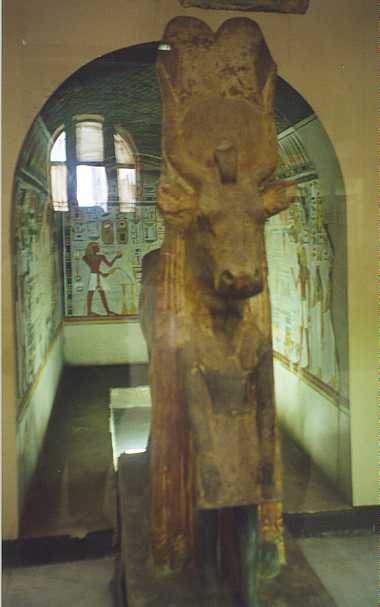
Finally, I include a photo of beautiful shrine to the goddess Hathor from the main floor of the museum. The vast museum collection of over 120,000 items is much too large to be appreciated in one visit. |