

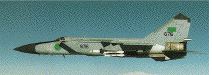
MiG-25 Foxbat
Developed to deal with a number of target types ranging from subsonic low-altitude cruise missiles to such Mach 3 types as the North American B-70 Valkyrie strategic bomber (later canceled) and Lockheed A-11 reconnaissance machine (precursor of the SR-71 'Blackbird'), the MiG-25 is the world's fastest interceptor although limited in this performance to non-maneuvering flight.
The type's RP-25 Sapfir-25 'Fox Fire' radar is elderly but powerful, with a search range of 48.6 nm (55.9 miles; 90 km) and a tracking range of 27 nm (31.1 miles; 50 km), and was designed to 'burn through' the enemy's countermeasures.
Design work on the Ye-155P supersonic interceptor began in 1959, and the program was later extended to cover a Ye-155R reconnaissance derivative: it was the latter that flew first, in March 1964, and the Ye-155P followed in September 1964. The MiG-25P interceptor entered service in 1970 with a powerplant of two MNPK 'Soyuz' (Tumanskii) R-15B-300 turbojets each rated at 22,487 lb st (100.03 kN) with afterburning. The MiG-25P was armed with four R-40 (AA-6 'Acrid') AAMs, of which two could be replaced by 23 mm cannon pods, and was suitable only for the high-altitude role, which had diminished in importance even before the type entered service in 1970, and the survivors have all been converted to the more useful MiG- 25PDS standard.
 Get your own Free Home Page